

Kiyatriton was a genus of small salamanders from western Siberia. Two species are known from Middle Jurassic and Early Cretaceous deposits. After examining the microscopic structure of their thigh bones, researchers proposed that the animals passed through metamorphosis and spent their adult stage on land.
Quick facts
| Group | Salamanders (Caudata) |
|---|---|
| Age | Middle Jurassic (Bathonian) and Early Cretaceous (Aptian) |
| Region | Asia, western Siberia (Russia) |
| Type species | Kiyatriton leshchinskiyi |
| Scientific name | Kiyatriton |
| Diet | Exact prey is unknown |
What can the fossils tell us?
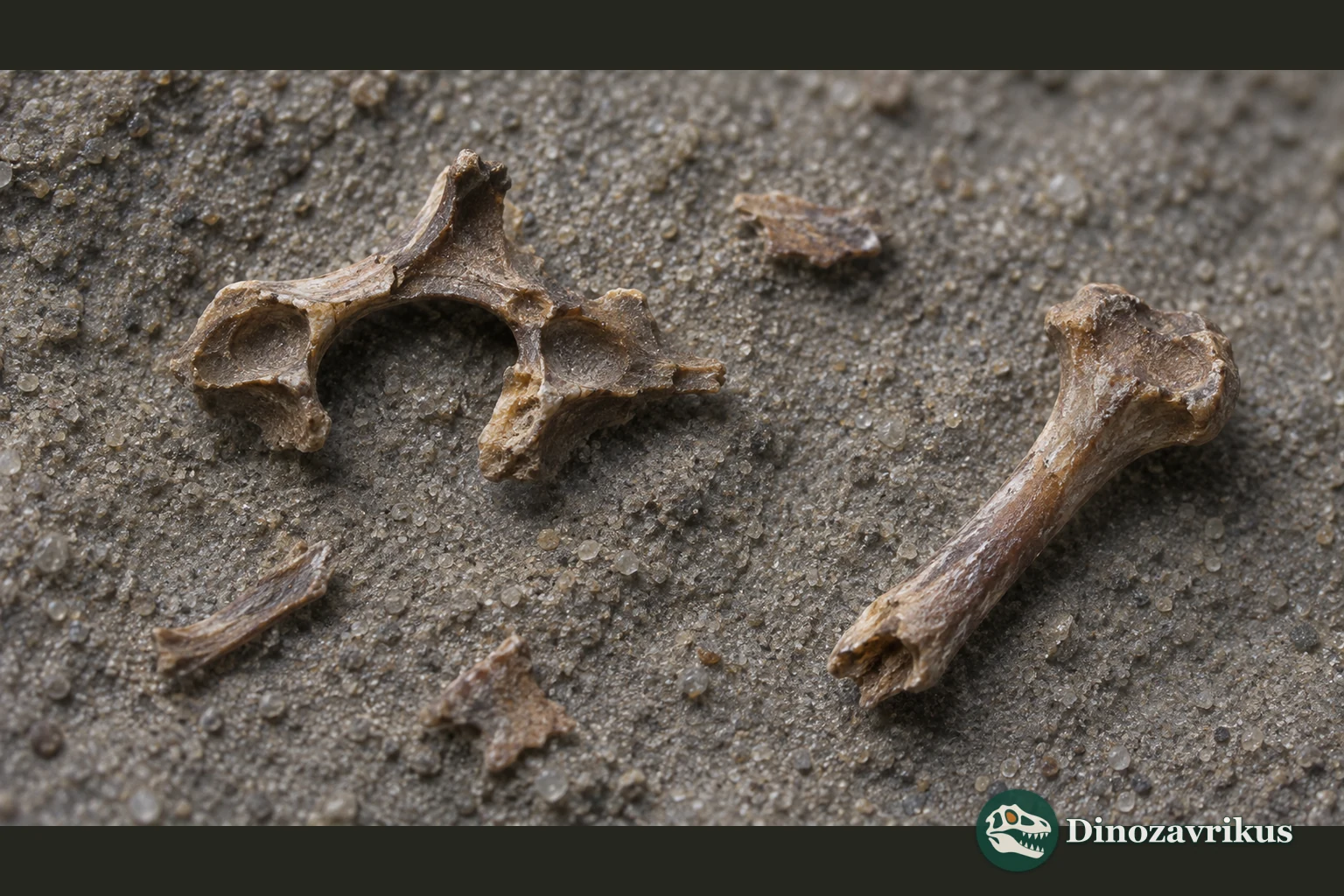
Shestakovo yielded parts of the first neck vertebra and thigh bones. The Berezovsk species differs in features of that vertebra and the tooth-bearing lower jaw bone.
Thin sections record interruptions in bone growth. The shape and internal structure of the bones support a metamorphosing life cycle with terrestrial adults.
Similar bones occur at two sites of very different ages. Those samples alone cannot say where the lineage lived in between.
Shestakovo and Berezovsk Quarry
Alexander Averianov and Andrei Voronkevich based the type species, Kiyatriton leshchinskiyi, on part of an atlas and incomplete femora from the Ilek Formation. The bones came from Shestakovo 1 in the Kemerovo region. The original paper gave an Aptian–Albian age. The 2024 study of the bones assigned the locality to the Aptian.
Telling the species apart
Pavel Skutschas described Kiyatriton krasnolutskii from the Bathonian Itat Formation at Berezovsk Quarry in Krasnoyarsk Krai. Some of the material had previously been called “Berezovsk salamander B”. The Jurassic species has more sharply defined ridges toward the front of the atlas and a relatively higher wall along the tooth row of the dentary.
Bone and way of life
The femora of both species have a prominent muscle attachment and a deep depression underneath. Their thick outer bone preserves recurring growth marks. Comparisons with small living salamanders that undergo metamorphosis led to the idea of a terrestrial adult stage. The much younger Palaeoproteus also preserves articulated skeletons, which provide information about the proportions of that salamander.
Frequently asked questions
Where was the type species found?
At Shestakovo 1 in the Kemerovo region of Russia, in Early Cretaceous rocks of the Ilek Formation.
Which species is older?
Kiyatriton krasnolutskii occurs in the Bathonian, a stage of the Middle Jurassic.
What is the atlas?
It is the first neck vertebra. Its shape and nerve openings are useful for comparing salamanders.
How did researchers infer a terrestrial adult stage?
They compared the shape and internal structure of thigh bones with those of living salamanders that go through metamorphosis.