

Krabisuchus siamogallicus was a small crocodilian from the Krabi Basin in southern Thailand. Its skulls and jaws preserve different shapes along the tooth rows. Cone-shaped teeth occur towards the front and lower, rounded crowns towards the rear. Other details help compare Krabisuchus with early crocodilians from elsewhere in Asia.
Quick facts
| Species | Krabisuchus siamogallicus |
|---|---|
| Group | Crocodylia, likely an orientalosuchine |
| Age in original description | Late Eocene |
| Locality | Krabi Basin, southern Thailand |
| Holotype | Kr-C-012, skull and mandibular rami |
| Estimated length | Probably under 2 m |
What can the fossils tell us?
Kr-C-012 shows how the tooth rows met. Other fossils help with comparisons where the holotype is flattened.
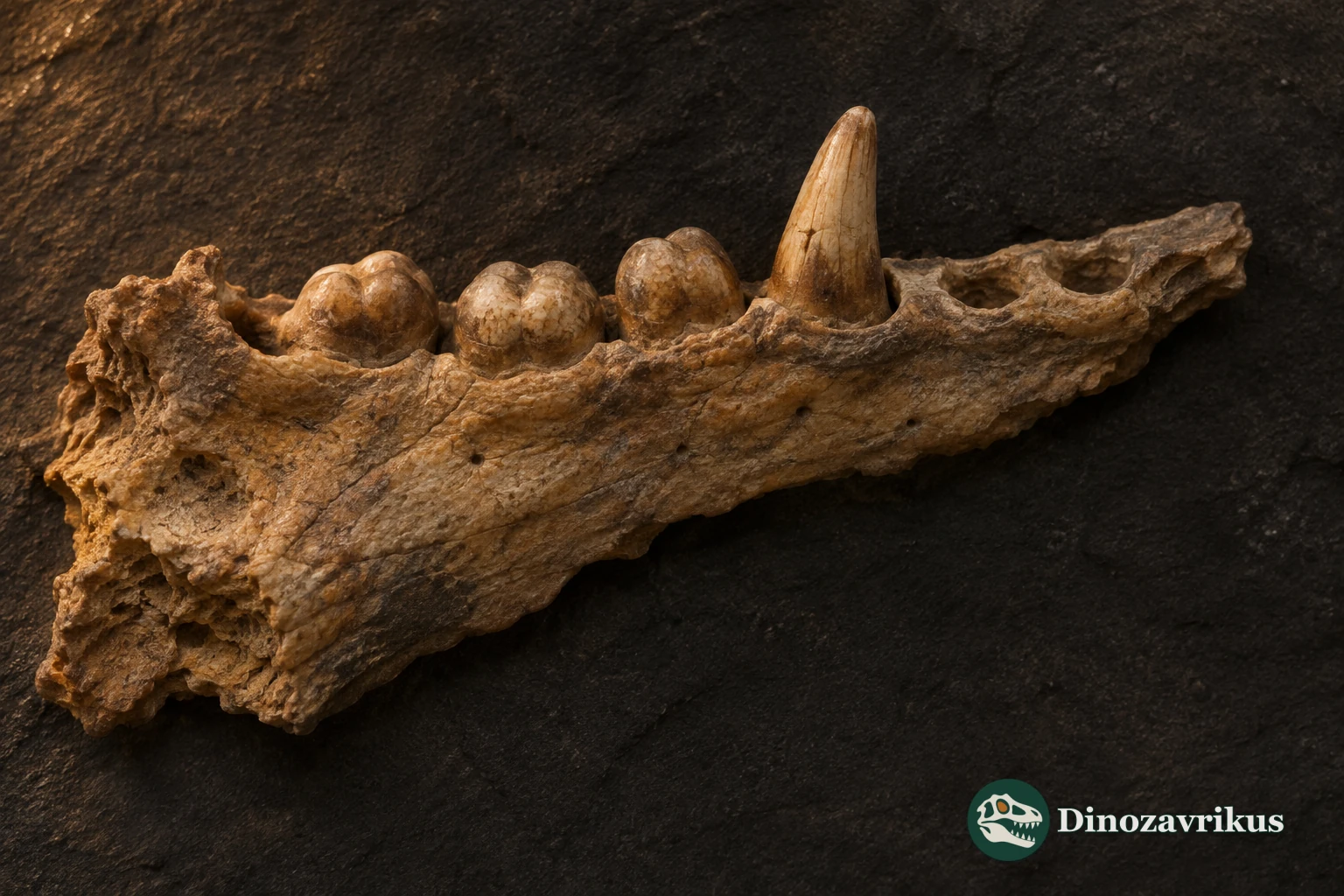
The row includes conical teeth and rounded posterior crowns. These forms may have had different functions, though the exact diet remains uncertain.
The beds lie within fluvial and lake deposits. The sediments help reconstruct the setting in which the remains accumulated.
The lignite finds from Krabi
Jeremy Martin and Komsorn Lauprasert described Krabisuchus in 2010. Its genus name refers to Krabi Province. The species name honours the Thai and French collaboration that collected and studied the fossils.
The holotype, Kr-C-012, consists of a skull with the two lower jaw branches. Other individuals preserve parts of the skull, jaws and skeleton. The authors considered Krabisuchus a small crocodilian that probably did not exceed two metres in length.
How the teeth change towards the back of the jaw
Some cone-shaped crowns have vertical ridges. The posterior crowns are lower and more rounded. A specimen numbered Kr-C-028 shows two teeth of this shape erupting. Such teeth could have helped crush food, although that does not identify the prey.
The diagnosis also used skull bones. One opening in the quadrate lies closer to the skull midline than it does in many other crocodilians. Later researchers compared this and other features across extinct East Asian taxa.
A basin in southern Thailand and a wider Asian group
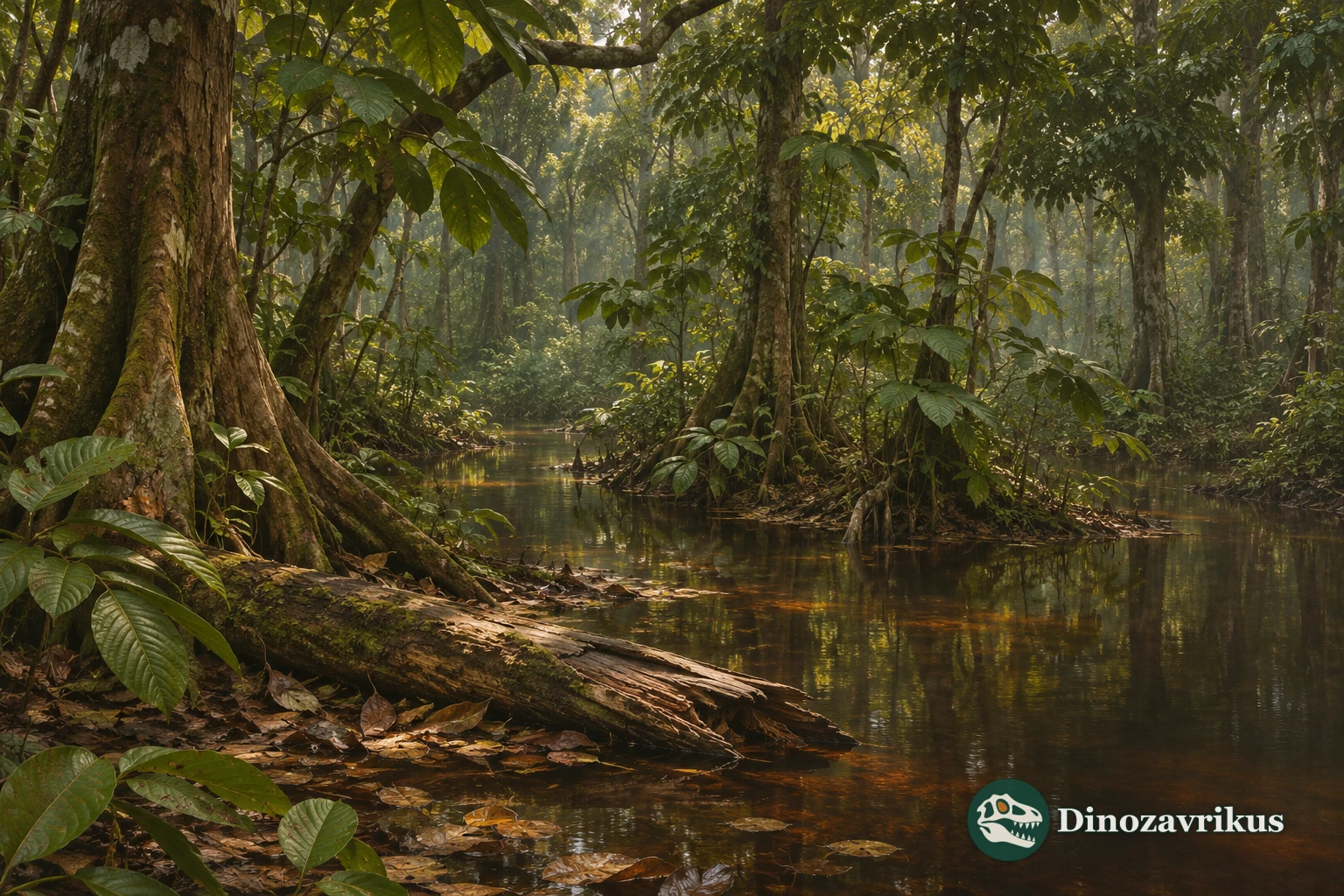
The Krabi lignite lies among fluvial and lake sediments. The original description assigned the fossil-bearing beds to the late Eocene, based on research into the age of the basin. The lignite records the accumulation of plant material in a wet lowland.
Krabisuchus was first considered an early alligatorine. A 2019 study grouped it with Eoalligator and other Asian crocodilians in Orientalosuchina. A 2025 analysis recovered the group among early alligatoroids, with weak support for its exact position.
Frequently asked questions
Where was Krabisuchus found?
In lignite deposits of the Krabi Basin in southern Thailand.
What belongs to the holotype?
A skull and its associated lower jaw branches, catalogued as Kr-C-012.
What is distinctive about the rear teeth?
The crowns are low and rounded. They may have crushed food, but the exact diet is unknown.
How large was Krabisuchus?
The original description estimated that it probably stayed under two metres long.