

Kuhnemys was an Asian softshell turtle. The Chinese type species is known from an incomplete skeleton from Maortu. More complete Mongolian finds reveal how the shells differed between species, and a younger fossil extends the genus into the Paleocene under the current classification.
Quick facts
| Group | Turtles, softshell turtles (Pan-Trionychidae) |
|---|---|
| Age | Late Cretaceous and Paleocene |
| Region | Asia (China, Mongolia and Kazakhstan) |
| Type species | Kuhnemys maortuensis |
| Holotype | IVPP V2864, partial skeleton and shell |
| Scientific name | Kuhnemys |
| Diet | No direct evidence |
What can the fossils tell us?
A later examination recognised seven midline bones in the Maortu specimen. The earlier description had counted eight.
Kuhnemys was named before Gobiapalone. When the genera are treated as one, the earlier name has priority.
A largely complete juvenile shell from the Naranbulak Formation defines a separate species and documents the genus in the Late Paleocene.
The skeleton from Maortu
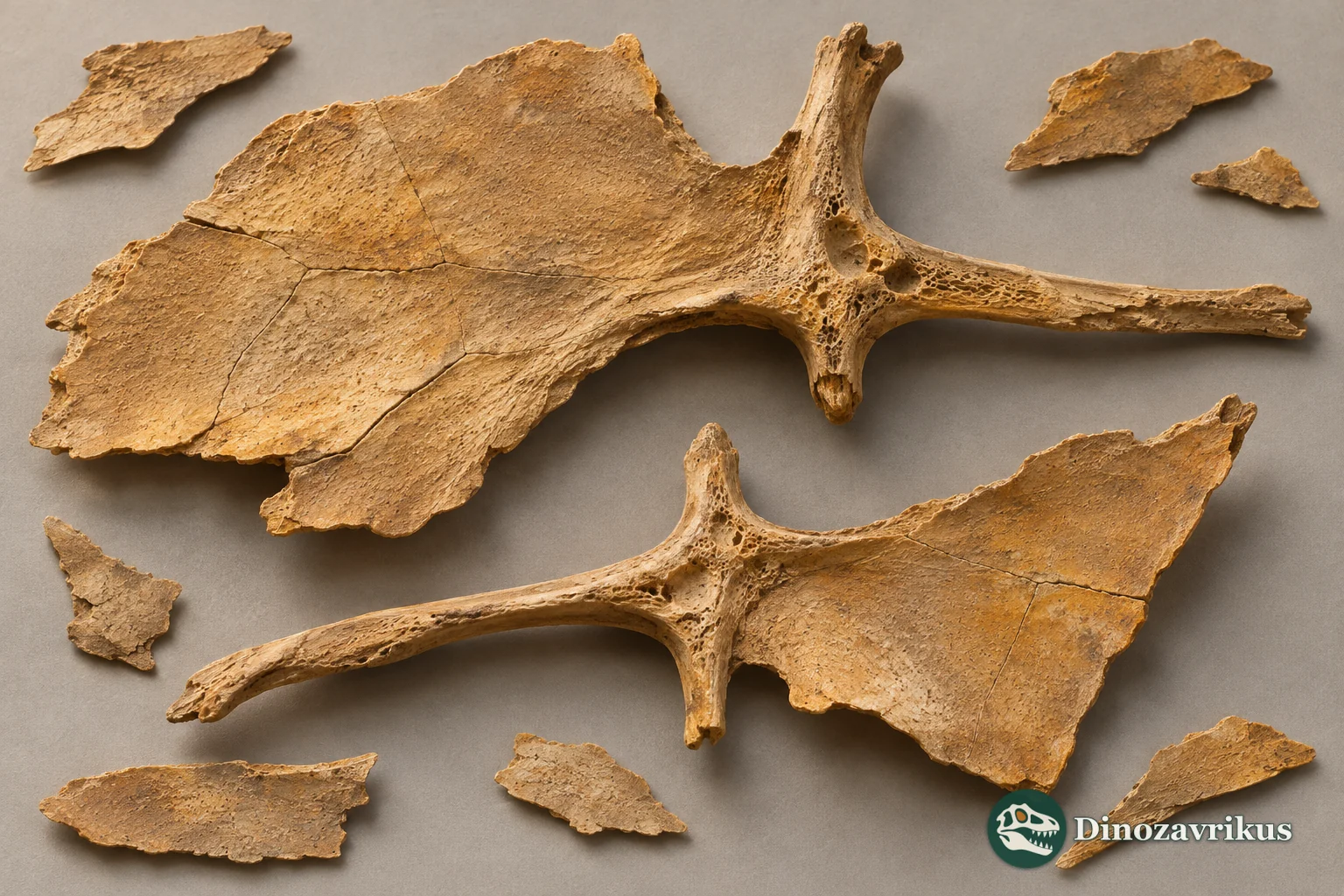
IVPP V2864, the type of K. maortuensis, preserves parts of the shell and girdles, two neck vertebrae and the right hind foot. The species was described in 1965 and became the type of Kuhnemys in 1999. The locality is attributed to the Ulansuhai Formation, whose dating was reassessed using the age of underlying basalts. On that basis, the fossils are generally placed in the Turonian.
What distinguishes the shell
The last pair of costals is small or absent. The two large paired components on each side of the lower shell remain unfused. Examination of the type specimen found seven midline bones and contact between the last two costal pairs at the midline. The Mongolian species K. orlovi is known from more nearly complete skeletons, including skulls. The Baynshire Formation also preserves a turtle of a different lineage, Lindholmemys.
From Gobiapalone to Kuhnemys
Several Mongolian species were named or assigned to Gobiapalone in work published in 2014 and 2015. A 2017 review placed them with the type species of Kuhnemys, which has priority. The group in that review includes K. palaeocenica, based on a juvenile skeleton with an almost complete shell from the late Paleocene Naranbulak Formation.
Frequently asked questions
What does the type skeleton preserve?
Parts of the shell and girdles, two neck vertebrae and a right hind foot.
How many midline bones were identified?
In the type shell, later examination found seven.
Why do some sources use Gobiapalone?
The name was used for Mongolian species that a later review placed in Kuhnemys.
Which species is known from the Paleocene?
Kuhnemys palaeocenica from the Naranbulak Formation of Mongolia.