

Lindholmemys was a Late Cretaceous turtle from what is now central Uzbekistan. A combination of scute boundaries on the upper and lower shell helps distinguish it from other turtles found across Asia. An isolated skull from the same fossil site once seemed to add a second line of evidence, until a closer look changed its identification.
Quick facts
| Group | Turtles, Lindholmemydidae |
|---|---|
| Age | Late Cretaceous, late Turonian |
| Region | Asia: Uzbekistan, Central Kyzylkum |
| Type species | Lindholmemys elegans |
| Holotype | CCMGE 34/12898, shell remains |
| Scientific name | Lindholmemys |
| Diet | No direct evidence |
What can the fossils tell us?
The shell remains catalogued as CCMGE 34/12898 anchor the name of the type species. Isolated plates supply additional points of comparison.
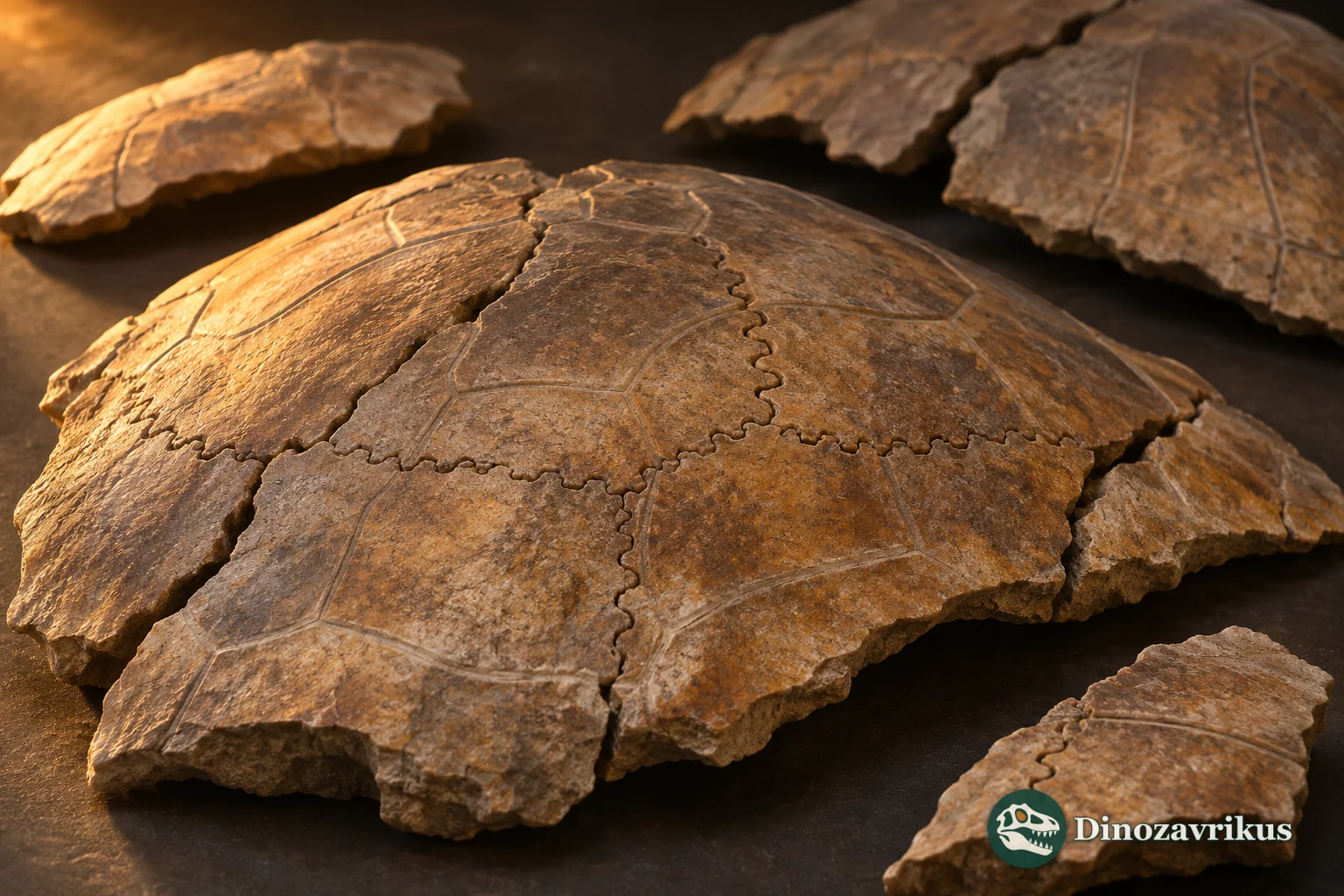
Broad second and third vertebral scutes are useful in combination with the narrow scutes around the bridge. Their outlines are visible as grooves on the fossil bone.
Reanalysis identified the skull ZISP PH 1/17 as an adocid. Its presence at Dzharakuduk supplies no evidence for the head shape of Lindholmemys.
The type species in Uzbekistan
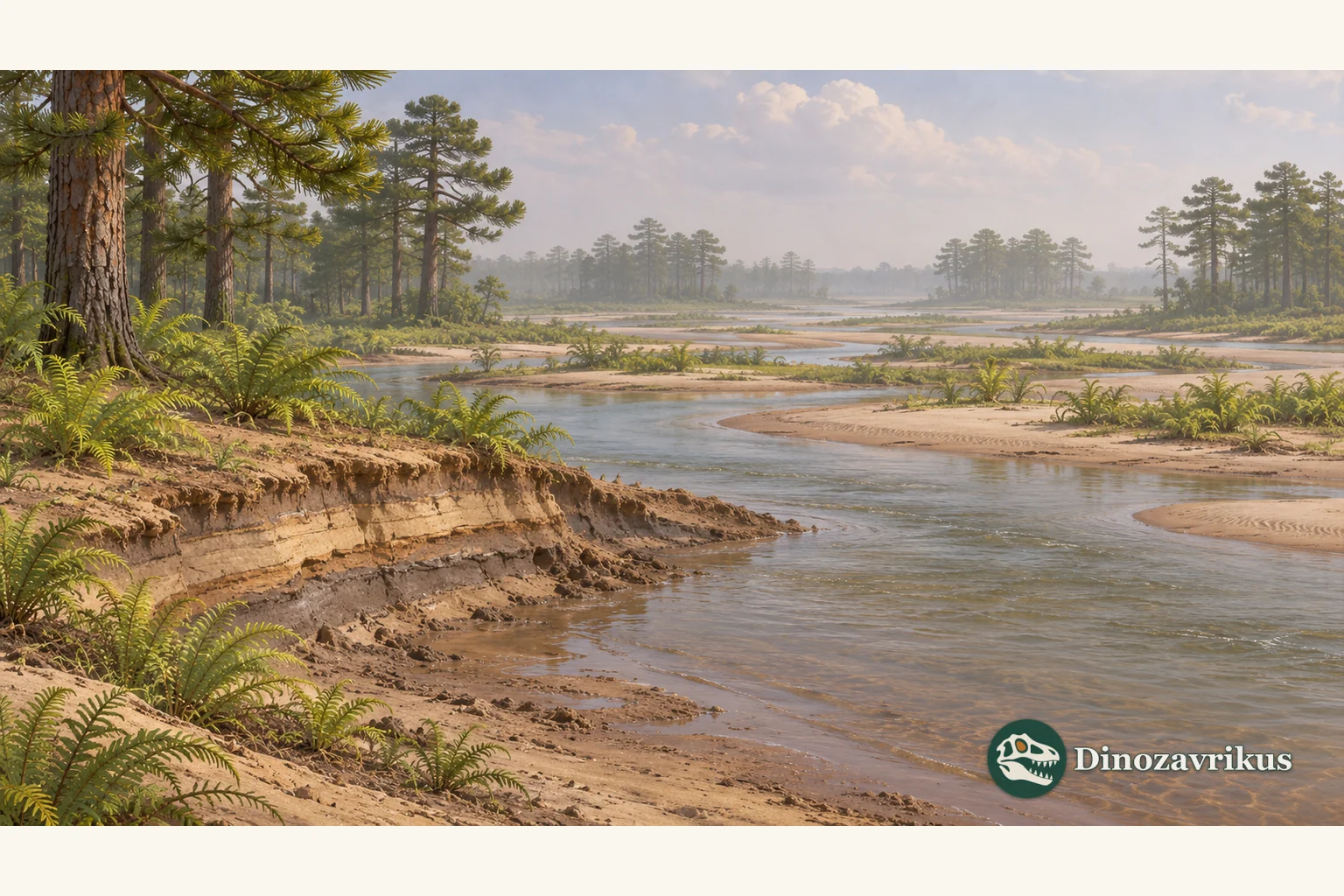
Anatoly Riabinin named Lindholmemys elegans in 1935. Its type material comes from the Bissekty Formation at Dzharakuduk in the Central Kyzylkum, a site dated to the late Turonian. Anatomical comparisons have drawn on the type specimen and on isolated shell plates held by the Zoological Institute of the Russian Academy of Sciences.
What the shell records
Scute grooves may cross the sutures between the bones beneath them. In L. elegans, the second and third vertebral scutes were relatively wide. Narrow scutes around the bridge largely occupied the plastron, the lower part of the shell. The combination gives researchers more to work with when only part of the shell is preserved.
Other lindholmemydids arranged the scutes differently. In Mongolemys, comparisons likewise rely on the pattern along the bridge, where the carapace joins the plastron.
Two fossils whose names changed
Igor Danilov and James Parham reassessed an isolated skull from the type locality and found it shared distinctive features with adocids. They could place the skull in that family while leaving its species unresolved. Skull characters from this fossil therefore cannot be used to establish the relationships of Lindholmemys.
A partial Mongolian shell was once referred to Lindholmemys martinsoni. A later comparison used the combination Hongilemys martinsoni. The older name helps track the specimen through the literature, while the type species of Lindholmemys remains anchored in Uzbekistan.
Frequently asked questions
Where is the type locality?
Dzharakuduk lies in the Central Kyzylkum of modern Uzbekistan.
Which part of the Cretaceous did the turtle live in?
The type locality lies in late Turonian beds of the Bissekty Formation, within the Late Cretaceous.
How can a scute be recognised on fossil bone?
A groove can mark where the edge of a horny scute once touched the shell. Grooves and bone sutures may follow different paths.
What did Lindholmemys eat?
The known shell material does not tell us what it ate. The skull once used to describe its head belongs to a different family.