

Mongolemys was a Late Cretaceous turtle from Mongolia. The Gobi Desert has yielded hatchlings, juveniles and adults. Some specimens preserve complete shells, while fragments from others provided thin sections that researchers could use to compare bone tissue across growth stages.
Quick facts
| Group | Turtles, lindholmemydids |
|---|---|
| Age | Late Cretaceous, Nemegt Formation |
| Region | Asia: Mongolia |
| Type species | Mongolemys elegans |
| Holotype | ZIN RN T/M-46.1, complete shell |
| Scientific name | Mongolemys |
| Diet | No direct evidence |
What can the fossils tell us?
The type shell is about 22 cm long. It preserves both the upper and lower outlines for comparison with later finds.
This very young turtle preserves the carapace and plastron together. Part of the rear rim and the right front bone of the plastron are missing.
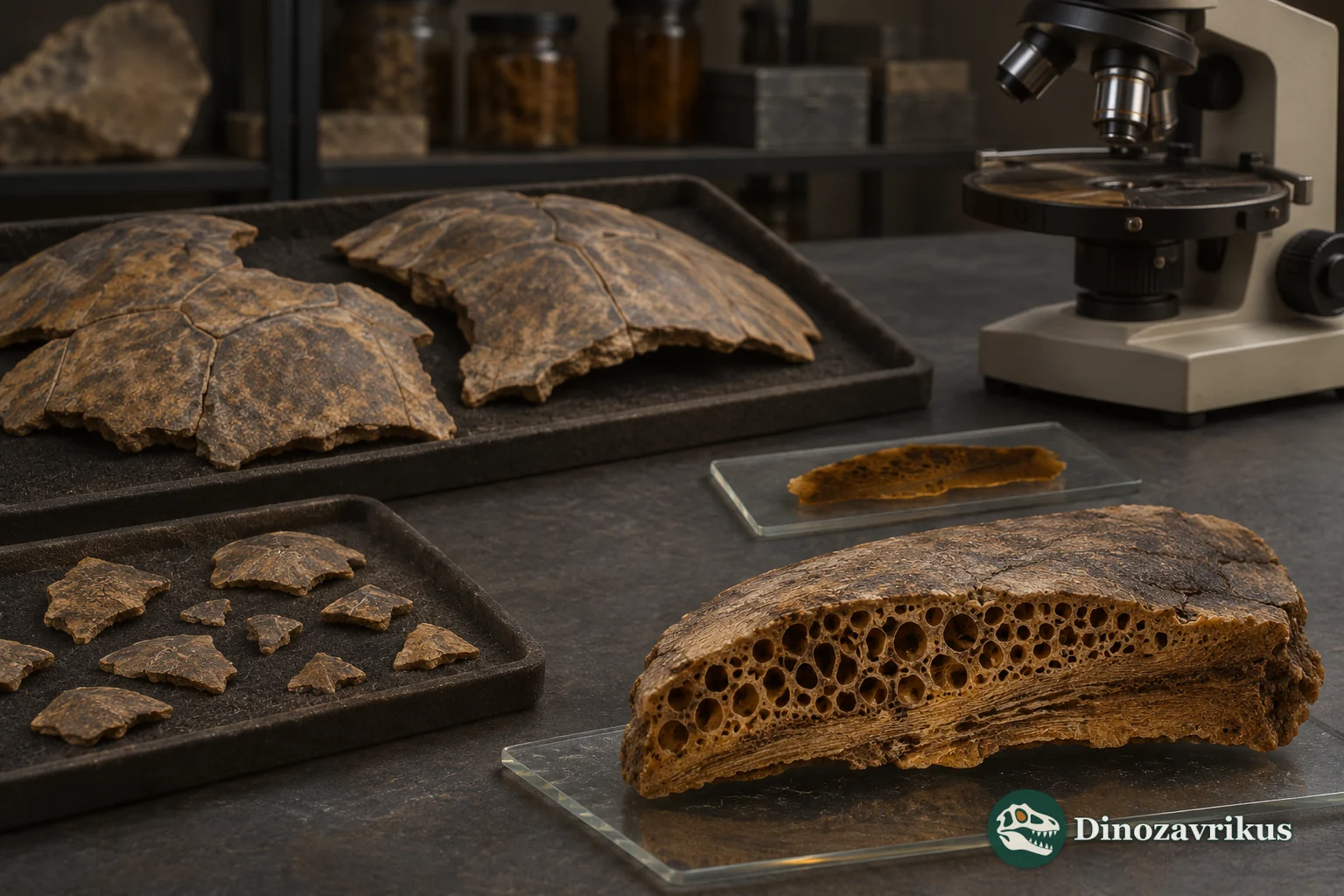
Sections reveal two dense layers with spongy bone between them. Researchers compared these tissues across different growth stages.
Shells from the Nemegt Formation
Lev Khosatzky and Marian Młynarski described Mongolemys elegans in 1971. The holotype ZIN RN T/M-46.1 preserves a complete shell about 22 cm long. The carapace widens towards the rear with a smooth rim and no prominent keel. The plastron has a broadly cross-shaped outline.
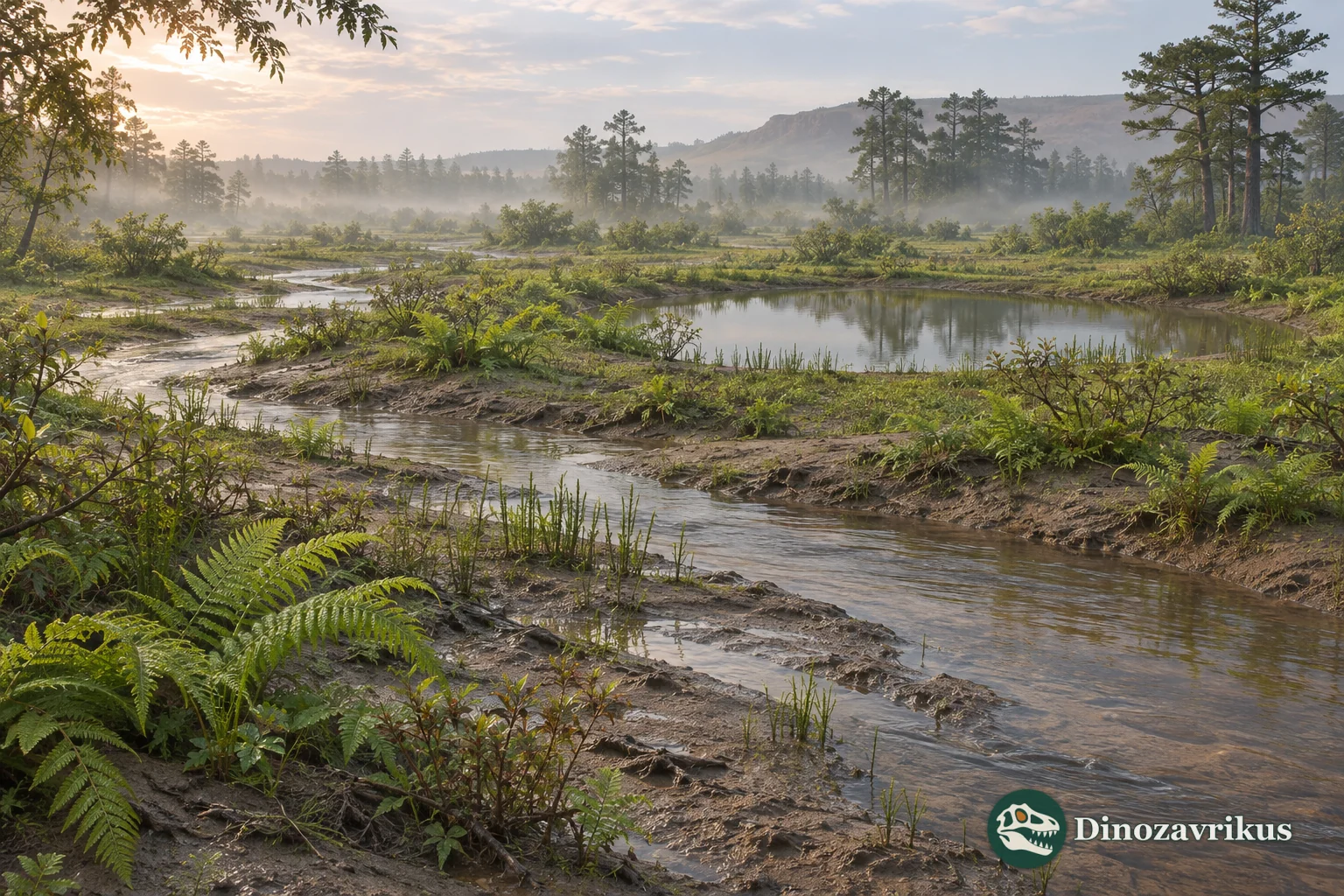
Fossils occur in the Late Cretaceous Nemegt Formation. The study describing the new series gave a possible age range of late Campanian to early Maastrichtian. Joint expeditions by the American Museum of Natural History and the Mongolian Academy of Sciences recovered several growth stages at Bugin Tsav in southern Mongolia.
What the bone sections show
The very young individual IGM 90/30 preserves its upper and lower shell together. Other specimens extend the series to larger turtles. Researchers prepared thin sections from three individuals and compared the dense inner and outer layers with the spongy middle tissue.
Microscopic spaces in the sections once housed bone cells. Some features of the tissue resemble those of living aquatic turtles. The sections record the structure of the shell during growth and leave the exact ages and diet unresolved.
Its place among Gobi turtles
A 2013 analysis placed Mongolemys on the testudinoid stem. That position follows from the available skeletal characters and may change as more are documented. Other Late Cretaceous turtles in Asia included Shachemys, which had a different connection between the upper and lower shell.
Frequently asked questions
Where has Mongolemys been found?
It occurs in the Late Cretaceous Nemegt Formation of Mongolia. The specimens representing several growth stages came from Bugin Tsav.
How big is the type shell?
The holotype shell measures about 22 cm in length. Other individuals include much smaller, younger turtles.
What can be seen in the thin sections?
Two dense layers enclose a spongy middle. Researchers compared how these tissues developed across the sampled growth stages.
Was Mongolemys aquatic?
The freshwater deposits and bone comparisons are consistent with aquatic habits. The amount of time it spent on land remains unknown.