

Kunmingella is a small Cambrian bradoriid. Its two valves normally covered most of the body. Some fossils from Yunnan also show the limbs, and a few retain eggs below the shield.
Quick facts
| Group | Bradoriida |
|---|---|
| Age | Early Cambrian |
| Species examined | Kunmingella douvillei |
| Localities | Chengjiang and the Haikou area, Yunnan |
| Adult length | 3.5–6 mm in the 2010 sample |
| Fossil evidence | Valves, appendages and eggs |
What can the fossils tell us?
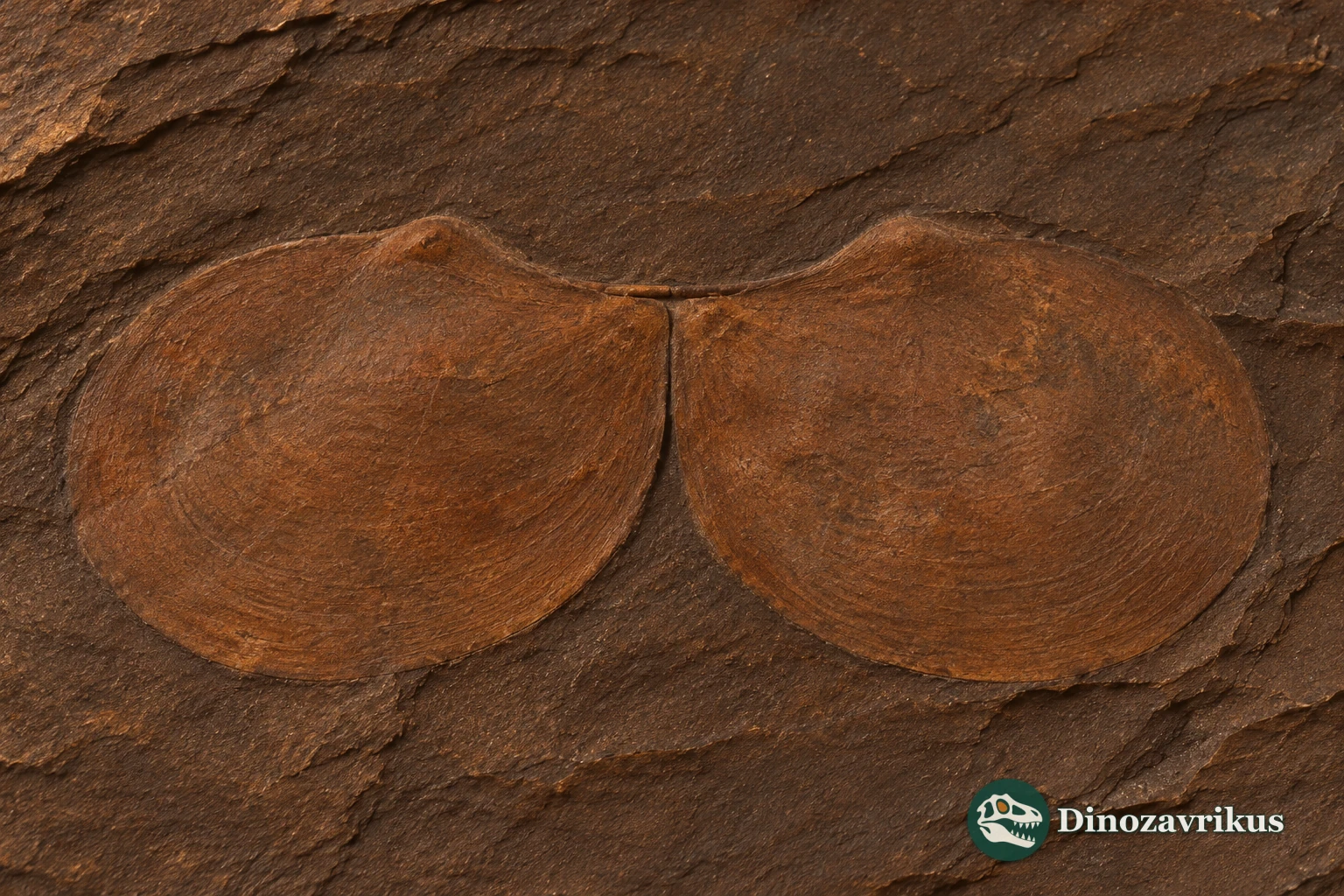
When both lie flat, their outlines are readily compared. Specimens with soft parts are needed to see the organisation of the enclosed body.
A 2019 revision identified twelve pairs. Clear preservation is required to see the small inner projections and fine bristles.
The fossils establish where the eggs were carried. The length of the brooding period is unknown.
A two-valved shield in Yunnan
Henri Mansuy described the species in 1912. Early Cambrian material from Chengjiang and the Haikou district in Yunnan has yielded particularly detailed specimens. Adults examined in one 2010 study measured 3.5–6 mm in length.
The valves joined along the back. Some fossils preserve them splayed open, with two matching outlines on the same surface. Other bradoriids, such as Liangshanella, also have a pair of valves. Much of the animal's anatomy is concealed beneath the shell in fossils with closed valves.
Counting the appendages
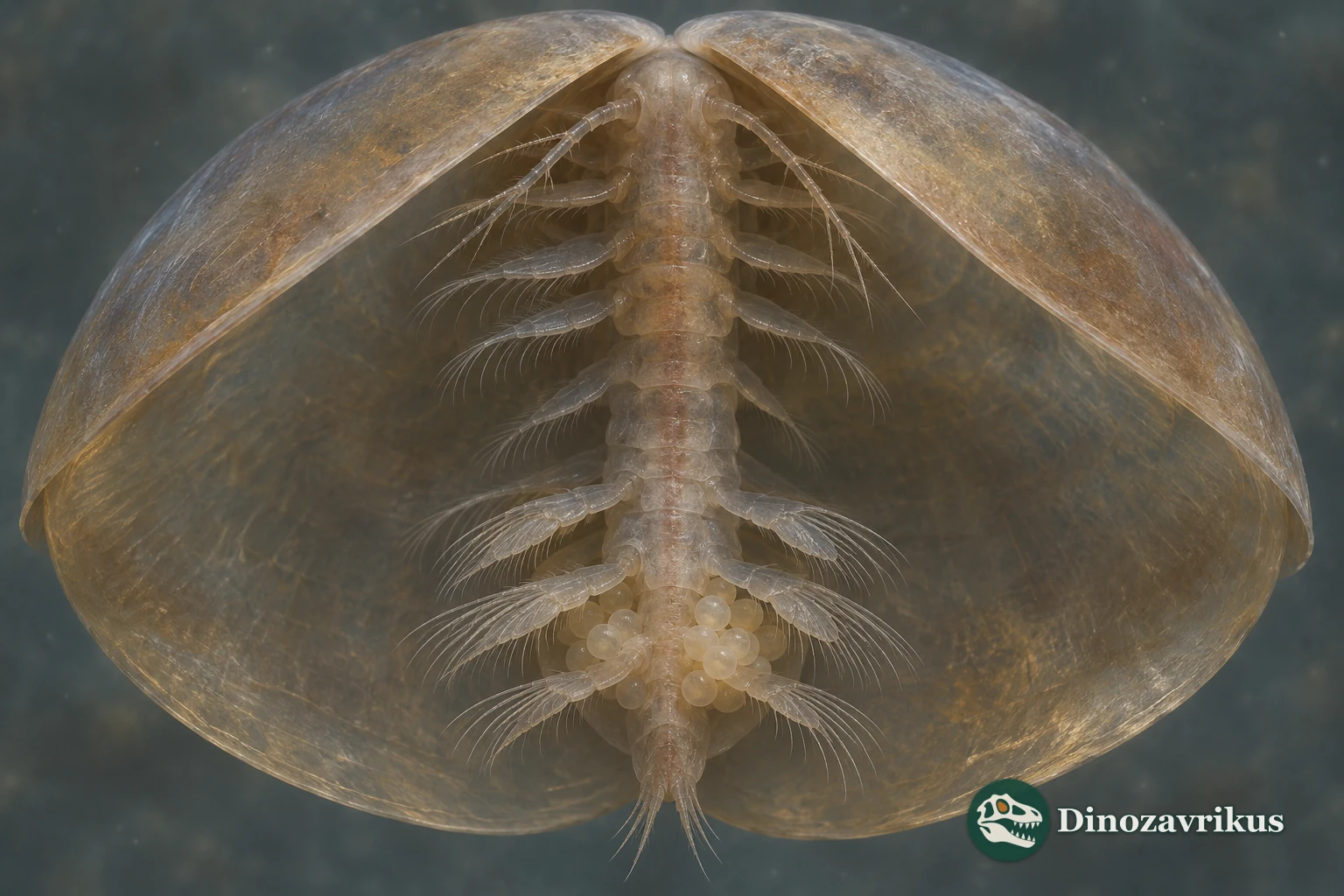
Good specimens preserve small lateral eyes and the first jointed appendages near the front of the shield. Behind them, several limbs divide into an inner and an outer branch. Fine setae are visible on some outer branches. The posterior end of the body extended past the shell margin.
A 2019 comparison of specimens including YKLP 16235 and YKLP 16233 recognised twelve pairs of appendages. Four pairs behind the antennules have two rows of small inward projections, followed by five pairs with a single row. The last appendages are different again. Better-preserved specimens enabled the authors to revise the earlier limb count.
Brooding beneath the shield
A study by Yanhong Duan and colleagues found clusters of eggs associated with the three rearmost pairs of biramous limbs. They estimated that a brood held roughly 50–80 eggs with diameters of about 150–180 micrometres. The eggs fit beneath the valves close to the body.
Their position supports a form of brood care. The fossils show where the eggs were held at burial and give an estimate of their number. The duration of this association cannot be judged from that snapshot.
A test of bradoriid relationships
The 2019 study compared Kunmingella with two other bradoriids and found markedly different patterns of limb differentiation. One result placed the sampled bradoriids outside the crown group that contains all living arthropods. That placement is a result of the chosen characters and analysis, and depends on how fossils preserve the smaller anatomical features.
Frequently asked questions
Where do the most informative Kunmingella fossils come from?
They come from the Early Cambrian of Yunnan, including Chengjiang and the Haikou area.
How large was Kunmingella?
Adult specimens reported by a 2010 study measured 3.5–6 mm in length.
Where were the eggs carried?
They occur below the valves in clusters associated with three posterior pairs of biramous limbs.
How many pairs of appendages were identified in 2019?
The revised description identified twelve pairs by comparing the positions and morphology of several finely preserved impressions.