

Liangshanella was a tiny Cambrian arthropod with a carapace made of two thin valves joined along the back. The Burgess Shale of the Canadian Rockies preserves thousands of them, including valves still joined at the hinge.
Quick facts
| Group | Bradoriida, Svealutidae |
|---|---|
| Period | Cambrian |
| Genus named | Huo, 1956 |
| Type species | Liangshanella liangshanensis |
| Canadian holotype | USNM 272083, Walcott Quarry |
| Canadian carapace length | 0.66–4.25 mm |
What can the fossils tell us?
Their straight dorsal edge preserves the line of attachment. The carapace gives a measurable size, while its soft appendages remain hidden or unpreserved.
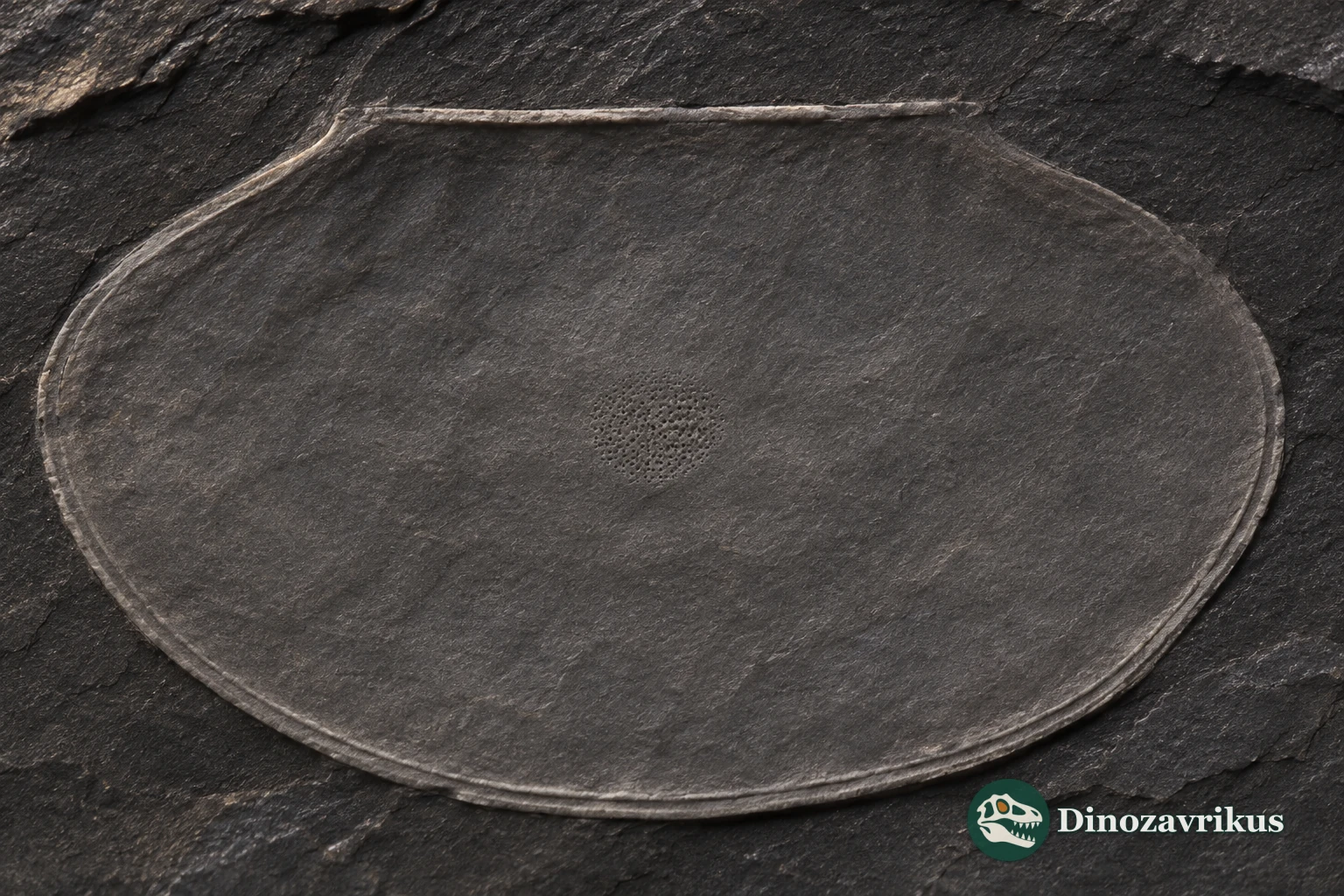
This feature is interpreted as a muscle attachment scar. It can be compared even when the two valves are separated.
Remains assigned to Liangshanella occur inside the worm Ottoia. That evidence shows what the worm swallowed and leaves Liangshanella's own diet unresolved.
A Chinese genus and a Canadian holotype
Huo described the type species, L. liangshanensis, in 1956 from Lower Cambrian rocks of southern China. David Siveter and Mark Williams named L. burgessensis from the Burgess Shale in 1997. The Canadian holotype USNM 272083 is a carapace about 2 mm long with both valves still joined, from the Walcott Quarry.
The Canadian carapaces measured in the museum account range from 0.66 to 4.25 mm long. Their anterior end is slightly narrower than the rear, and a fine ridge runs around the free edge of each valve. The thin shell can be preserved as an impression or a dark film.
How the valves were joined
A band of cuticle joined the valves along the near-straight dorsal margin. On the inner surface, a small rounded patch of pits is interpreted as a muscle attachment scar. Its position provides a clue to how the valves were held and moved.
The carapace allows comparison with other bradoriids. In Mongolitubulus some specimens preserve a long spine attached to the valve. In the Canadian Liangshanella, a fine marginal ridge and the muscle scar stand out. The soft appendages have to be inferred from other bradoriids.
Abundant fossils and rare gut remains
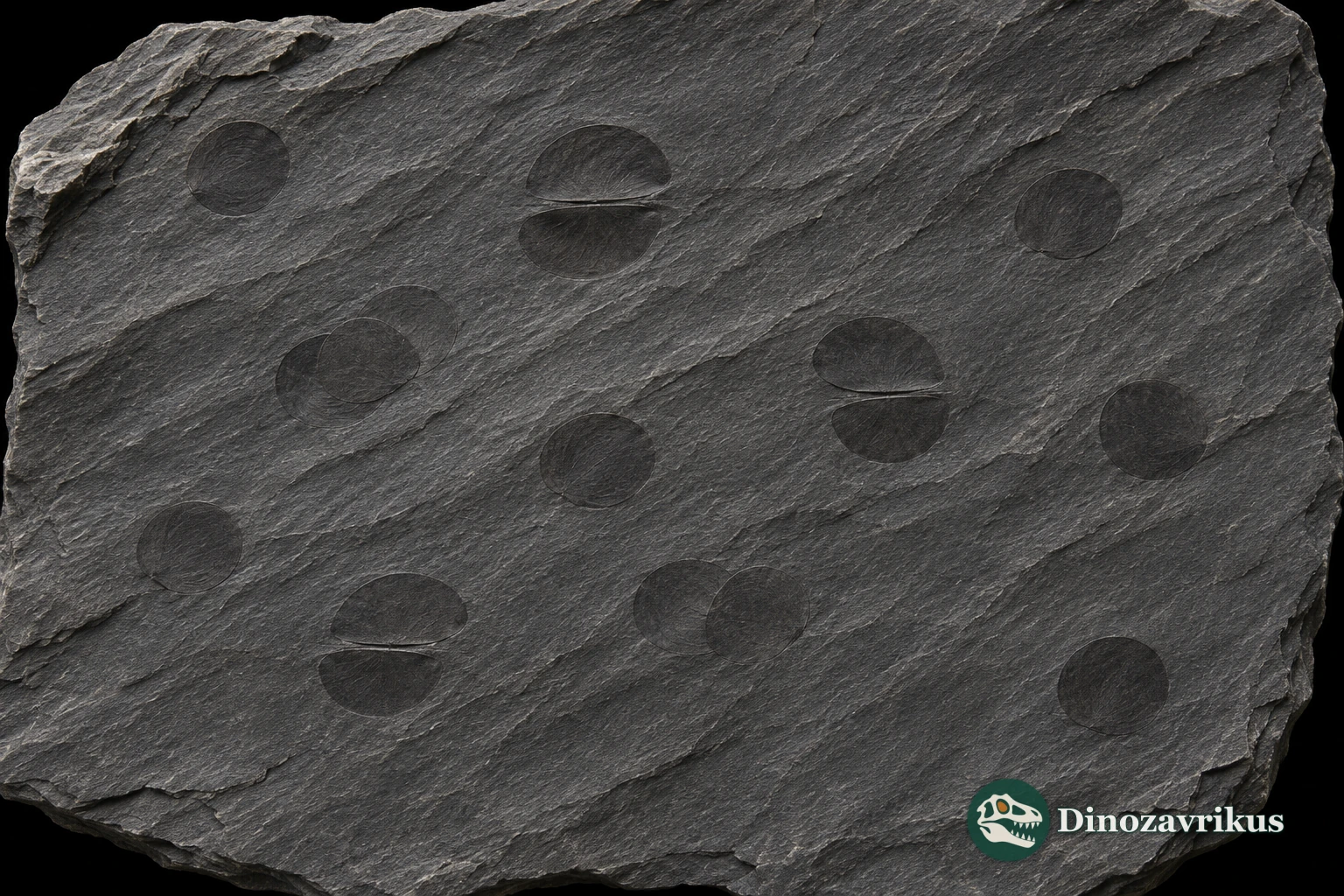
Liangshanella accounts for roughly 12 percent of the specimens in a published Walcott Quarry census. That figure describes the fossil sample, whose composition depends on burial and preservation. Some slabs preserve dozens of detached valves.
A few fossils of L. burgessensis occur in the gut of the worm Ottoia prolifica. The association shows that the worm swallowed the bradoriid. It leaves open whether the worm caught a live animal or took up its remains, and what Liangshanella itself ate.
Frequently asked questions
Where was Liangshanella first described?
The genus was based on Early Cambrian fossils from southern China. The Canadian species was named later from the Burgess Shale.
How large were the Canadian carapaces?
The museum account reports lengths of 0.66 to 4.25 mm. The holotype is about 2 mm long.
What joined the two valves?
A flexible band of cuticle joined them along their straight dorsal edge.
How is it known that Ottoia swallowed Liangshanella?
Remains of its carapace were preserved inside the digestive tract of the fossil worm.