

Kyasuchus saevi was a small crocodyliform from the Early Cretaceous of western Siberia. Its type skull, only about four centimetres long, came from a site near the village of Shestakovo. Bones on the underside preserve details of the palate that help compare early crocodyliforms.
Quick facts
| Species | Kyasuchus saevi |
|---|---|
| Group | Shartegosuchid in the original description |
| Age | Early Cretaceous |
| Locality | Shestakovo 3, Kuzbass, Russia |
| Type specimen | PM TGU 16/I-184 |
| Type skull length | About 4 cm |
What can the fossils tell us?
The fit of the jaws, the shape of the muzzle and some teeth can be studied together. The four-centimetre measurement applies to the skull.
The original description traces the floor of a nasal passage along the underside. Similar structures may have developed independently in different crocodyliform lineages.
The museum reported skulls and skeletal fragments from a 2025 field season. The published number of skulls concerns the mixed assemblage.
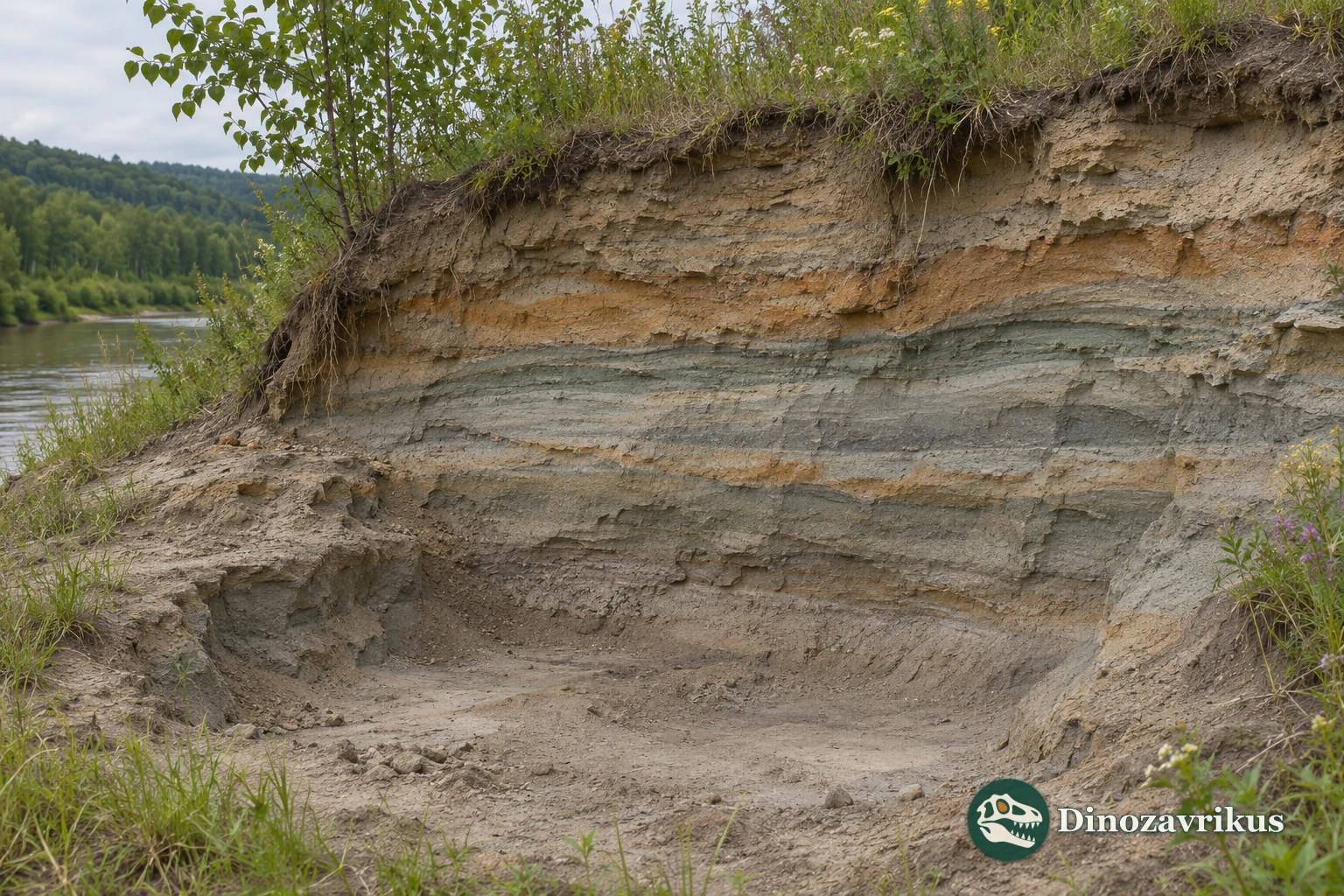
A fossil from the Ilek Formation
The skull and lower jaw were discovered in 1996 at Shestakovo 3 in the Chebulinsky District of Kuzbass. Mikhail Efimov and Sergei Leshchinskiy described the type as PM TGU 16/I-184 in the palaeontological collection of Tomsk State University. The genus refers to the Kiya River. The species honours Vladimir Sayev, who discovered the site.
The fossil came from the Ilek Formation. Papers have used a Barremian to Aptian range for the formation, while a recent study uses Aptian for Shestakovo 3. The original type description gives its age as Early Cretaceous.
What the palate and teeth preserve
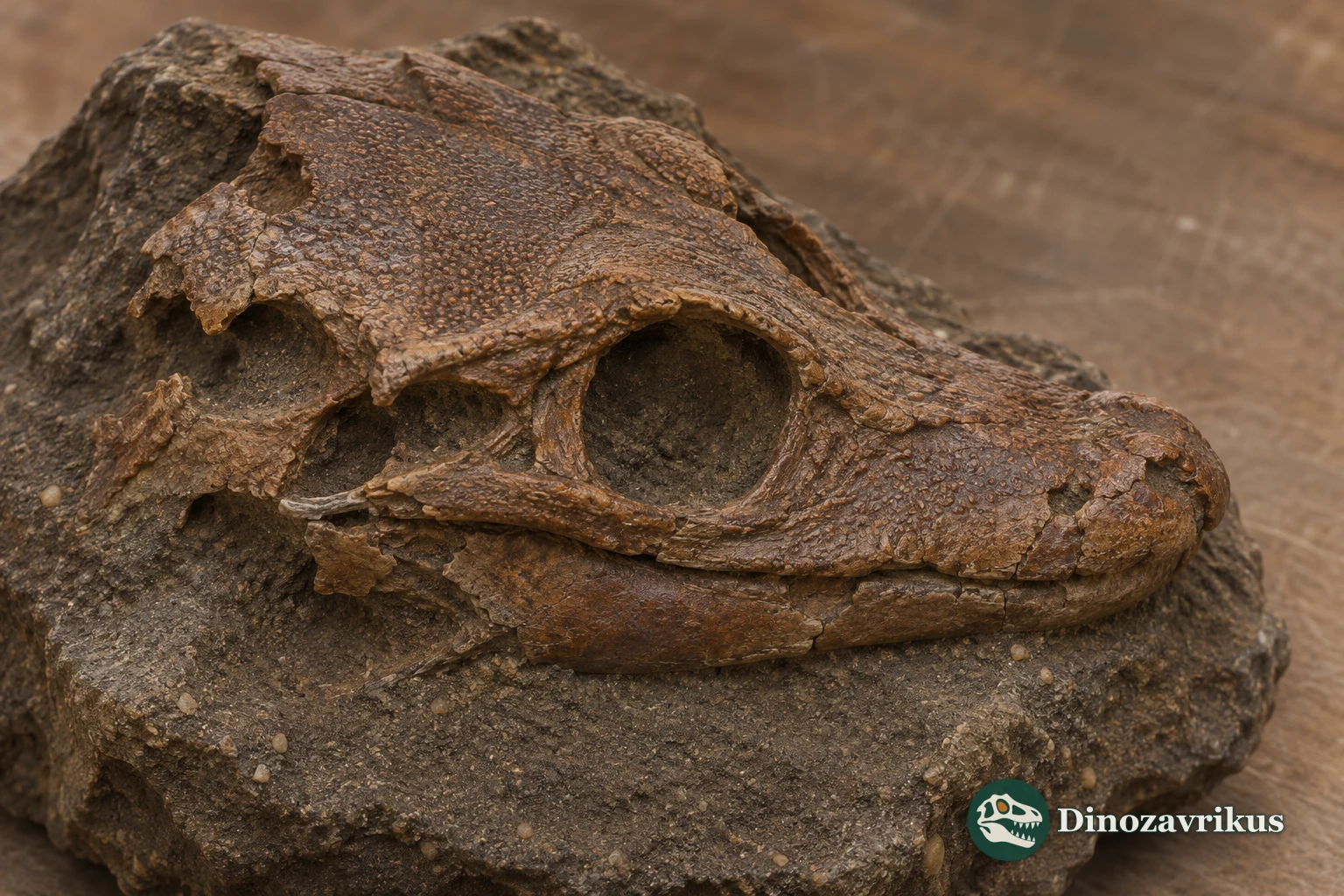
The skull is short-snouted, broad and moderately tall. The roof bones carry conspicuous surface sculpture. The original description recognises four premaxillary teeth, with the third the largest. A notch between the premaxilla and maxilla received an enlarged lower tooth when the jaws closed.
The palatal bones were described as fused along the midline, forming an elongated bony floor for the nasal passage. The species was assigned to Shartegosuchidae. Later CT work on the Mongolian Shartegosuchus showed that palate features resembling those of living crocodilians could have evolved independently. The evidence in Kyasuchus comes from its own type skull.
Crocodyliforms from one fossil site
Another small crocodyliform from Shestakovo 3, Tagarosuchus, was named from a different skull found in 1997. In the 2025 season, the Kuzbass State Museum of Local History and its collaborators found a fossil-bearing lens containing remains attributed to both genera.
The museum reported more than six skulls along with skeletal fragments. That number combines finds of both genera. Specimen-level descriptions would help establish which postcranial remains can be assigned to Kyasuchus.
Frequently asked questions
When did Kyasuchus live?
The animal is Early Cretaceous in age. Recent work treats the fossil beds at Shestakovo 3 as Aptian.
How large was it?
The type skull measures about four centimetres. A reliable total body length has not been published from that skull.
Where does its name come from?
The genus is named for the Kiya River and the species honours Vladimir Sayev, who discovered Shestakovo 3.
How does it differ from Tagarosuchus?
The genera are based on different skulls from the same locality. The palatal bridge and notch for a large lower tooth were described in the Kyasuchus type.