

Labidolemur is an early Cenozoic North American mammal in the family Apatemyidae. Its record ranges from fragmentary lower jaws and teeth to cranial material and an unusually complete skeleton assigned to a later species.
The genus is included in the ancient mammal catalogue. Its fossils make it useful for studying apatemyid anatomy, while the family’s feeding hypotheses and deeper evolutionary relationships remain open to revision.
Quick facts
| Scientific name | Labidolemur Matthew & Granger, 1921 |
|---|---|
| Type species | L. soricoides |
| Group | Mammalia, Apatemyidae |
| Age | Late Paleocene to Early Eocene records |
| Range | Western North America, including Colorado, Montana and Wyoming |
| Main evidence | Lower jaws, teeth, cranial material and postcranial bones |
| Notable specimen | USNM 530221 preserves an unusually complete skeleton of L. kayi |
What can the fossils tell us?
The holotype AMNH 17400 preserves parts of both lower dentaries with an incisor and first molar. It is enough to anchor a name, but not to reconstruct a whole animal.
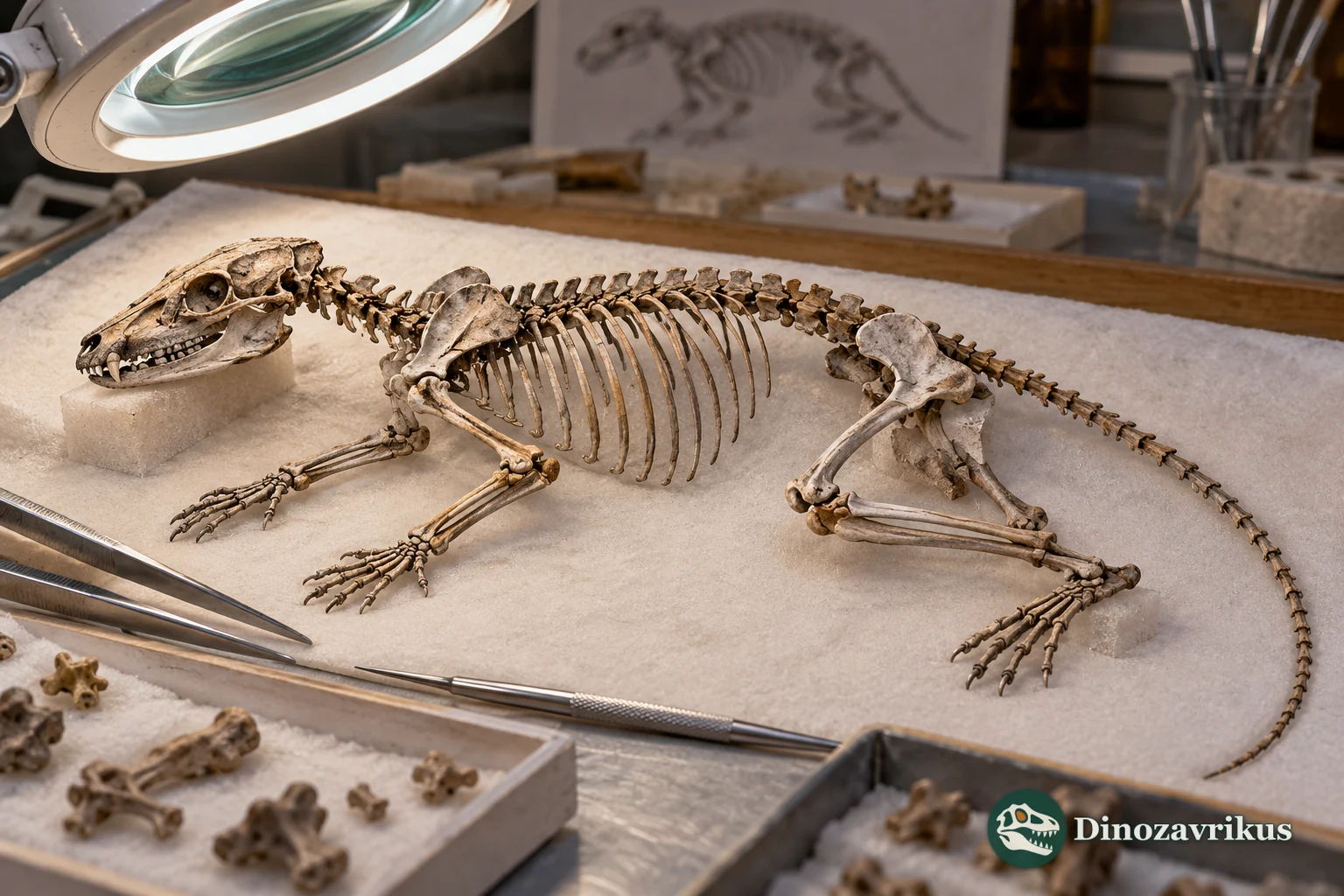
USNM 530221 is an articulated, nearly complete skeleton assigned to Labidolemur kayi from the lower Willwood Formation in Wyoming. This material expands the anatomical record beyond the fragmentary type of L. soricoides.
High-resolution CT work on Labidolemur kayi examined structures around the ear region and pathways associated with nerves and blood vessels. These observations inform anatomical comparisons, not a direct test of behaviour.
Published analyses place apatemyids near major placental mammal branches, but support for some proposed relationships is weak. Labidolemur should not be described as a direct ancestor of rodents or primates.
The name and its type species
Matthew and Granger named Labidolemur soricoides in 1921 from Mason Pocket in Colorado. The holotype, AMNH 17400, consists of associated incomplete left and right lower dentaries preserving an incisor and a first molar. The name is tied to this limited jaw material, not to the better-preserved skeletons assigned to other species later.
Several species have been placed in the genus in different studies. L. kayi, named by Simpson in 1929, was later moved to Apatemys by McKenna and subsequently returned to Labidolemur by later authors. Other names, including L. major and L. serus, were based on material from different formations and ages. Their membership and status have not been treated identically by every author. The related genus Apatemys provides a useful comparison in this changing classification.
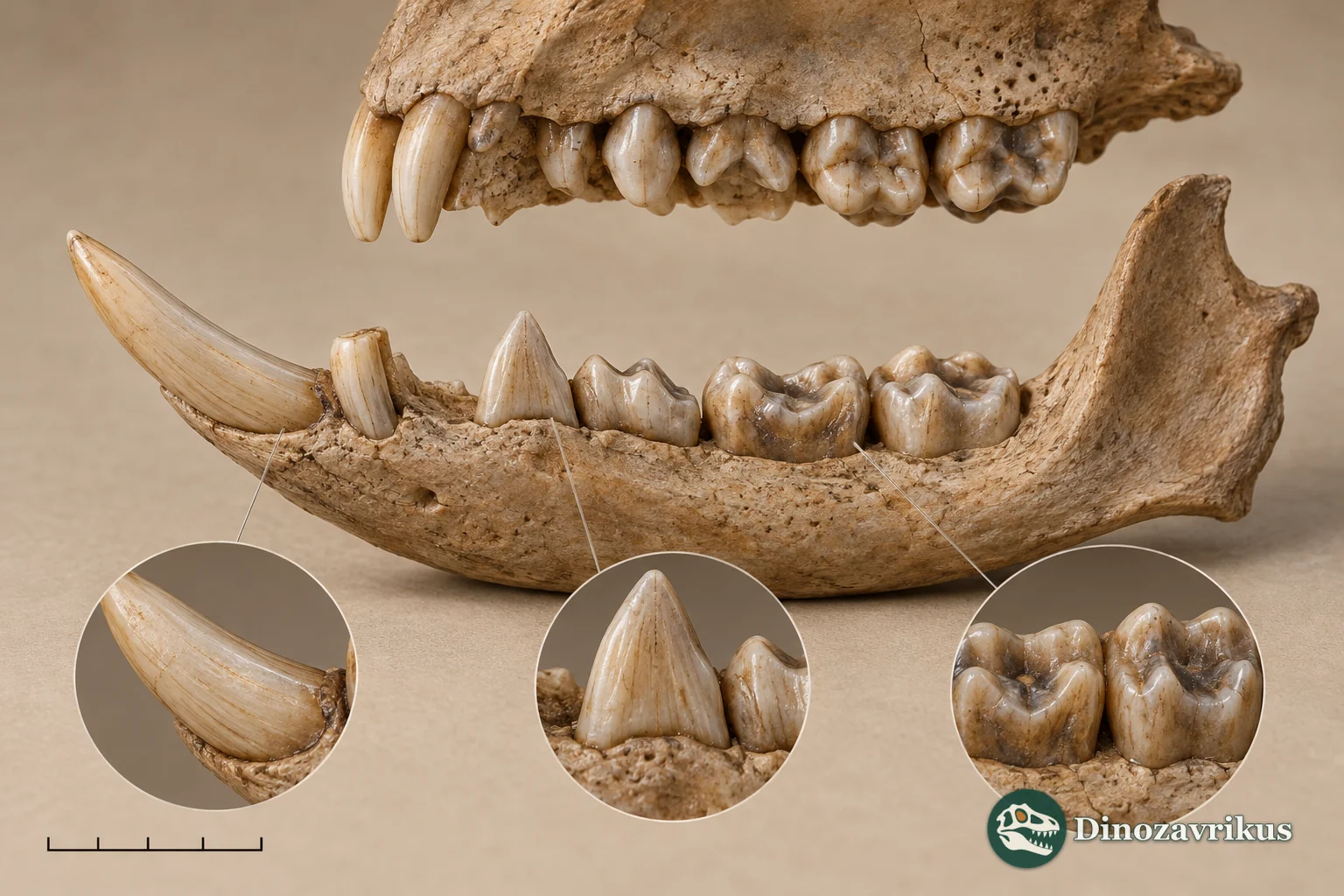
Teeth and a proposed way of feeding
Apatemyids are recognised by a distinctive dental apparatus that includes an enlarged, forward-projecting lower incisor and a large upper incisor. The second premolar can be blade-like, and some postcranial descriptions note elongated fingers. These features have encouraged comparisons with living mammals that extract insects from wood.
The comparison is a functional hypothesis, not direct evidence of a diet. The fossils discussed here do not preserve stomach contents or a feeding trace that proves what Labidolemur ate. An insect-focused way of feeding is plausible from anatomy, but the animal’s actual menu and foraging routine are not known in detail.
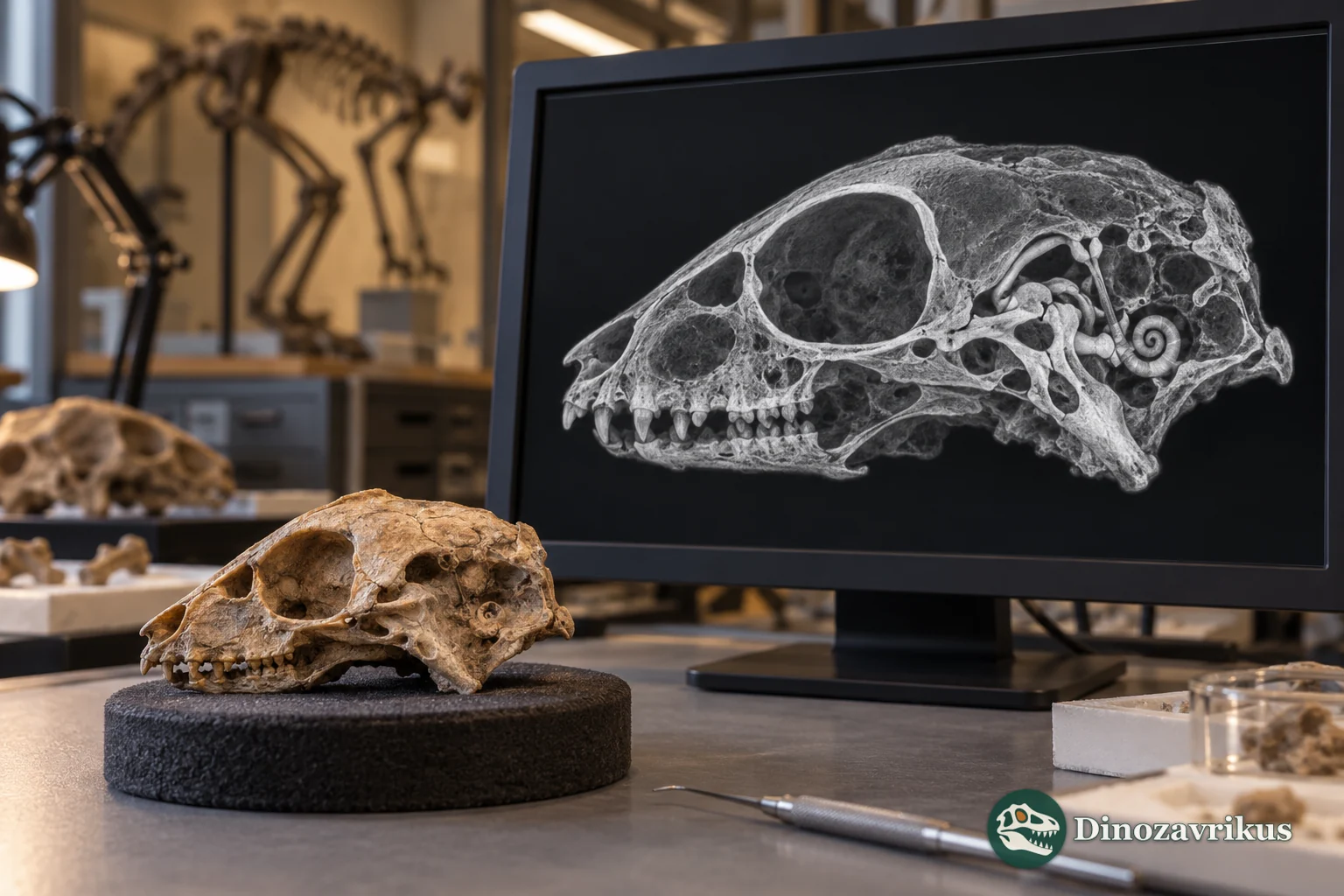
Skeletons and cranial evidence
A specimen assigned to L. kayi, USNM 530221, preserves an articulated and nearly complete skeleton from locality SC-26 in Wyoming’s Clarks Fork Basin. It comes from the lower Willwood Formation and an early Wasatchian interval dated to approximately 54.92–54.70 million years ago. This age belongs to that locality and horizon, not to every species called Labidolemur.
High-resolution CT work on three well-preserved crania assigned to L. kayi described the tympanic roof and pathways related to the internal carotid artery and facial nerve. Such details help compare skull anatomy across fossil mammals. They do not by themselves establish the animal’s habits or a direct evolutionary lineage.
Age, range and relationships
Named material assigned to the genus spans the Late Paleocene and Early Eocene of western North America. The type species comes from Colorado; other described material comes from Montana and Wyoming. Combining these records gives a broad range for the genus, not a single continuous population or a range shared by every species.
Phylogenetic studies have placed apatemyids near major placental groups, but some proposed positions receive weak support and depend on the characters and taxa included. Similarities in teeth or hands do not make Labidolemur a direct ancestor of primates or rodents. Its best-supported contribution is a record of a distinctive mammal family with increasingly informative anatomical material.
Frequently asked questions
When did Labidolemur live?
Named species are reported from Late Paleocene and Early Eocene deposits in western North America. Particular ages apply to particular sites and specimens.
What is the type specimen?
The type species L. soricoides is anchored to AMNH 17400, associated incomplete lower dentaries preserving an incisor and first molar.
Is a complete skeleton known?
A nearly complete articulated skeleton, USNM 530221, is assigned to L. kayi. It is a different species from the type species and comes from an Early Eocene locality in Wyoming.
Was Labidolemur a primate or a rodent ancestor?
No. Apatemyids have been placed near major placental branches in some analyses, but those relationships are uncertain. The fossils do not establish Labidolemur as a direct ancestor of either group.