

Lagurodon was a small fossil arvicolid known most securely from teeth rather than a complete skeleton. Its type species L. arankae was described from Kisláng in Hungary, where river sediments brought together fossils of different ages. The cover is a restrained reconstruction of a vole's proportions; no fossil records its fur or exact living appearance.
The scientific importance of the genus lies partly in the changing interpretation of that mixed assemblage. A small molar can identify a line of voles, but its presence in a collected fauna does not automatically date every other specimen from the locality.
Quick facts
| Group | Rodentia, Arvicolidae |
|---|---|
| Type species | Lagurodon arankae (Kretzoi, 1954) |
| Genus named | Kretzoi, 1956 |
| Type locality | Kisláng, Hungary |
| Kisláng material | One lower first molar and four lower second molars in the available series |
| Age context | Younger part of a reworked Early Pleistocene assemblage, roughly 2.0–1.6 Ma |
| Evidence limit | Molars cannot establish fur, exact body mass or behavior |
What can the fossils tell us?
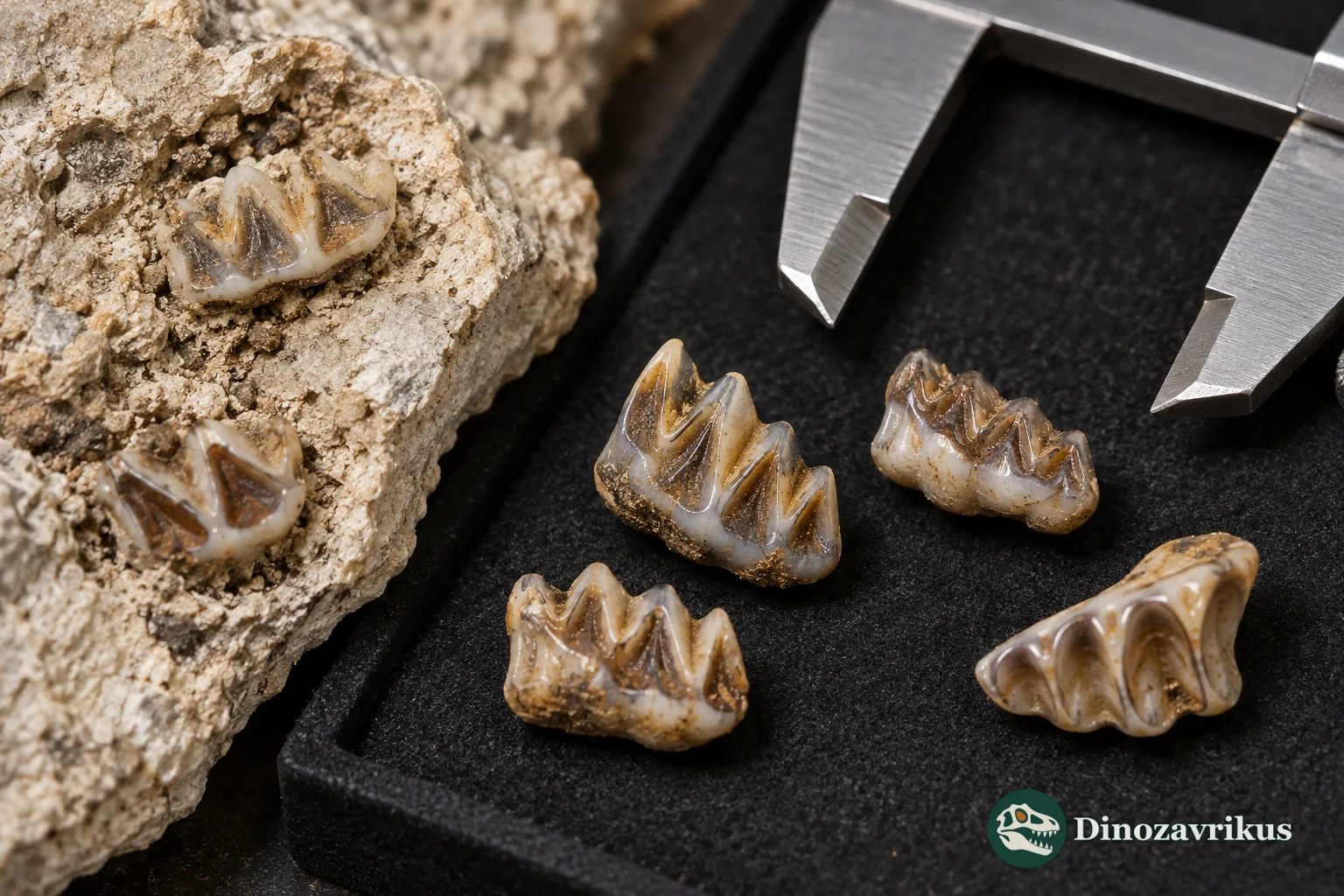
A revision described one lower first and four lower second molars without roots or crown cement. The original holotype's status remains unresolved; naming a neotype would require a separate formal act.
The first molar has an elongated anterior loop with a buccal projection; the second molars have separated dentine fields. Wear and variation limit identifications from a single outline.
The Kisláng collection includes reworked fossils from at least three time intervals. Lagurodon belongs to its younger component and cannot date every associated bone.
A species named before its genus
Miklós Kretzoi named Lagurus arankae in 1954 and established Lagurodon for it in 1956. David Mayhew's 2012 revision examined available Kisláng material in the Hungarian Geological Institute collection. It found a mismatch between early statements about the name-bearing specimen and the surviving series. A remaining first molar may be eligible for neotype designation if the original holotype is lost, but that revision did not make the designation.
The available Kisláng series bears the joint number V12698 Vt91 and includes one lower first and four lower second molars. These are rootless and lack crown cement. The first molar's elongated anterior loop bears a buccal salient angle; the second molars are strongly curved and have separated dentine fields. Those are observations of teeth, not measurements of a whole animal.
The Kisláng dating problem
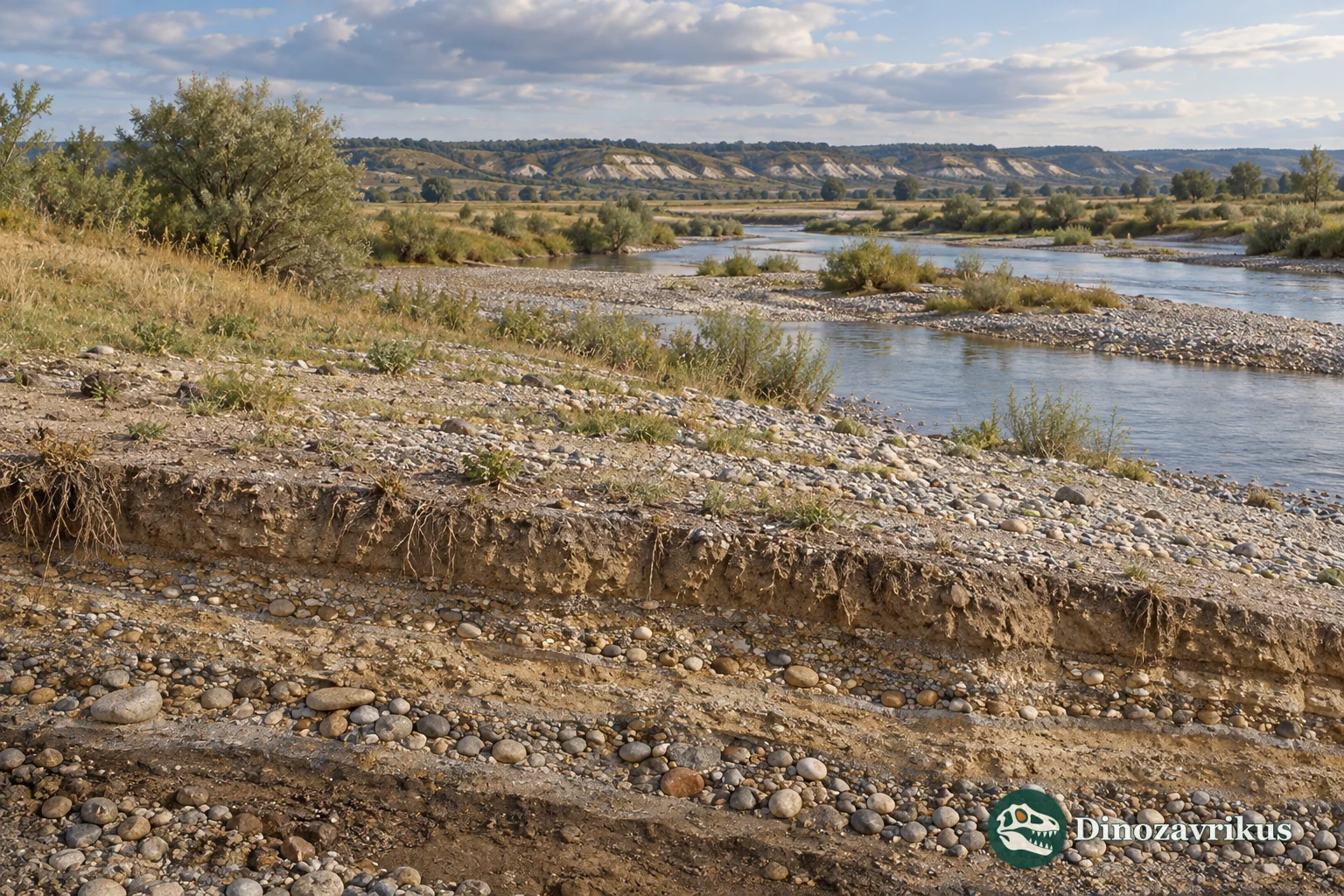
Kisláng's fluvial sediments mixed fossils from several geological periods. Earlier faunal lists placed seemingly old mammals alongside an advanced vole, prompting conflicting regional dates. Mayhew's reassessment identified a mid-Pliocene component, an earliest Pleistocene component and a younger Early Pleistocene component containing L. arankae. The latter fits a broad interval near 2.0–1.6 million years ago rather than one date for all specimens.
The supposed pre-Biharian occurrence of Lagurodon was partly built on transferred identifications from different Villány localities. Rechecking those records removed compelling evidence for a range older than biozone MQR10. This narrows a stratigraphic claim; it does not identify the exact first individual of the genus. Comparison with Allophaiomys helps explain why different vole lineages cannot be read as one simple sequence from a mixed list.
Independent Hungarian material
At Beremend 14, researchers described a right jaw fragment with lower first and second molars and measured four first molars attributed to L. arankae. Their lengths ranged from 2.27 to 2.70 mm, and widths from 0.93 to 1.03 mm. Those values describe teeth, not body length. High, rootless crowns and nearly uniform enamel thickness provided comparative characters.
The genus has also been discussed at Süttő 21. The related Prolagurus illustrates why a broadly similar chewing pattern does not establish the same genus. The river-terrace image below interprets a possible process of sediment reworking, not a documentary view of Kisláng.
What the fossils cannot show
Dental structure is consistent with processing plants, as in other voles, but it cannot identify particular grasses, seasonal feeding or litter size. The dating question belongs within the Quaternary history of individual deposits. No surviving Lagurodon tooth establishes coat color, calls or social behavior.
Frequently asked questions
Was Lagurodon a lemming or a vole?
It was an extinct arvicolid vole in a lagurine line. A modern common name does not establish its exact living appearance.
Is a complete Kisláng skeleton known?
No. The surviving reviewed series contains five lower molars, not a skeleton.
Why does Kisláng not give one precise age?
Its fluvial sediments contain reworked fossils of different ages. The vole's age must be evaluated within that mixed history.
Was a new type specimen formally selected in 2012?
No. The revision discussed a possible neotype if the holotype proves lost, but did not designate one.