

Lestodon was among the largest South American ground sloths. Heavy limb bones, skulls and jaws with projecting caniniform teeth come from Pleistocene Argentina and Uruguay. Bonebeds preserve multiple animals and offer evidence about age, disease and diet, though they do not directly capture behavior.
It is included in the ice-age animal catalogue. Its front teeth contrast with those of Glossotherium; the narrower snout of Scelidotherium provides another useful comparison among Pampas sloths.
Quick facts
| Type species | Lestodon armatus Gervais, 1855 |
|---|---|
| Family | Mylodontidae |
| Main region | Pampas of Argentina and Uruguay |
| Estimated mass | Often above 3 tonnes for large sampled adults |
| Distinctive teeth | Large forward caniniforms separated by a gap |
| Bonebeds | Playa del Barco and Arroyo del Vizcaíno |
What can the fossils tell us?
Skulls show projecting caniniforms and a long diastema before the molariforms. Their shape helps identify the genus but does not directly reveal fighting behavior.
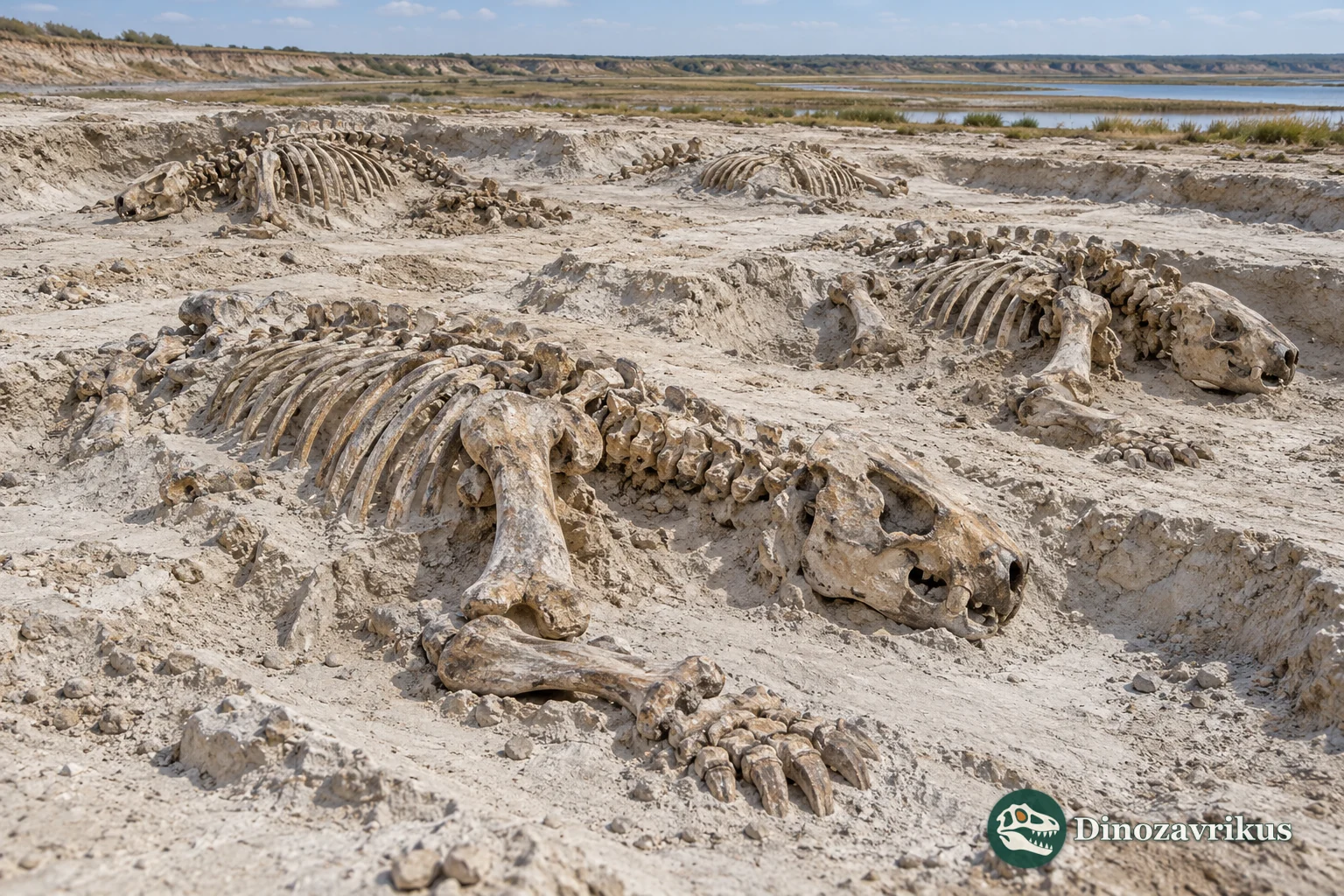
Playa del Barco preserves individuals of different ages. Taphonomy, pathology and isotopes support a group-life hypothesis, but shared burial is not a direct record of a permanent herd.
Some bones at Arroyo del Vizcaíno bear grooves interpreted as possible stone-tool marks in a roughly 27–30 ka deposit. The human interpretation remains under debate.
One species after a long naming history
Paul Gervais established Lestodon and its type species L. armatus in 1855 from jaw material originating in what is now Uruguay. The original material included upper and lower jaw fragments with front and first chewing teeth. Later authors named numerous species from incomplete bones, sometimes confusing large sloths with Mylodon.
A 2013 systematic revision compared skull form and tibial measurements of material assigned to L. armatus and L. australis. It found no stable separation and retained L. armatus as the one valid Pleistocene species. That conclusion is based on the examined sample and can be tested with new finds. The Paris natural history museum catalogs postcranial specimen MNHN.F.PAM762 from Buenos Aires under this species, illustrating how collections preserve the material behind taxonomic comparisons.
Caniniforms and estimated body mass
Large triangular caniniform teeth project forward and outward from the front of the jaws. A toothless gap separates them from the rear molariforms. These are not the true canine teeth of a carnivore. Their arrangement helps diagnose Lestodon, while proposals about combat or display need independent behavioral evidence. The chewing teeth and skull support a plant-based diet.
The massive trunk and limbs indicate a very large animal. Published mass estimates for sizeable specimens often exceed three tonnes and depend on regressions using tibiae or other long bones. Different samples and models give different figures; neither the largest estimate nor a drawn silhouette measures every individual.
What the bonebeds can and cannot show
Playa del Barco in the Argentine Pampas contains remains attributed to 13 L. armatus individuals of different growth stages. Its deposit has been dated to approximately 19,849 calibrated years before present. A study combined bone distribution, histology, pathology and isotopes. Bony spurs and other changes affect some vertebrae and limbs, describing disease in these individuals rather than one proven cause of death for the entire group.
The authors proposed gregariousness from several strands of evidence. Multiple animals could also have visited the same water source at different times, so shared burial alone cannot establish permanent herds. Carbon isotopes from this sample describe food resources used locally, and other Uruguayan samples need not yield the same values.
Arroyo del Vizcaíno and contested human traces
At Arroyo del Vizcaíno near Sauce, Uruguay, researchers reported over a thousand bones, mostly of Lestodon, representing at least 27 individuals. Radiocarbon estimates place the deposit about 27,000–30,000 years ago. Some bones have deep grooves with microscopic striations interpreted as possible stone-tool marks; a possible lithic object was also reported. Their human origin and association with the bones remain debated because the implication for American settlement would be unusually early.
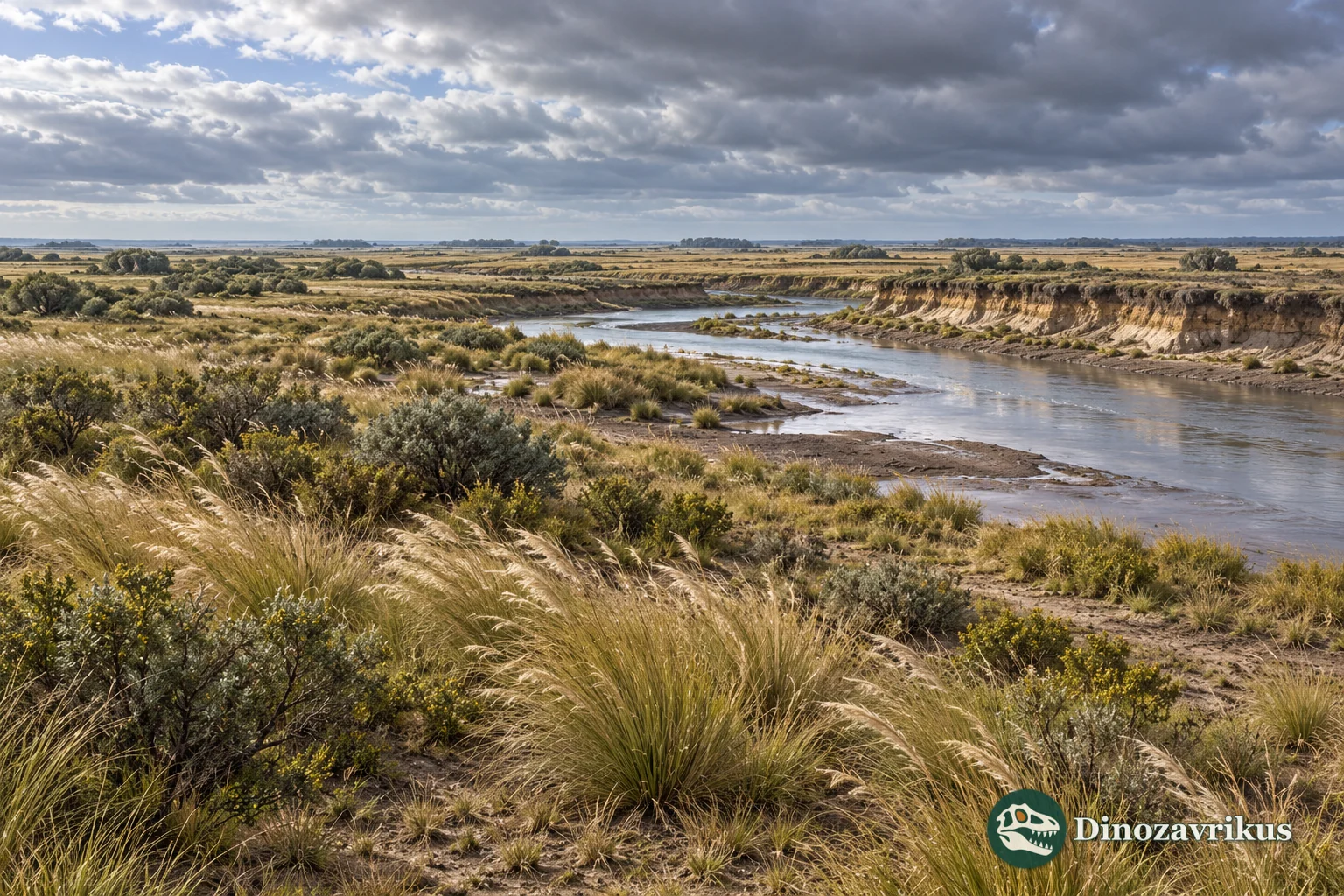
The grooves and dates are observations and measurements; human processing is a disputed explanation. Open Pampas vegetation and C3 plant use are supported by some isotopic results, but no isotope value identifies an exact grass species. The cover reconstructs body mass and strong limbs from fossils; fur color, stance and precise landscape are artistic choices.
Frequently asked questions
How many Pleistocene Lestodon species are currently retained?
A 2013 revision recognized one, L. armatus, after comparing material formerly assigned to L. australis.
What distinguishes its front teeth?
Large caniniform teeth project ahead of the molariforms and are separated from them by a long gap.
Do bonebeds prove that Lestodon formed herds?
No. A 13-individual bonebed and multiple analyses support the idea, but shared burial does not directly show permanent social groups.
Are human cut marks at Arroyo del Vizcaíno proven?
Some grooves resemble tool marks, but their origin and the association of possible stone artifacts with the bones remain debated.