

Liaoxipterus brachyognathus is known from a nearly complete lower jaw in the Early Cretaceous Jiufotang Formation of northeastern China. Its rounded, expanded front and relatively small number of teeth distinguish it from other regional pterosaurs. First assigned to ctenochasmatids, it was later reinterpreted as an istiodactylid. No skull roof or wing is known from the holotype.
Quick facts
| Scientific name | Liaoxipterus brachyognathus, Dong and Lü, 2005 |
|---|---|
| Holotype | CAR-0018, a nearly complete lower jaw |
| Locality | Western Liaoning, China |
| Rock unit | Jiufotang Formation, Lower Cretaceous |
| Jaw | Rounded, expanded and flattened at the front |
| Wingspan | Unknown; no wing bones described |
What can the fossils tell us?
CAR-0018 preserves a nearly complete lower jaw. No skull roof or wing has been described for the holotype.
The mandibular symphysis expands and reaches its greatest breadth around the fourth tooth sockets.
Dong and Lü placed it among ctenochasmatids in 2005. Lü, Xu and Ji reinterpreted it as an istiodactylid in 2008.
Without wing or trunk bones, a direct wingspan or body mass estimate cannot be made for this species.
A jaw from the Jiufotang Formation
Dong and Lü named the species in 2005 from specimen CAR-0018, collected in western Liaoning. The Lower Cretaceous Jiufotang Formation has yielded many pterosaurs, but Liaoxipterus is represented by much less material than some of its neighbours: a lower jaw rather than a complete skeleton.
The front where the two sides of the jaw meet is expanded, widest near the fourth pair of tooth sockets and flattened vertically. This combination distinguished the fossil from pterosaurs already known in the region. The name identifies a particular fossil species and does not imply that its full anatomy is known.
Why its classification changed
The original study used the rounded, spatulate jaw tip and teeth without strong variation to assign Liaoxipterus to Ctenochasmatidae. Its tooth count was unusually low for that family, however. Similarity in one part of a jaw does not settle all evolutionary relationships.
A 2008 restudy by Lü, Xu and Ji moved the taxon towards Istiodactylidae. Later comparative studies discuss it alongside other Chinese members of that group. Nurhachius and Istiodactylus offer comparisons, without forming a demonstrated ancestor-descendant sequence.
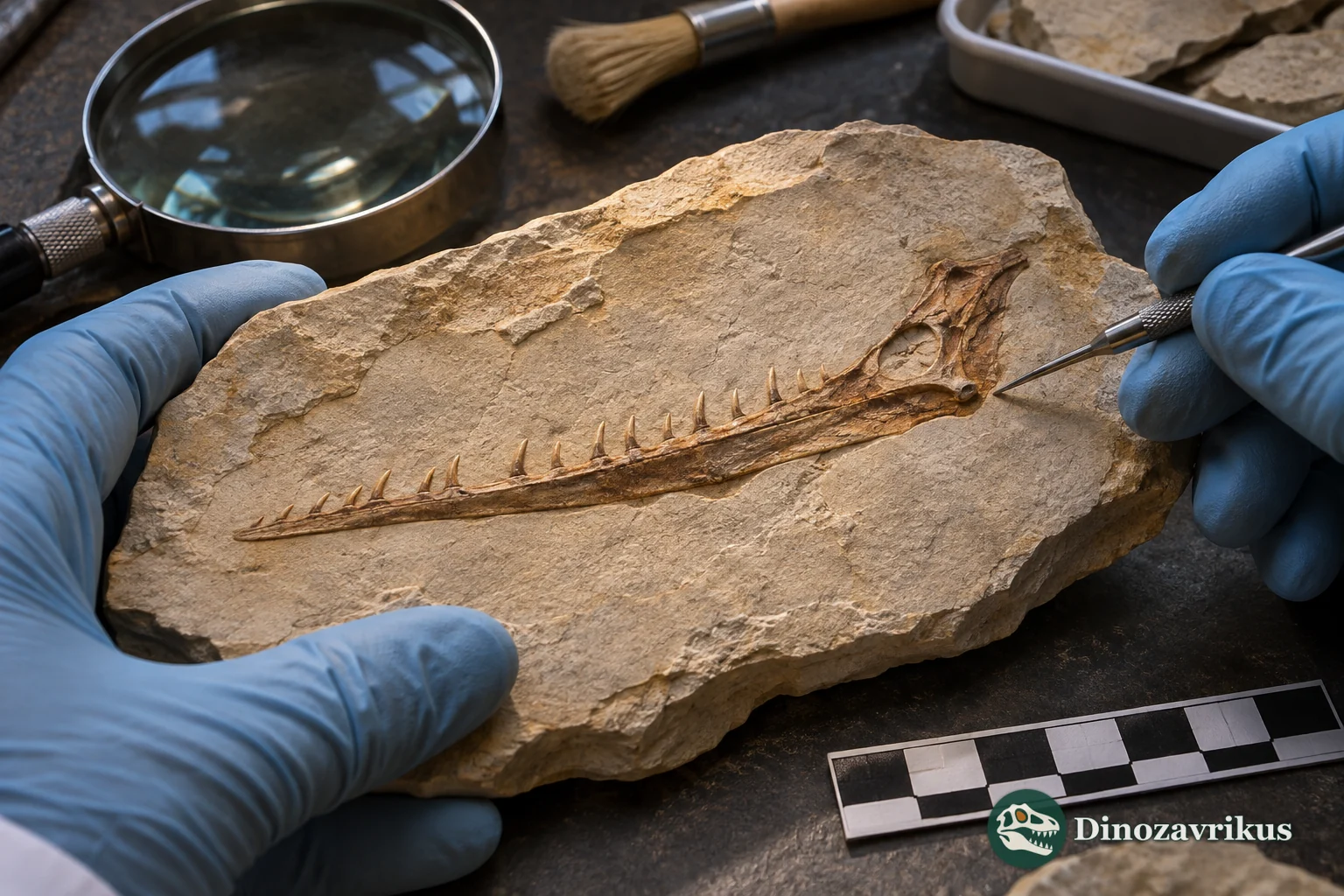
What the jaw can and cannot show
The jaw retains the shape of its front and the arrangement of teeth. These structures allow anatomical comparisons and hypotheses about grasping food. No prey remains were described with CAR-0018, so a particular diet or feeding frequency cannot be demonstrated.
The large Liaoningopterus also comes from the Jiufotang Formation and preserves some wing material. Its wingspan estimate cannot be transferred to Liaoxipterus. No assigned bones can directly establish the latter's wingspan, trunk length or mass.
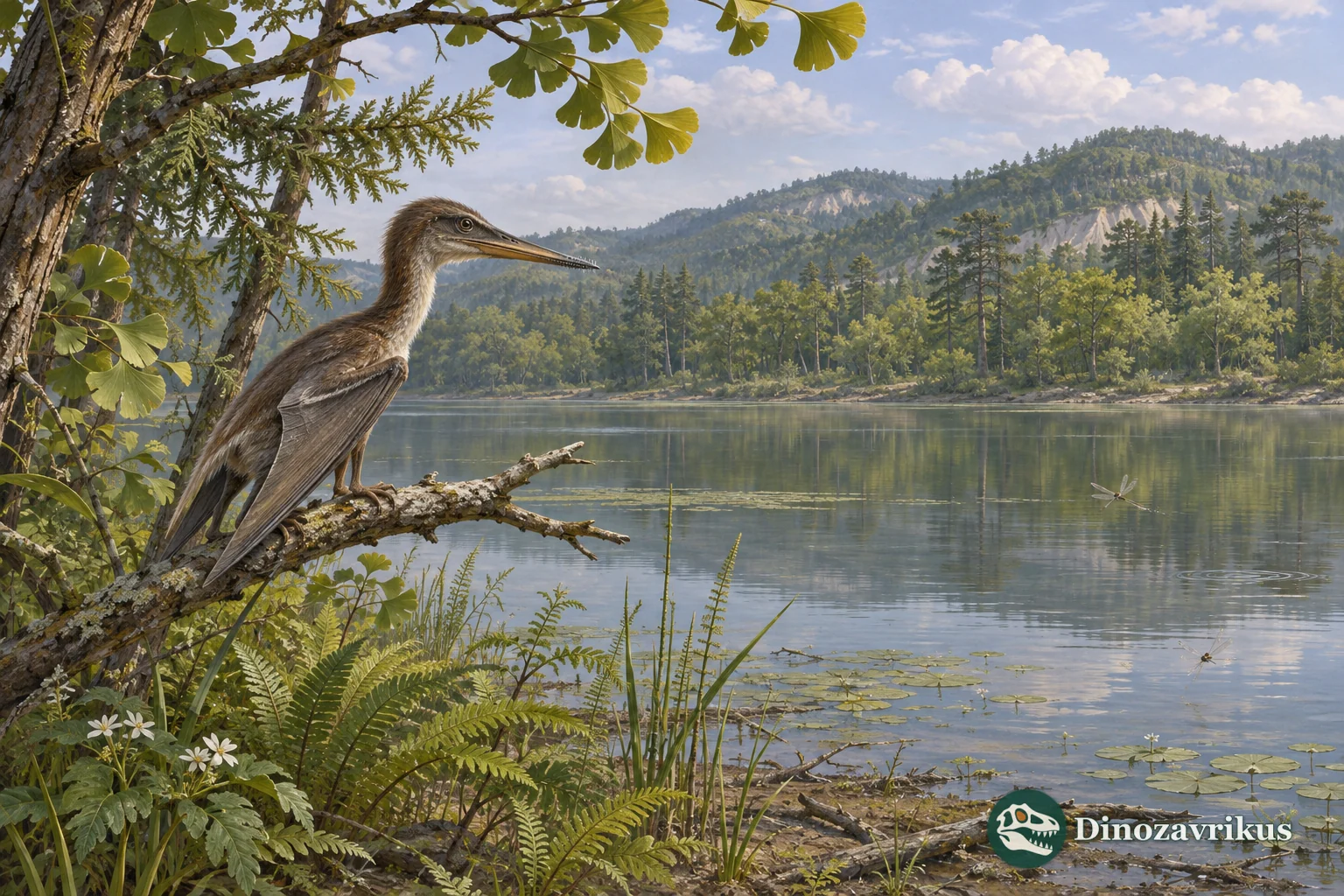
A cautious living reconstruction
Art can combine the preserved jaw with broader pterosaur anatomy and a plausible Early Cretaceous setting. Its body, wing proportions, colour and behaviour remain choices in the reconstruction rather than observed features of the holotype.
Frequently asked questions
Where was Liaoxipterus found?
The holotype came from the Lower Cretaceous Jiufotang Formation in western Liaoning, China.
Which bones are known?
CAR-0018 is a nearly complete lower jaw with teeth and tooth sockets; no full skull or wing is known from it.
Why did its classification change?
The first assignment relied on its broad jaw tip. A later study reconsidered its teeth and other details and placed it closer to istiodactylids.
Can its wingspan be measured?
No. The species has no described wing bones from which to measure a complete wing directly.