

Lisogoragnostus was a minute marine agnostoid. An articulated specimen from northern Sweden and detached shields from glacially transported limestone show how palaeontologists match parts of its shell and recognise variation within a species.
Quick facts
| Group | Agnostida |
|---|---|
| Age | Cambrian, Miaolingian to early Furongian |
| Type species | Lisogoragnostus kalisae |
| Genus established | A. V. Rozova, 1988 |
| Type area | Southern Kazakhstan |
| Known fossils | Articulated dorsal shells and separate shields |
What can the fossils tell us?
The articulated shell from Abborrfallet joins shields of one individual. Assigning isolated shields to a species requires comparison of several features.
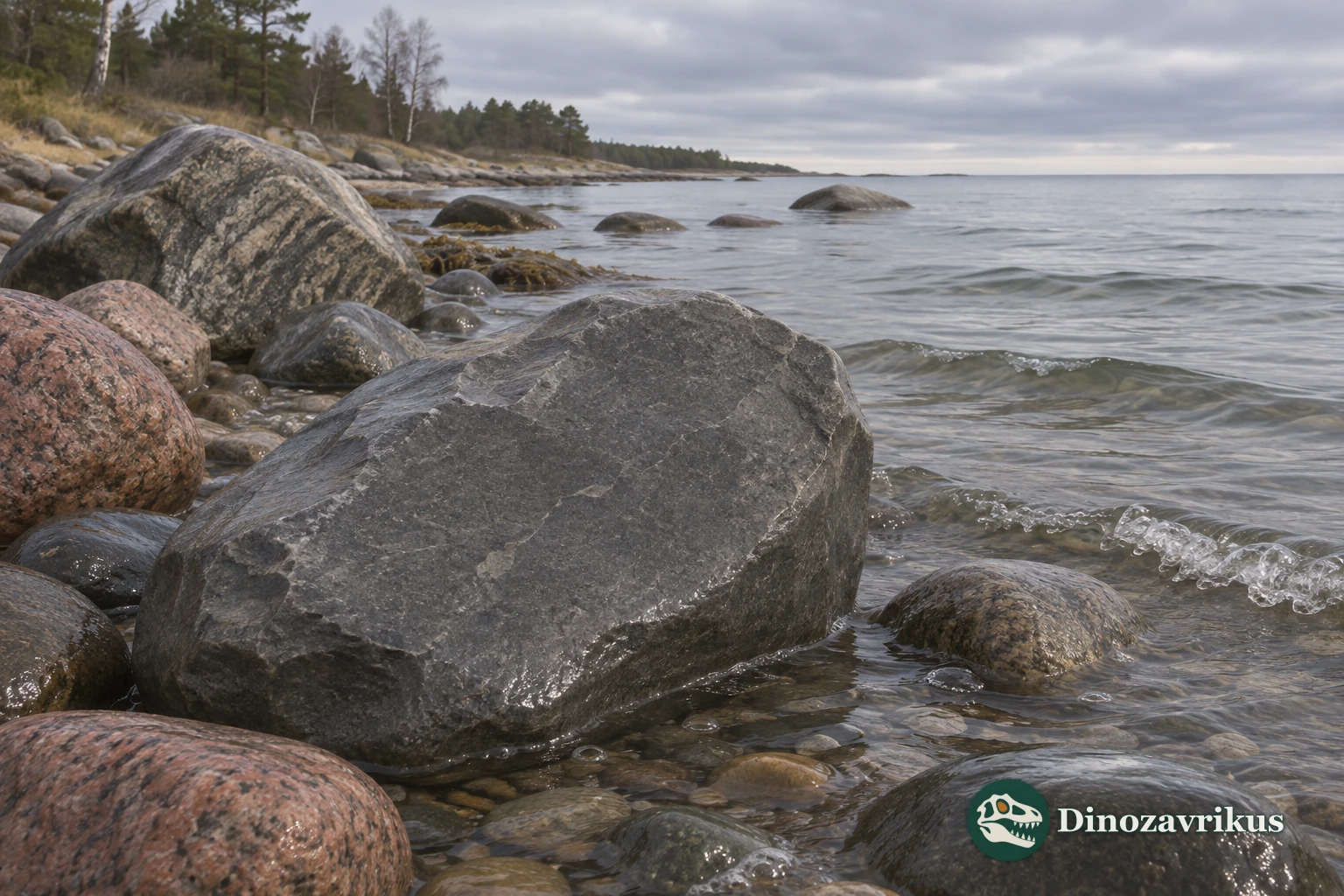
The confluens holotype was picked up in Germany. Its rock records Cambrian marine deposition, while the boulder's modern position reflects later transport.
The 2023 revision compared both shields and their age. Treating two names as synonyms is an interpretation of those similarities and differences.
The genus and its type
A. V. Rozova established Lisogoragnostus in 1988. The type species, L. kalisae, comes from the Tomagnostus fissus Zone of the Amgan Stage in southern Kazakhstan. Other species have been reported from Scandinavia, East Asia and North America. The 2023 Scandinavian study placed the genus from the Miaolingian into the early Furongian.
The history of L. confluens starts with a detached tail shield, G 134/5. Rudolph described it as Svenax confluens in 1994. It came from a piece of Andrarum Limestone carried by ice to what is now Mucheln in northern Germany. The rock and its fossil zone tell a different part of the story from the place where the boulder was collected.
Matching detached shields
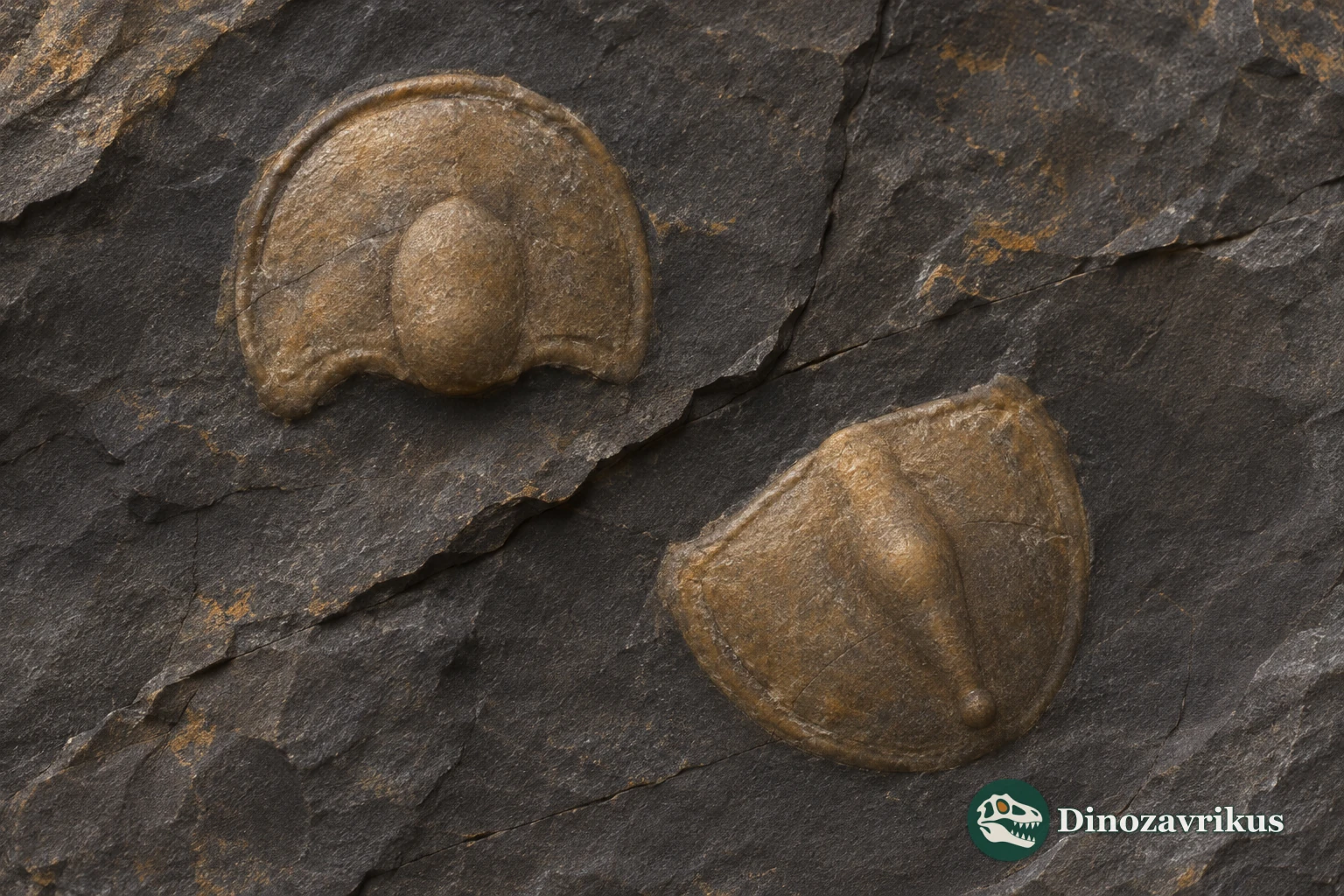
A distinct groove follows the margin of the head shield in L. confluens. Behind it is a raised oval portion of the glabella. The pygidial axis carries an elongate node and a smaller terminal node. Compare it with Baltagnostus, whose tail shield is recognised in part by the relief along its broad posterior border.
An articulated shell from Abborrfallet in northern Jämtland preserves the two shields together. Boulders on the coast between Brantevik and Gislövshammar in Scania yielded a series of 25 specimens. That larger sample makes it possible to compare the shape of the glabella and the width and curvature of the tail axis across individuals.
The comparison with Hunan
Peng Shanchi and Richard Robison named L. hybus from Hunan in 2000. The 2023 revision found slightly different proportions in some Chinese specimens, but similar features of both shields and the same position in the lower part of the Lejopyge laevigata Zone. Weidner and co-authors interpreted the differences as variation within L. confluens and treated hybus as a junior synonym.
Material from Trial Ridge in Tasmania illustrates a limit of the method. It includes a nearly complete specimen measuring 1.5 mm and a partial tail shield. The researchers recognised the genus but left the specimens without a species name because their preservation limited the comparison.
Frequently asked questions
Where was the type species found?
The type species comes from the Tomagnostus fissus Zone in southern Kazakhstan.
How did the holotype of L. confluens end up in a boulder in Germany?
Ice carried a block of Cambrian marine limestone to northern Germany long after the sediment had hardened.
What marks the tail axis of L. confluens?
It carries an elongate node and a smaller swelling near the rear end.
Is L. hybus treated as a separate species?
The 2023 Scandinavian revision treated it as a junior synonym of L. confluens.