

Litomylus was a genus of small Paleocene mammals from North America, known mainly through teeth. The type species, L. dissentaneus, was described from the Fort Union deposits of Montana. No complete skeleton is known, so species identification and reconstructions of the animal’s body remain limited.
The genus is included in the ancient mammal catalogue. The Paleocene mammal Promioclaenus offers a useful comparison for how early placental groups were historically classified from incomplete material.
Quick facts
| Scientific name | Litomylus Simpson, 1935 |
|---|---|
| Type species | Litomylus dissentaneus Simpson, 1935 |
| Group | Early placental mammal; often classified in Hyopsodontidae |
| Age | Paleocene; exact interval varies among species and localities |
| Range | North America, including Montana and other western localities |
| Type specimen | USNM 9425, dental material from Gidley Quarry |
| Known remains | Isolated molars, jaw fragments and partial tooth rows |
| Main limitation | No complete skeleton; body size and behaviour cannot be securely reconstructed |
What can the teeth tell us?
Later systematic works list USNM 9425 as the holotype of L. dissentaneus, from Gidley Quarry, Montana. It is not a complete skull or skeleton.
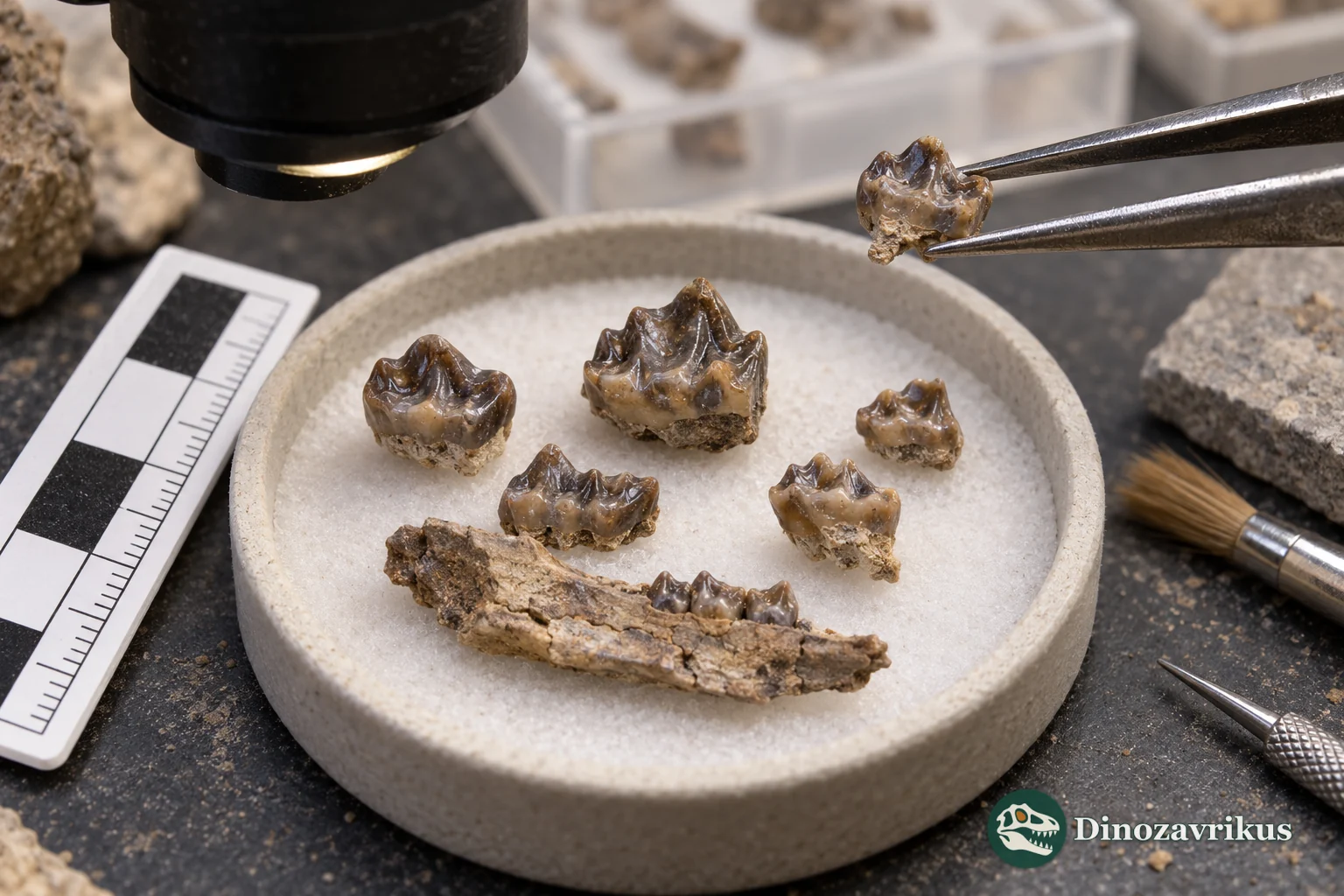
Researchers compare tooth size, cusp arrangement, crests and position in the row. Similar isolated molars may be difficult to assign to a species without a jaw or an associated tooth row.
L. dissentaneus was reported at Gidley Quarry and referred material is known from Douglass Quarry, among other records. Each occurrence has its own stratigraphic context; a genus-wide list is not one population.
The genus was originally placed among hyopsodontids. Some phylogenetic work groups Litomylus with apheliscids, and the names L. scaphicus and L. scaphiscus have been treated differently by later authors.
The name and the Gidley Quarry material
George Gaylord Simpson established Litomylus in 1935 in a paper on Paleocene mammals from the Fort Union deposits of Montana. He named L. dissentaneus as the type species. Subsequent systematic literature identifies USNM 9425 as its holotype, from Gidley Quarry. The name-bearing material anchors the species, but it does not preserve the animal’s full anatomy.
Gidley Quarry formed part of the fossil-rich “Crazy Mountain field.” Albert C. Silberling collected at localities in the region; James Gidley later opened and worked the quarry named for him. The historical collection context is documented, but it does not establish which individual collected the particular type tooth unless its catalogue record says so.
How teeth are identified
Descriptions compare molar length and width, cusp proportions, ridges and the shape of the crown. A tooth row adds information because researchers can see the sequence of neighbouring teeth. Isolated teeth lack that context and may resemble those of related early mammals.
Krause and Gingerich referred two upper molars from Douglass Quarry to L. dissentaneus. Their measurements were 3.5 by 2.8 millimetres for PU 23588 and 3.6 by 2.5 millimetres for PU 23589. The authors compared them with the small sample from Gidley and a larger sample from Swain Quarry. These are tooth measurements, not body-size estimates.
Species names and family placement
Several species have been assigned to Litomylus, but the roster and relationships vary among taxonomic treatments. Names discussed in the literature include L. ishami, L. osceolae, L. orthronepius and L. grandaletes, in addition to the type species. Their material comes from different localities and time intervals; evidence for one species should not automatically be applied to the genus as a whole.
The status of L. scaphicus and L. scaphiscus illustrates the difficulty. Van Valen synonymized those Tiffanian forms from Bison Basin with L. dissentaneus in 1978. Rigby later questioned that treatment and tentatively retained L. scaphicus. The debate turns on whether dental differences represent separate species or variation within one species.
Simpson’s original classification placed the genus among Hyopsodontidae within the historically broad “Condylarthra.” Later phylogenetic work has challenged that assemblage. A 2005 analysis recovered a Litomylus/Aletodon group among apheliscids, while many catalogues and faunal papers continue to use Hyopsodontidae. The family label should therefore be attributed to a classification rather than treated as settled.
Paleocene localities and age
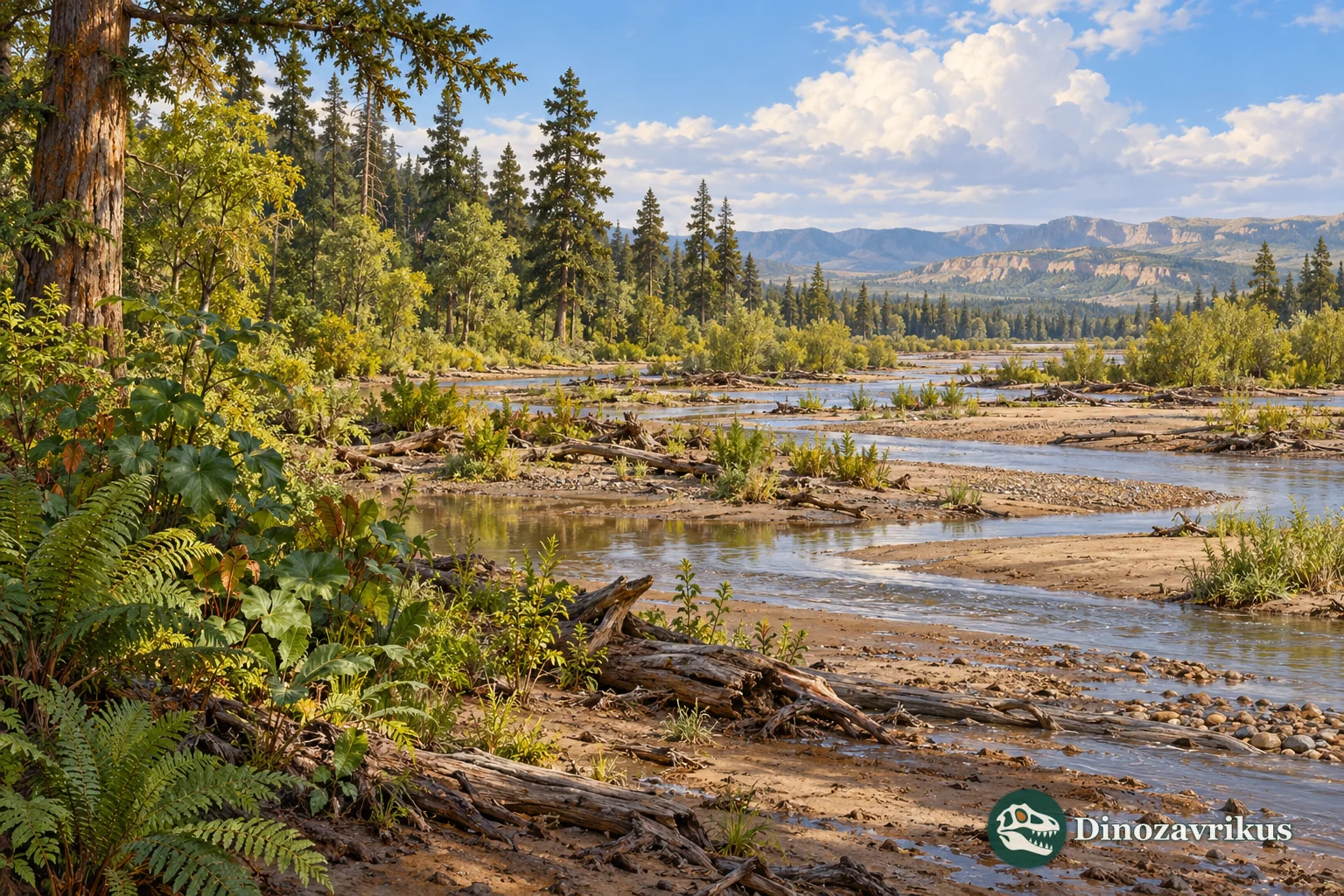
The type locality, Gidley Quarry, lies in the Fort Union deposits of Montana and is assigned to the late Torrejonian interval of the middle Paleocene. The genus also appears in other North American faunas. At Douglass Quarry, two isolated upper molars were referred to L. dissentaneus; the quarry’s stratigraphic placement and associated mammals provide the age context.
North American land-mammal ages such as the Torrejonian and Tiffanian are biochronological units. Their boundaries are refined through fossil assemblages and stratigraphy, rather than serving as exact dates for every tooth. A species’ reported range can also shift when isolated material is reidentified or a synonym is accepted.
What the teeth cannot establish
Tooth anatomy reveals useful details about feeding mechanics and classification, but no known stomach contents or direct feeding traces identify a precise menu for Litomylus. Small size alone is not evidence that it ate insects. A complete skeleton has not been reported, so body proportions, gait, reproduction and social behaviour are not directly known.
The cover illustration is deliberately generalized. It conveys a small mammal in a Paleocene landscape but does not claim to reconstruct a named species’ exact fur, colour, tail or posture. Those details are not preserved by the available material.
Frequently asked questions
When did Litomylus live?
The genus is known from Paleocene North American faunas. The type species L. dissentaneus is documented at Gidley Quarry in the late Torrejonian interval of the middle Paleocene.
What is the holotype of L. dissentaneus?
Later systematic works list USNM 9425 from Gidley Quarry as the holotype. It is dental material, not a complete skull or skeleton.
Why is its classification uncertain?
The genus is known mainly from teeth, and the composition of Hyopsodontidae and the wider relationships of early “condylarths” have changed among phylogenetic analyses.
Are L. scaphicus and L. scaphiscus synonyms of L. dissentaneus?
Van Valen treated them as synonyms in 1978, while Rigby questioned that decision and tentatively retained L. scaphicus. The literature therefore records competing treatments.