

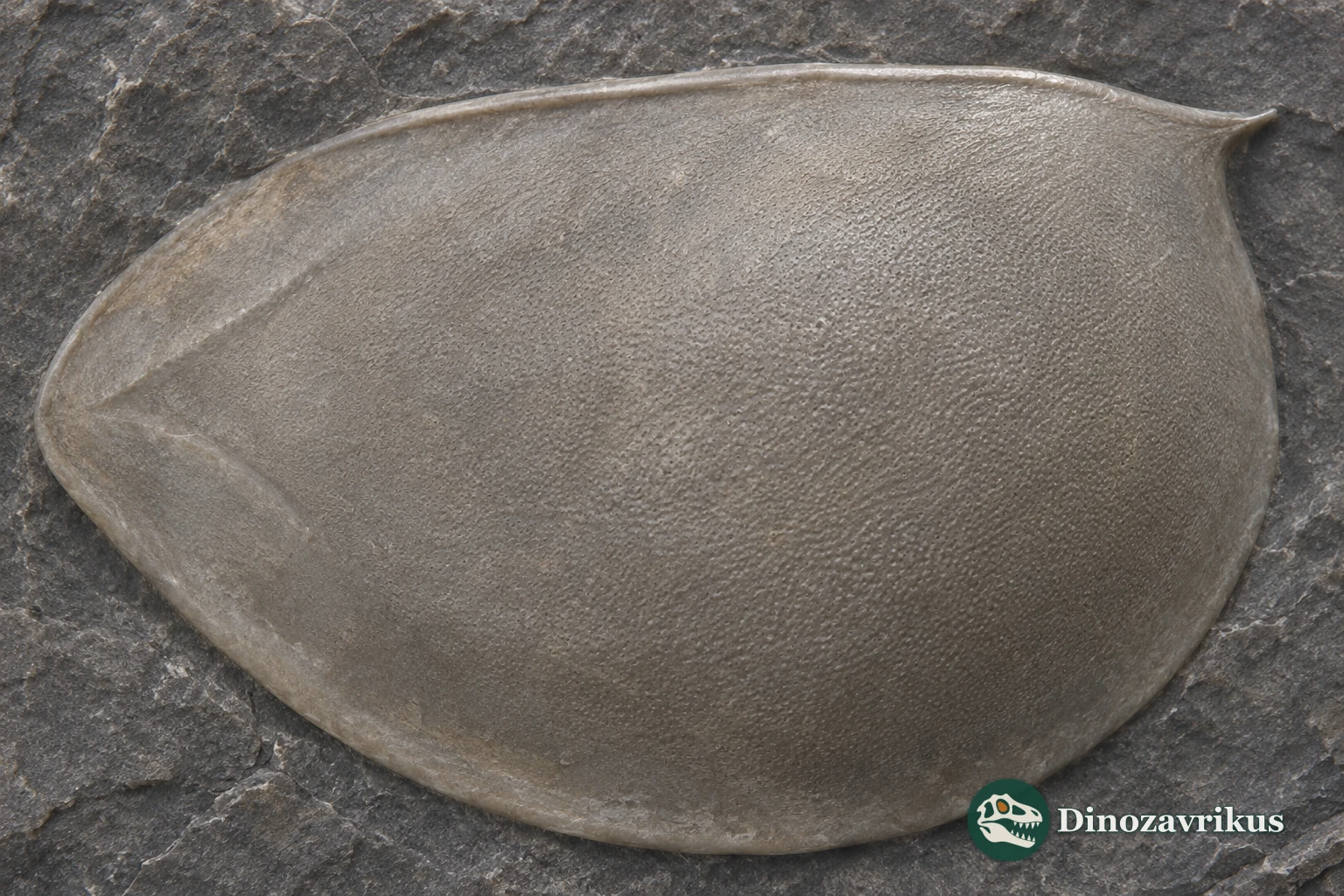
Manawarra was an Early Cambrian bivalved arthropod from South Australia. The inflated shields bear round pits interrupted by a smooth groove near the front edge. Some specimens preserve both shields joined together and show the shape of the carapace.
Quick facts
| Group | Bradoriid arthropods |
|---|---|
| Age | Early Cambrian |
| Genus described by | M. Betts and colleagues, 2017 |
| Type species | Manawarra jonesi |
| Holotype | Right shield SAM P53697 |
| Size | Shields up to 3.5 mm long |
What can the fossils tell us?
The joined specimens show how the left and right shields meet along the dorsal edge.
The largest are about 29 micrometres across. The anterior groove and outer margin are smooth.
Antarctic fragments show similar pitting, but the similarity is insufficient for a firm species identification.
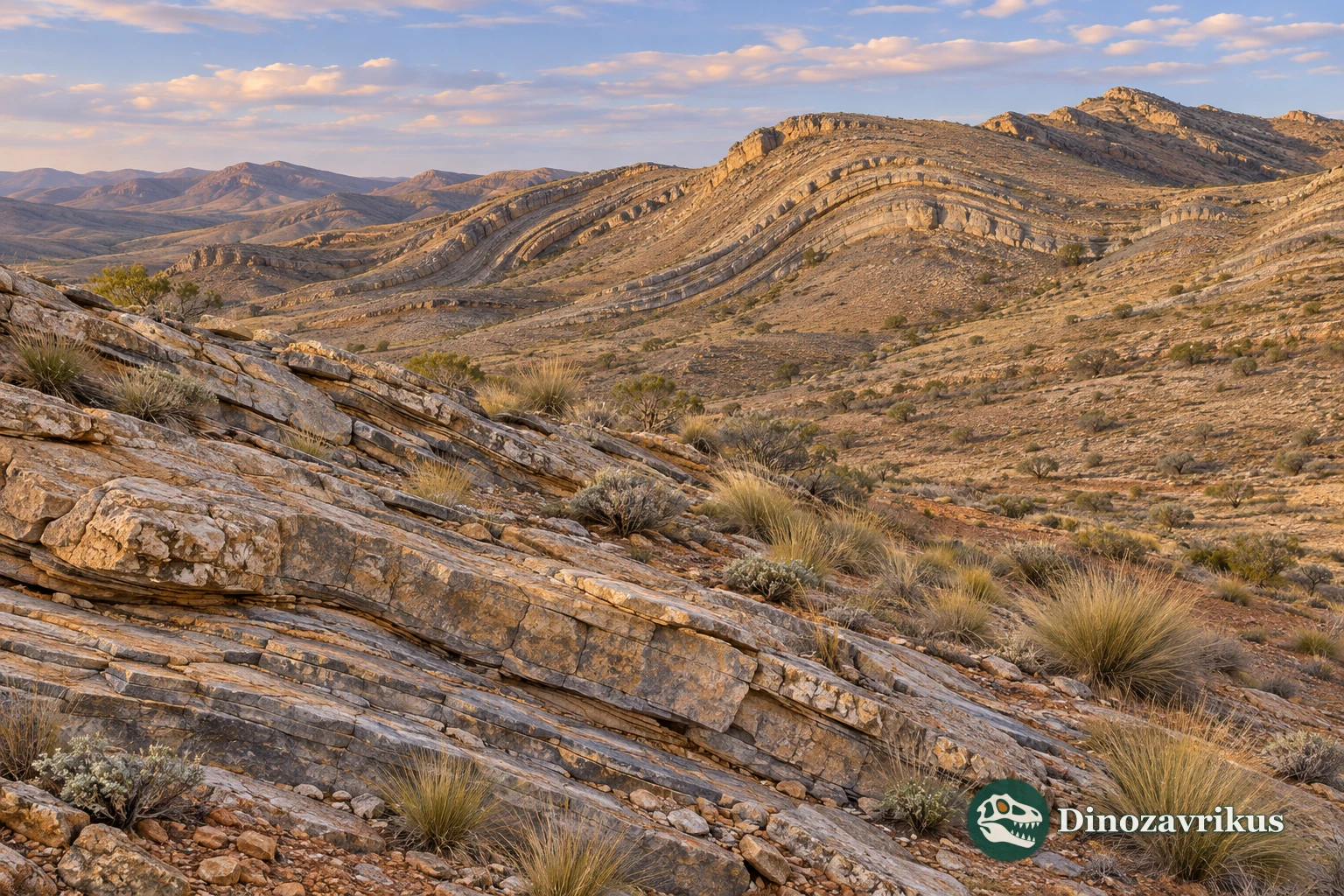
Fossils from the Mount Chambers area
Marissa Betts and colleagues named Manawarra jonesi in 2017 from the Arrowie Basin. The holotype, right shield SAM P53697, came from the Mernmerna Formation in the eastern Flinders Ranges. The study included 289 isolated shields, two conjoined specimens and additional fragments.
The genus name comes from an Adnyamathanha word for a native plum, referring to the rounded, inflated shields. The species honours Peter Jones for his work on Australian bradoriids and ostracods.
The shape and texture of each shield
The shields reach 3.5 mm in length and 2.6 mm in height. The dorsal fold is usually nearly straight. A pronounced V-shaped groove lies near the front, with the shield bulging behind it. A small spine projects near the upper rear edge.
A broad, smooth rim frames the finely pitted surface. The pits are on the outside and stop within the shell wall. The shields are larger than currently known members of the proposed family, so the authors placed Manawarra in Comptalutidae tentatively.
Similar fossils and the limits of comparison
As with Jiucunella, the shields are the main source of anatomical evidence. Some Australian fragments previously appeared under the name Euzepaera. Better specimens supported the new species and genus. Fossils from the Transantarctic Mountains have circular pitting similar to that of M. jonesi. That comparison does not establish that the same species lived there.
Frequently asked questions
Where was the Manawarra holotype found?
In the Mernmerna Formation in the Mount Chambers area of the eastern Flinders Ranges, South Australia.
How large were its shields?
The studied specimens reach 3.5 mm in length and 2.6 mm in height.
What are the tiny round marks on the shields?
They are shallow pits up to about 29 micrometres across. They do not go through the shield.
Is the species known outside Australia?
Antarctic fragments have similar pits. The available evidence is insufficient to identify those fragments as the same species.