

Maroccosuchus zennaroi was an early Eocene crocodilian from the phosphate deposits of Morocco. Several skulls preserve a snout that was long but still relatively broad. Other specimens preserve parts of the skeleton and a jaw injury that healed. Its combination of skull features has put it near the early branches of the gharial lineage in several analyses.
Quick facts
| Species | Maroccosuchus zennaroi |
|---|---|
| Group | Crocodylia, probable early gavialoid |
| Age | Early Eocene, Ypresian |
| Locality | Sidi Daoui and other sites in the Ouled Abdoun Basin, Morocco |
| Holotype | IRSNB R408, skull, jaw and skeletal bones |
| Snout proportions | About 70–74% of measured skull length |
What can the fossils tell us?
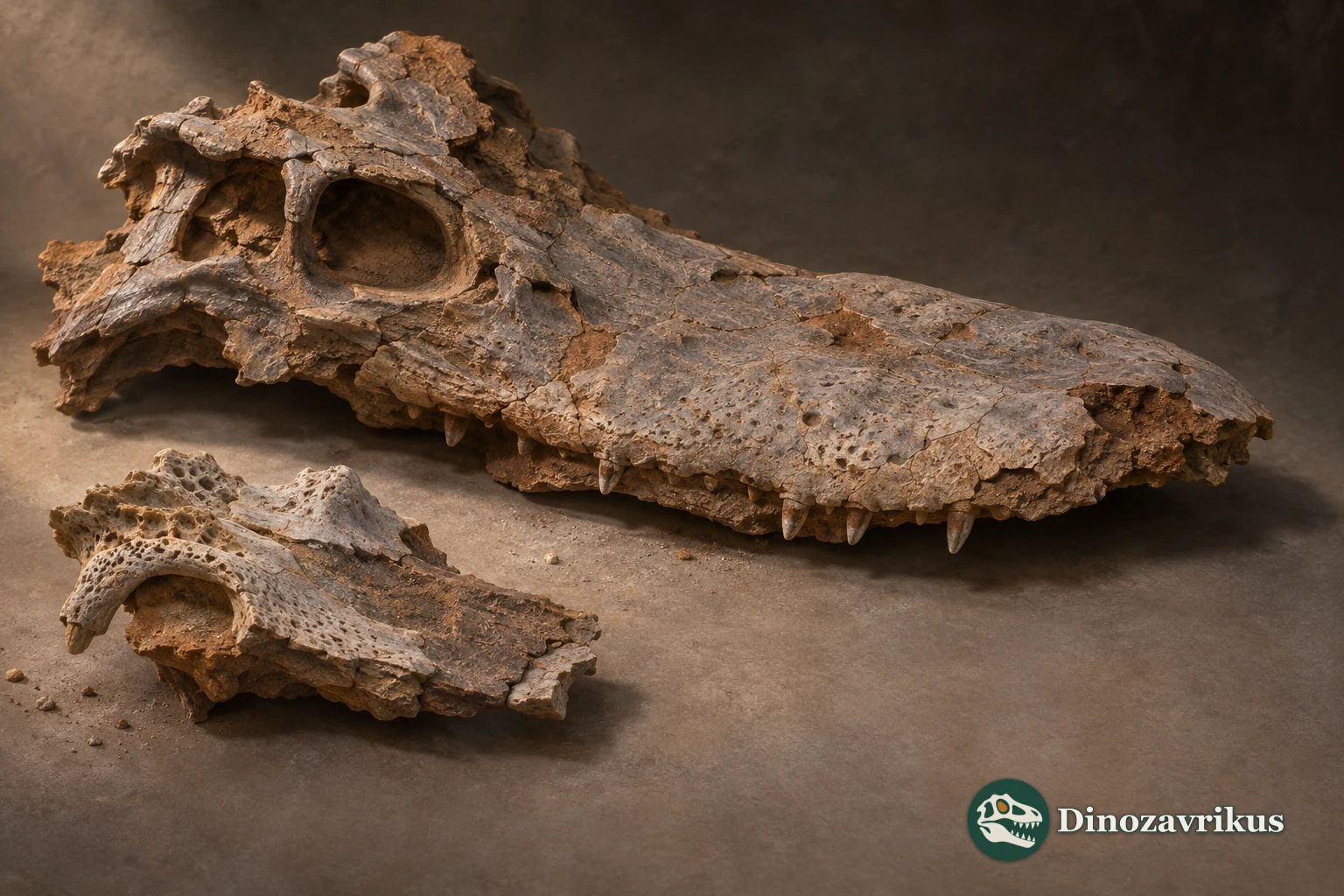
Several skulls preserve the outline and depth of the snout. Crushing exaggerates the flatness of the holotype.
A healed break is visible in the right lower jaw of OCP DEK-GE 70. The injury itself cannot identify how it happened.
The sediments establish a marine setting for burial. They do not directly measure the animal’s salt tolerance.
Comparing skulls from the phosphate basin
Jonet and Wouters established the species in 1977. The holotype, IRSNB R408, came from Couche 1 at Sidi Daoui. The Royal Belgian Institute of Natural Sciences holds its skull and lower jaw along with vertebrae, part of the pelvis, a tibia and bony scutes.
The type skull is crushed, which obscures several sutures. A redescription published online in 2014 used additional specimens, including a skull and jaw in the Toulouse natural history museum. In some of these skulls the nasal bones reach the external nostril. The authors also reassigned some Moroccan fragments that Camille Arambourg had previously compared with an English species.
Snout proportions and a healed break
The snout extends for about 70–74% of the measured span from its tip to the back of the skull table. It is broad around the fifth maxillary tooth. The two halves of the lower jaw meet as far back as the ninth tooth. The eleventh tooth is larger even than the prominent fourth tooth.
In OCP DEK-GE 70 the right lower jaw broke just behind the join with the left side. The bone healed, showing that the animal survived the injury. No particular cause can be read from the fracture.
An early branch near the gharials
The English Kentisuchus had a somewhat narrower snout. The Moroccan species combined an extended lower-jaw join with broader proportions. Its redescription placed it as an early tomistomine. An analysis in 2025 instead recovered the species among the stem gavialoids, while other trees place it closer to crocodyloids.
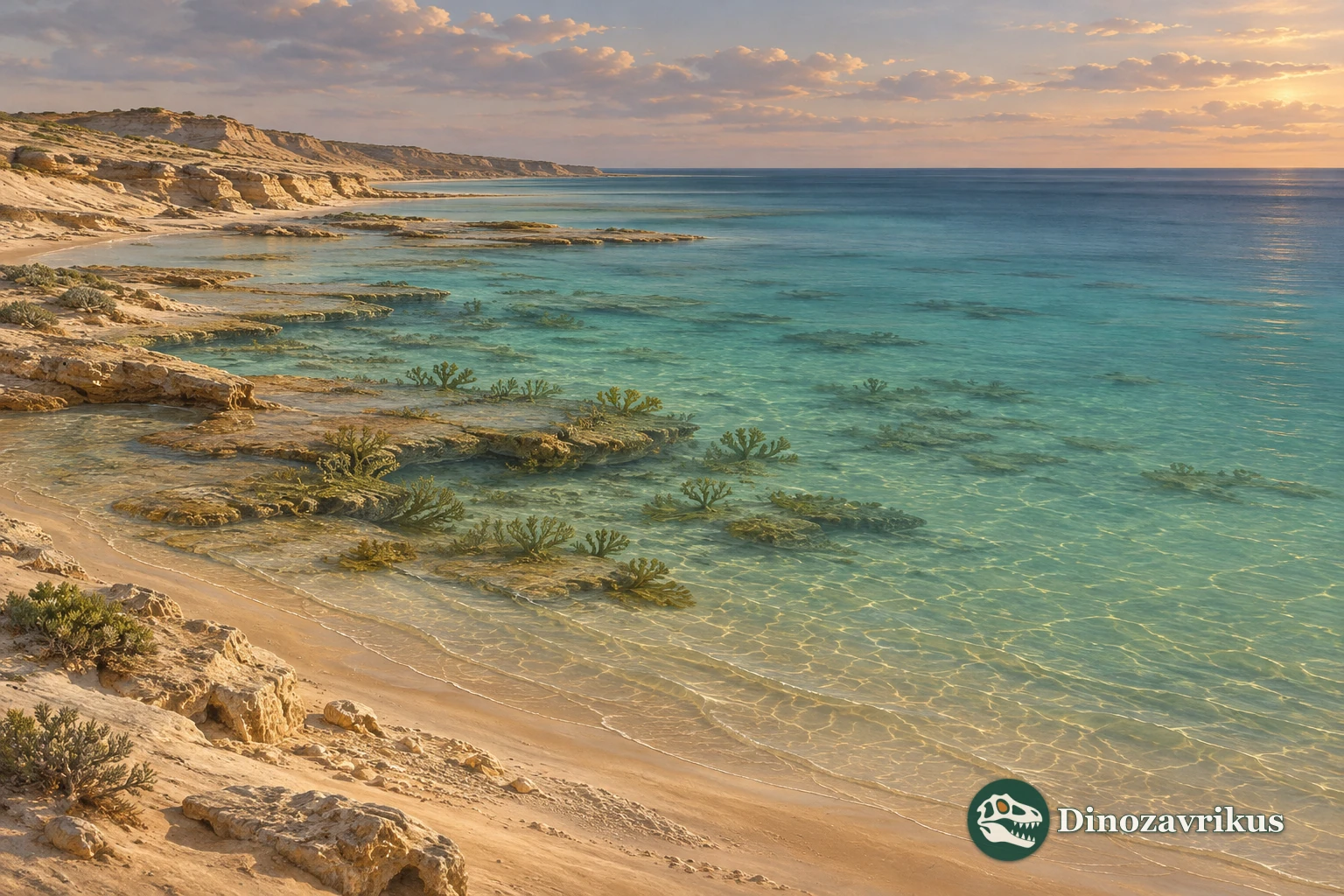
The Ouled Abdoun phosphates formed in a marine basin. That setting is relevant to ideas about early crocodilian dispersal. The fossils alone leave the animal’s habitual use of salt water and its usual prey uncertain.
Frequently asked questions
Where was Maroccosuchus found?
The holotype comes from Sidi Daoui in Morocco’s Ouled Abdoun Basin. Other skulls occur in Ypresian deposits of the same basin.
How long was its snout?
It occupied about 70–74% of the measured skull length and was noticeably wider than deep.
What happened to its jaw?
One specimen, OCP DEK-GE 70, has a healed fracture behind the joined part of the lower jaw. Its cause remains unknown.
Was Maroccosuchus ancestral to living gharials?
Some analyses place it on an early branch of Gavialoidea. That evidence supports a possible relationship without identifying a direct ancestor.