

Maxschlosseria is a poorly known fossil mammal from the history of research on early South American ungulates. Ameghino named the genus from dental material in Patagonia, and later researchers repeatedly reconsidered which species and relationships the name should include. The surviving evidence is much narrower than a complete animal portrait.
The genus appears in the ancient mammal catalogue. Its historical association with beds named for Notostylops helps explain the original context, but it does not make the type a precisely dated skeleton.
Quick facts
| Scientific name | Maxschlosseria Ameghino, 1901 |
|---|---|
| Type species | M. praeterita Ameghino, 1901 |
| Group | Notoungulata; position among early forms is reviewed |
| Age | Originally associated with ‘Notostylops beds’; precise modern correlation is unknown |
| Region | Patagonia, Argentina |
| Type evidence | Upper molars described by Ameghino; no collection number in the short account |
| Body size | No dependable body-length or mass estimate |
What does the Maxschlosseria record actually show?
Ameghino noted quadrangular crowns and longitudinal crests. These are dental observations; they do not reveal a complete skull or skeleton.
The type material was associated with ‘Notostylops beds’ in a 1901 description. Without a secure locality and section, it cannot be converted into a precise stage or numerical age.
A 2008 thesis treated the genus as a nomen dubium under its interpretation of Simpson’s species. Later conference abstracts focused a revised treatment on the type species. The status should be described with its source and date.
Dental characters can inform comparisons and phylogenetic hypotheses. They cannot establish mass, colour, behaviour or a precise diet on their own.
Ameghino’s description and the type species
Florentino Ameghino introduced Maxschlosseria and the type species M. praeterita in 1901, in a preliminary account of new mammals from Patagonia. He dedicated the generic name to the German palaeontologist Max Schlosser. His entry is brief by current standards and discusses upper molars, noting their quadrangular outline and longitudinal crests.
The original account does not give a modern museum catalogue number or a detailed inventory of a holotype. It is therefore not possible to attach a specimen number to the type from this description alone. A careful account should preserve that gap rather than fill it with an unverified collection record.
Historical age and Patagonian context
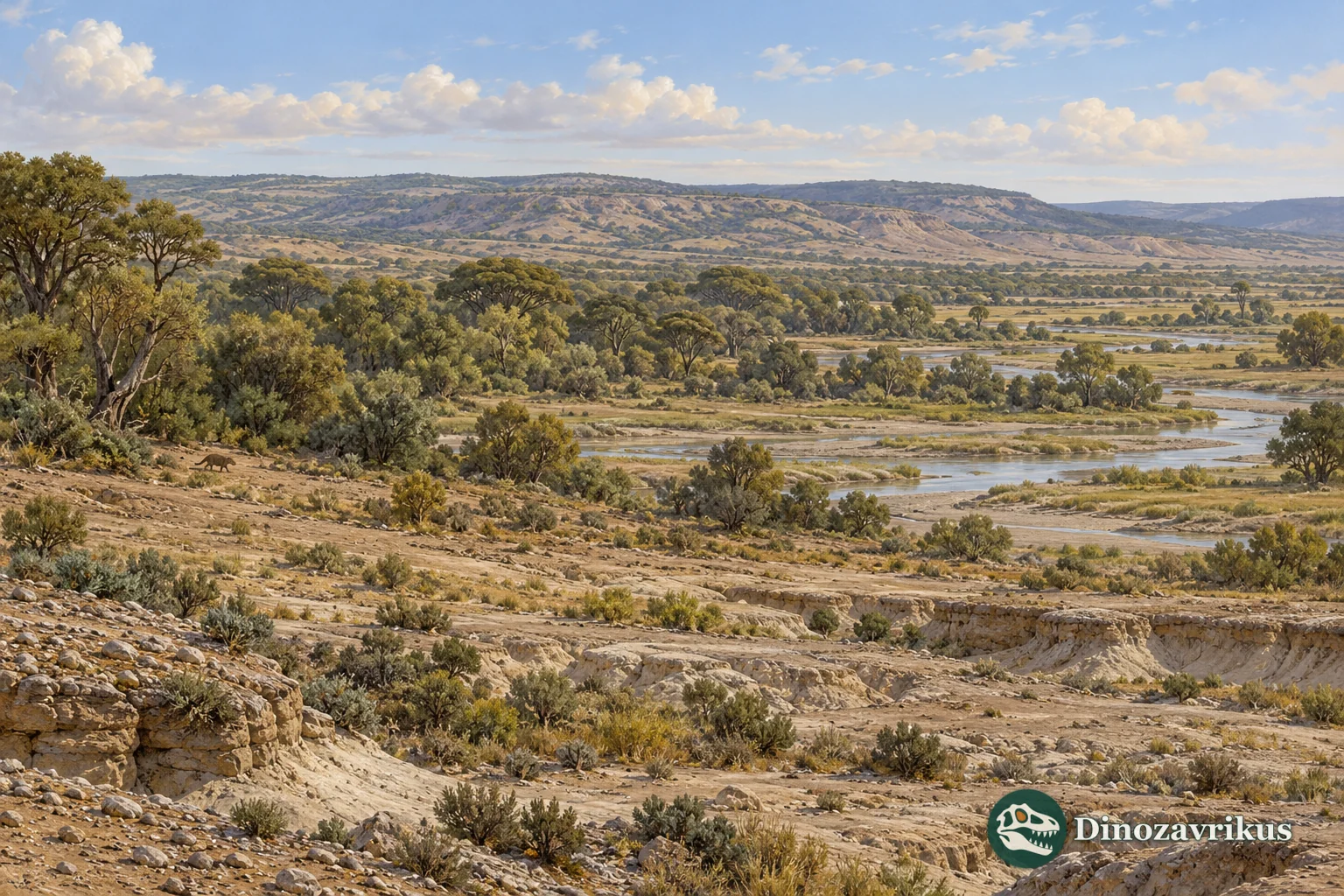
Ameghino associated M. praeterita with the ‘Couches à Notostylops’, or Notostylops beds. This is a historical stratigraphic expression from early work on the Patagonian sequence, not a precise modern formation and horizon as documented in the short entry. The original account does not supply coordinates, a measured section or enough contextual information to narrow the age responsibly.
Later assignments made under the same genus name have not always shared one secure age or locality. Simpson’s broader set of species was subsequently reassessed, and newer work distinguishes the original Ameghino material from material assigned later. A single numerical date for every tooth ever placed in Maxschlosseria would therefore conceal the taxonomic problem rather than solve it.
Dental evidence and anatomical limits
The contour and crests of a molar crown are observable features that palaeontologists can compare with other early mammals. Diagnosis depends on the arrangement and condition of several characters, including wear and the tooth’s position in the row. When only part of a dental series is available, many cranial and postcranial characters cannot be scored.
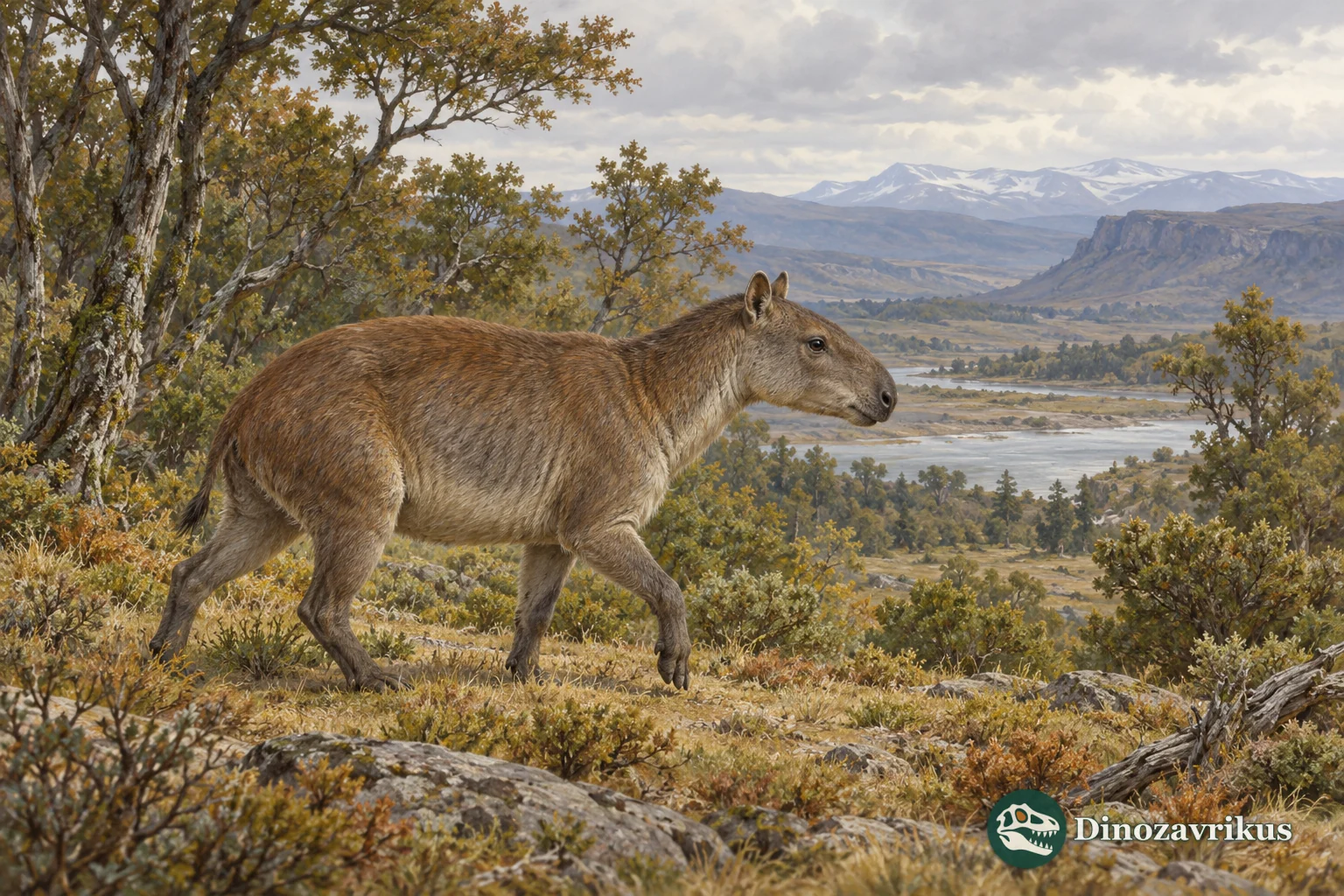
The type record does not support a reliable body length or mass. There is no securely documented complete skull, vertebral column or limb skeleton with which to test proportions. The illustrations show a hypothetical small quadruped only to communicate the uncertainty of a living animal reconstructed from limited evidence; the silhouette is not a fossil-based measurement.
Tooth form can suggest how food was processed, but it does not identify a menu. No stomach contents, associated coprolites or taxon-specific chemical evidence were established by the sources consulted here. Running speed, digging, social behaviour and reproduction are likewise unknown.
Changing species lists and relationships
The history became complicated as numerous dental forms named by Ameghino were reorganised in later schemes. A 2008 doctoral thesis by Gabriela López regarded Maxschlosseria as a nomen dubium under its review of the seven species Simpson had recognised. That was the conclusion of a particular taxonomic assessment, not a permanent ruling that ended all later study.
In a 2016 conference abstract, López and Bond proposed a revised treatment centred on the type species M. praeterita, tentatively associating it with Henricosborniidae and comparing it with Othnielmarshia lacunifera. They also proposed redistributing several other names. Because this account is an abstract rather than a full monographic revision, it is best described as a published proposal.
Proceedings from a 2024 vertebrate-palaeontology meeting report that the authors’ ongoing review recognises the type species as valid and highlights differences between Ameghino’s Patagonian material and Simpson’s later specimens. The discussion shows that the taxonomy is still being tested against original material. A tooth that resembles another form does not, by itself, establish a stable genus-level relationship.
Comparisons with early notoungulates such as Henricosbornia provide useful context for the proposed affinity. Similar dental characters are not sufficient to show that all compared genera form one well-supported group; the available record for Maxschlosseria is too limited for that shortcut.
What can be reconstructed?
The direct record consists chiefly of described tooth crowns. The age comes from a historical geological attribution, while family placement and species limits are later research inferences that have changed. An illustration may show a conjectural small mammal, but its coat, colour, body proportions and behaviour are not documented features of Maxschlosseria.
Frequently asked questions
What was Maxschlosseria?
It is a genus of fossil South American mammals established from Patagonian dental material. Its species composition and relationships have been reassessed more than once.
What is the type species?
The type species is Maxschlosseria praeterita, named by Florentino Ameghino in 1901. Recent revisionary abstracts have again focused on this species.
How old is Maxschlosseria?
The original account associated the type material with ‘Notostylops beds’. That historical attribution cannot be converted into a precise modern age without better locality and stratigraphic data.
Can its body size or diet be estimated?
No reliable body length or mass has been established, and a specific menu is unknown. Isolated teeth permit anatomical comparisons but do not describe the whole animal.