

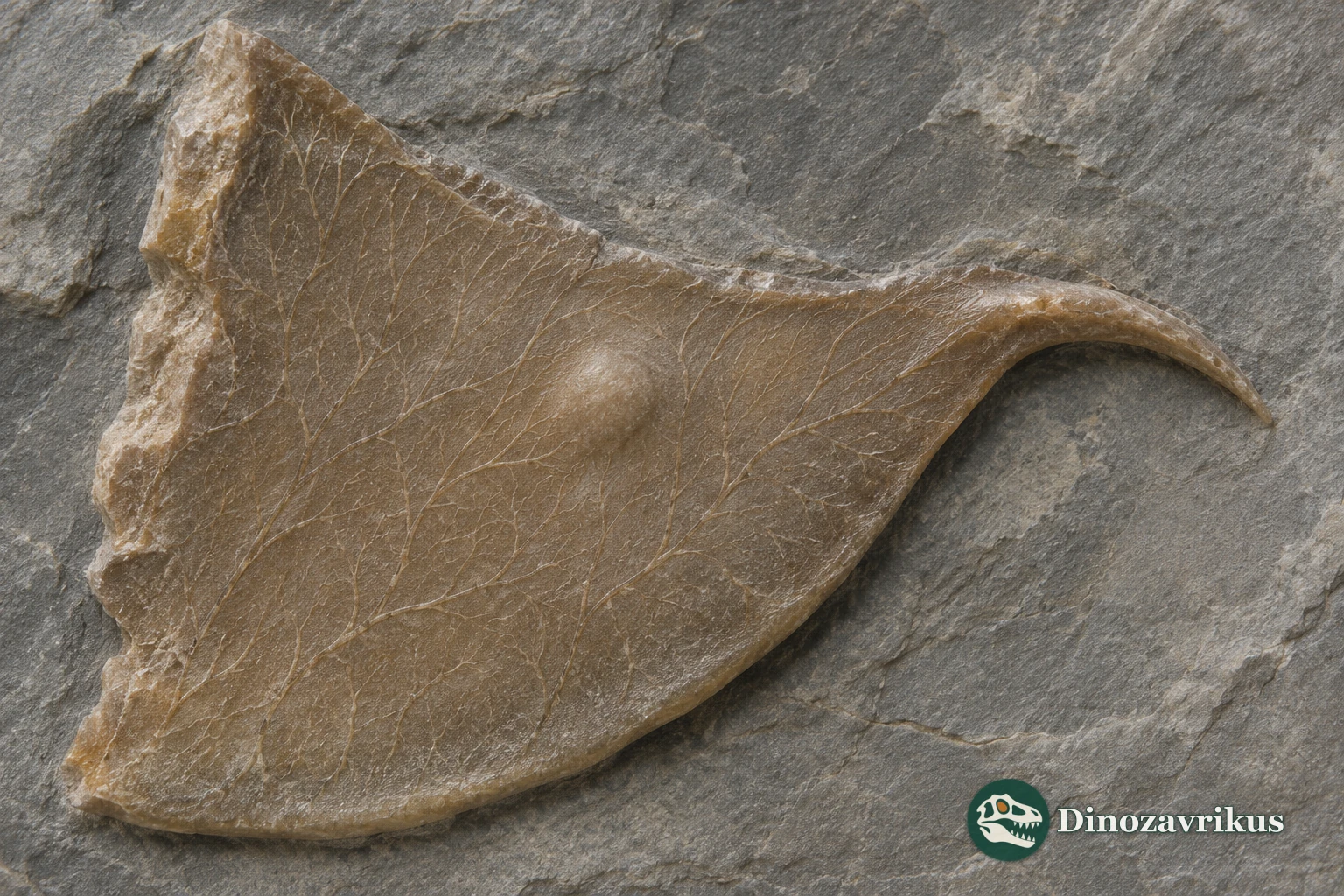
Millardicurus is known from latest Cambrian and earliest Ordovician rocks in North America. Silicified remains from western Utah revealed three closely related species. A free cheek of the type species even preserves a small swelling that may record a healed injury.
Quick facts
| Group | Hystricurid trilobites |
|---|---|
| Age | Latest Cambrian and earliest Ordovician |
| Genus named by | J. Adrain and S. Westrop, 2006 |
| Type species | Millardicurus millardensis |
| Records | United States, Canada and northwestern Greenland |
| Type locality | House Range, western Utah |
What can the fossils tell us?
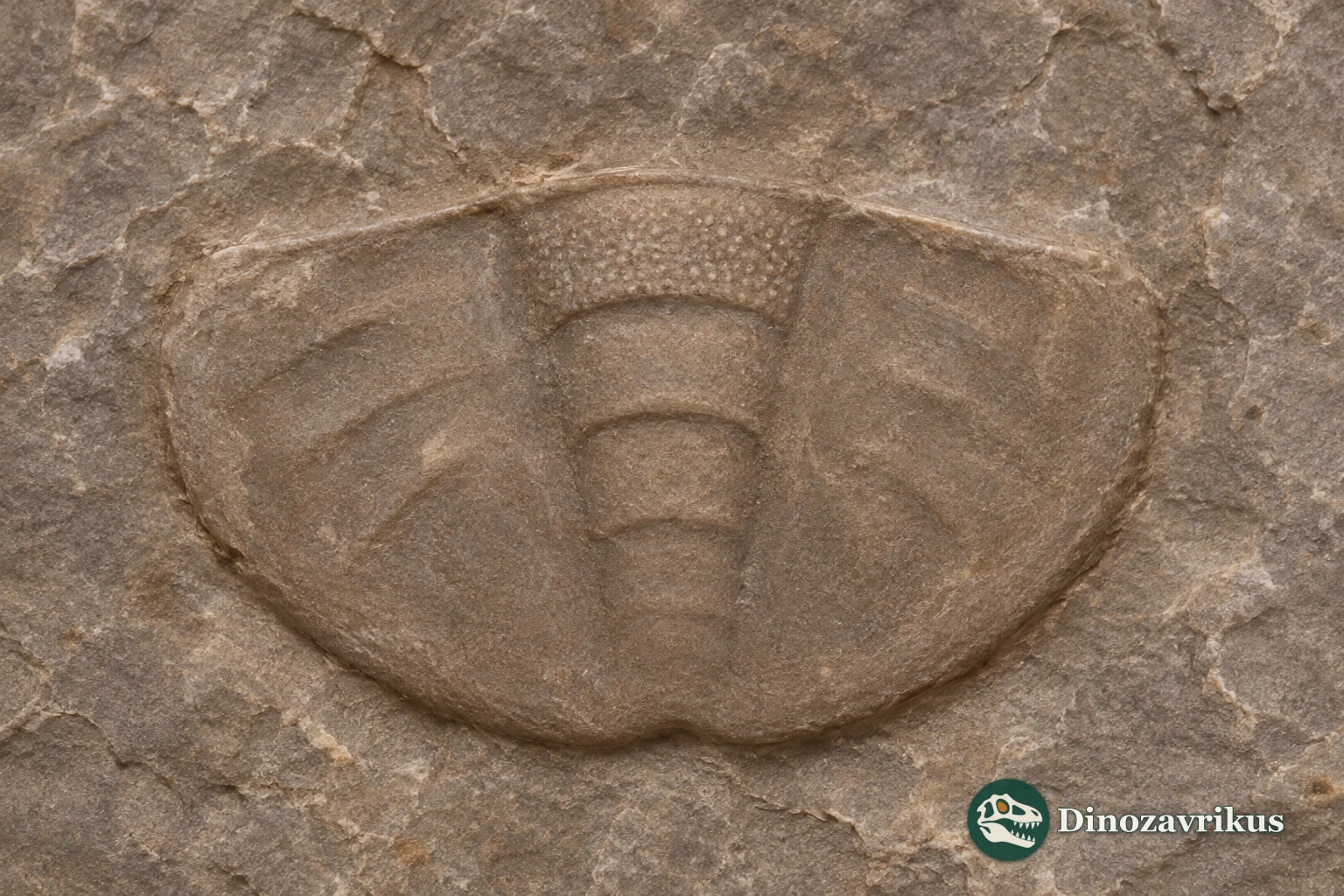
A long field lies in front of the raised central lobe. Another Utah species has a markedly narrower glabellar front.
The first ring bears obvious tubercles in the type species. Ring relief fades nearer the rear edge.
The swelling interrupts the surface pattern and matches a depression inside the shell. It may be a healed injury.
From five initial fossils to three species
Lehi Hintze named Hystricurus millardensis in 1953 from a single cranidium, two free cheeks and two tail shields from low in the House Formation of western Utah. The name originally placed it in Hystricurus. Later fossil collections supported a separate genus.
In 2006 Jonathan Adrain and Stephen Westrop studied new silicified material from the original bed and nearby strata. Alongside the type species they described M. housensis and M. paramillardensis. The latter was collected above the type horizon.
Comparing separate parts of the shell
In M. millardensis the front of the glabella is broad and the tail axis has three distinct rings and a faint fourth. In M. housensis the glabella narrows sharply in front of the eyes. Its smaller tail axis can have as few as two clearly defined rings.
The researchers recorded coordinates of equivalent landmarks on cranidia, free cheeks and tail shields. Statistical comparisons of those coordinates distinguished the average tail shield shape in all three pairwise species comparisons.
A swelling on a free cheek and the age of the fossils
A low, smooth swelling interrupts fine lines on the right free cheek SUI 100092. A depression on the inside matches the bulge. The authors suggested that it could be a healed injury.
The type horizon in Utah is earliest Ordovician. Rare cranidia assigned to Millardicurus also occur in latest Cambrian limestone in eastern New York. Those specimens were identified at genus level.
Frequently asked questions
Where was the type species found?
Low in the House Formation in the southern House Range of Millard County, western Utah.
Which Utah species were named in 2006?
The revision described M. housensis and M. paramillardensis alongside the type species.
How many rings occur on the tail shield of the type species?
Three rings are distinct. A fourth is weakly defined.
What might have caused the swelling on one of the cheeks?
The authors suggested a healed injury. A depression on the inner surface corresponds to the outer swelling.