

Mioclaenus was a small North American Paleocene mammal studied mainly from teeth and jaw fragments. Its type species, Mioclaenus turgidus, is known from jaw material associated with the San Juan Basin of New Mexico. The fossils reveal details of the tooth row, but they do not provide a complete skeleton, a reliable body-mass estimate or direct evidence of behaviour.
The genus belongs in the ancient mammals catalogue. The history of early mammal names can be seen in Protoselene: Protoselene opisthacus was first described in a combination with Mioclaenus. That former combination does not make the two genera identical. Promioclaenus is another distinct genus despite its similar name.
Quick facts
| Scientific name | Mioclaenus Cope, 1881 |
|---|---|
| Type species | Mioclaenus turgidus Cope, 1881 |
| Group | Paleocene mammal, usually placed in Mioclaenidae |
| Time | Torrejonian interval of the Paleocene |
| Main region | San Juan Basin, New Mexico; some referred records elsewhere need careful assessment |
| Type material | AMNH 3135, jaw fragments with teeth |
| Tooth size | M1 length is about 5–6 mm in some measured samples; this is not body size |
| Mass and diet | No reliable body-mass estimate or direct record of a specific diet |
What do the teeth show?
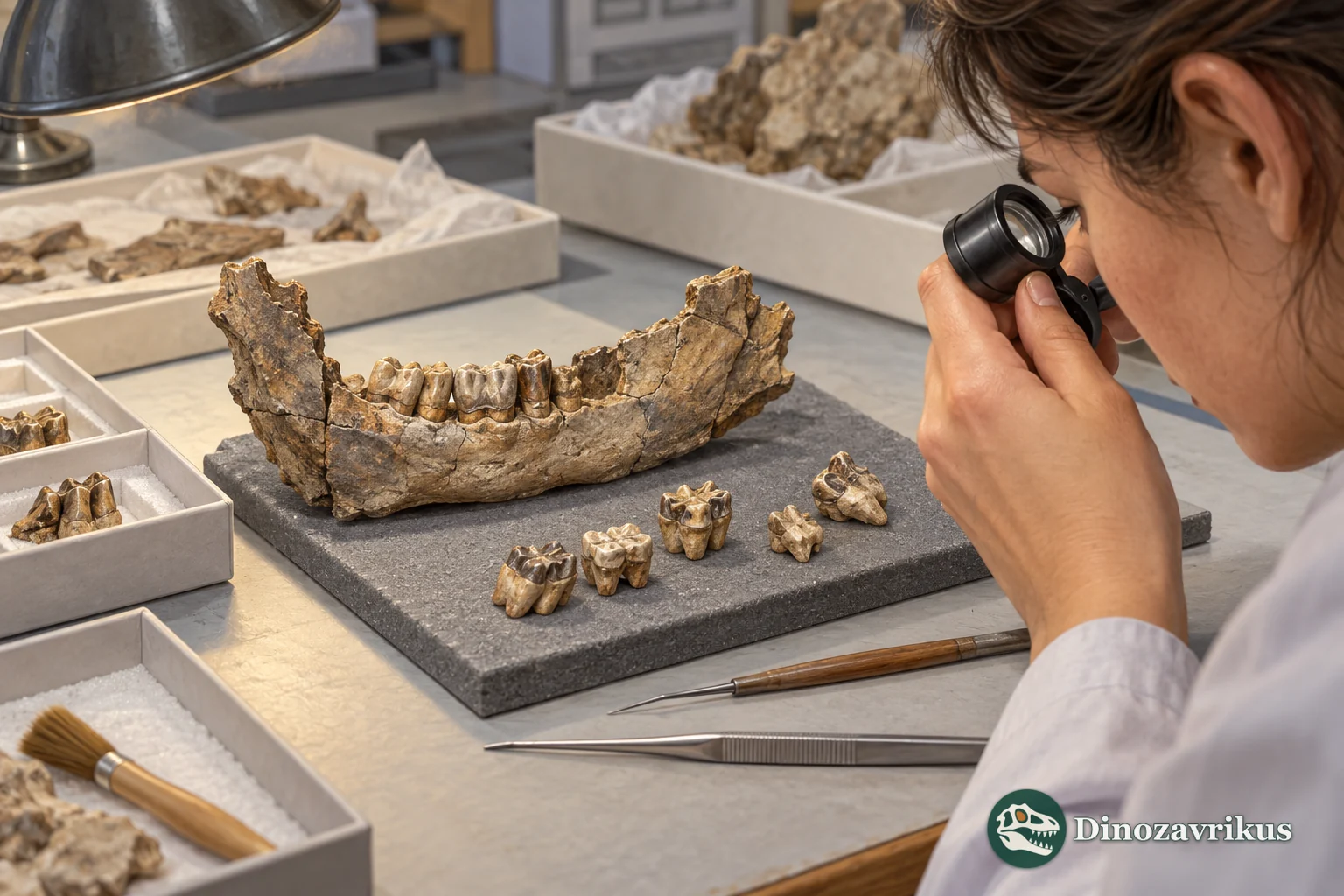
Holotype AMNH 3135 includes lower-jaw fragments and a maxillary fragment with teeth. It fixes the name M. turgidus but is not a complete skull or skeleton.
Descriptions note inflated premolars, a strongly reduced lower-molar paraconid and very small last molars. These characters support comparisons among fossil teeth, not a precise estimate of body size or diet.
The type material is associated with the San Juan Basin and probably the Torrejonian Nacimiento Formation. The Torrejonian is a Paleocene land-mammal interval. “Lowest Eocene” in Cope’s title reflects an older timescale, not current dating.
Mioclaenus opisthacus is a historical combination for a species later assigned to Protoselene. It should not be counted as a confirmed species of the present-day genus Mioclaenus.
Description and type species
Edward Drinker Cope introduced Mioclaenus in an 1881 paper on mammals from what he called the “lowest Eocene beds” of New Mexico. The terminology for boundary deposits and early mammal faunas has since changed. Material from the Nacimiento Formation is assigned to the Paleocene, so the old title should not be used as a modern age determination.
The type species is M. turgidus. Museum and taxonomic records identify its holotype as AMNH 3135. The specimen includes fragments of lower jaws with premolars and molars, plus part of an upper jaw. It supports comparisons of crowns and their arrangement, but reconstructing a complete skull would require adding anatomy not present in the type.
Teeth and diagnostic features
Descriptions of M. turgidus emphasize inflated premolars, a greatly reduced lower-molar paraconid, and very small last molars. This combination helped distinguish the genus from other early mammals, although species limits and the assignment of isolated specimens have changed in later literature.
Individual molars can be measured directly. Some samples of M. turgidus have first upper molars about 5–6 mm long, with variation among specimens and measurement series. A tooth cannot reliably yield body length or mass without a verified association with the skeleton and a defensible comparative model.
Locality and age
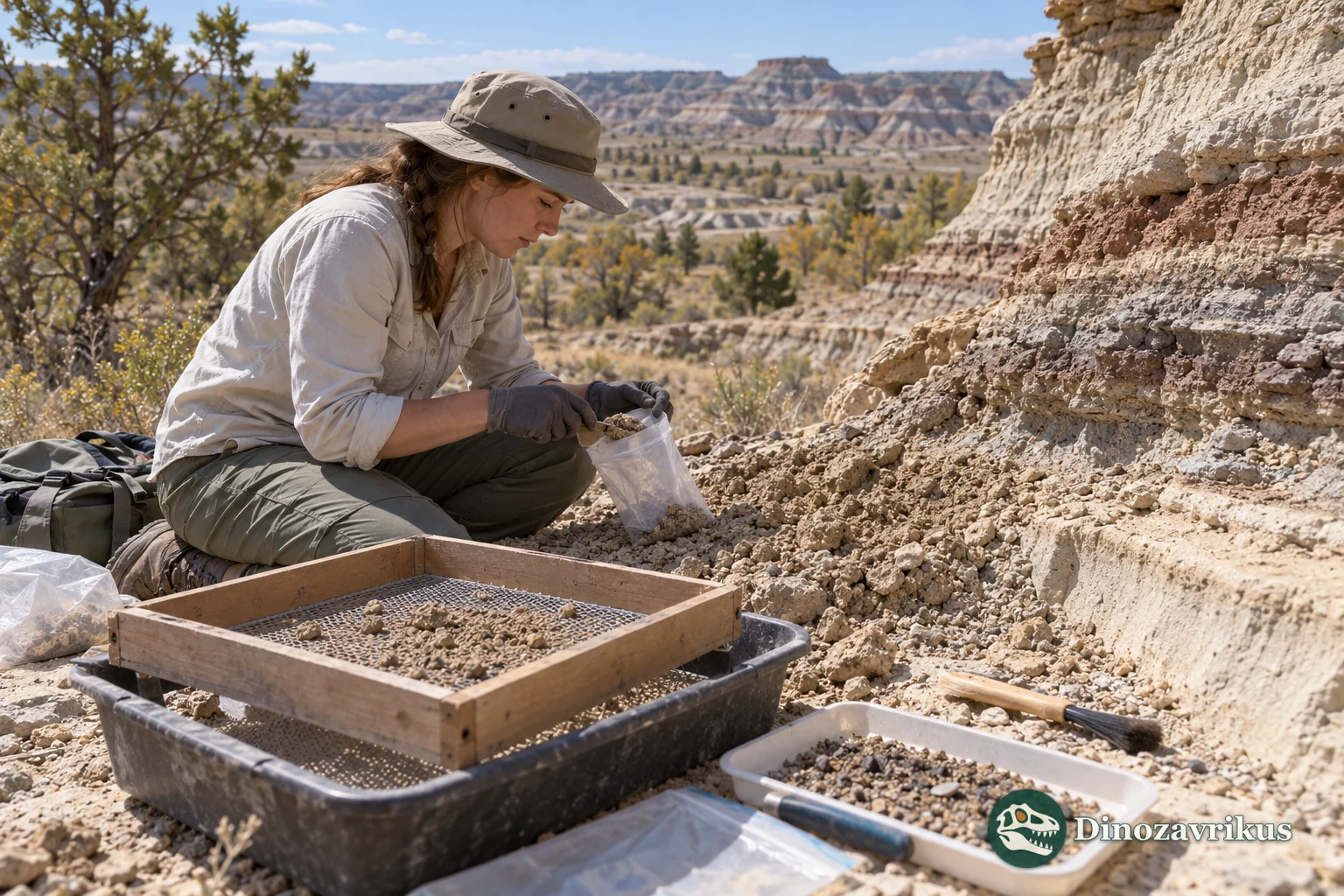
The main record of M. turgidus is associated with the San Juan Basin in New Mexico. The holotype is thought to come from Torrejonian strata of the Nacimiento Formation. Other fossils referred to the species come from additional North American localities; identifications based on isolated teeth should be compared carefully with the type.
The Torrejonian is a Paleocene land-mammal interval established from fossil assemblages and geological evidence. It is not one exact date for every tooth. A museum record for one specimen does not show that every member of the genus came from the same layer.
Taxonomy and transferred names
Mioclaenus is commonly associated with the family Mioclaenidae, but the higher classification of early placental mammals has changed repeatedly. The old grouping “Condylarthra” brought together several early hoofed forms and should not automatically be treated as a modern natural order. For an individual fossil, diagnostic anatomy and the history of its identification matter more than transferring a family name from an old list.
The name Mioclaenus opisthacus is an easy source of confusion. Cope first used that combination; later literature placed opisthacus in Protoselene. Other early mammal species also moved between genera, and Mioclaenus is easily confused in searches with Promioclaenus. The names refer to separate taxonomic histories, not interchangeable genera.
Diet and appearance
Molars with rounded cusps and reduced elements allow researchers to describe dental mechanics. They do not identify an exact menu. The known material does not include diagnostic stomach contents, coprolites with identifiable food, or feeding traces on a particular plant. Claims that Mioclaenus ate a specific fruit, leaf or insect would exceed the evidence.
No complete skeleton establishes the genus’s limb, trunk or tail proportions. The cover is a deliberately generalized artistic impression of a small terrestrial mammal. Fur, colour, body length and behaviour cannot be recovered from the known jaws.
Frequently asked questions
When did Mioclaenus live?
The best-known species, Mioclaenus turgidus, is associated with the Torrejonian interval of the Paleocene. Cope’s original paper used an older “lowest Eocene” label for the beds.
What is the holotype of Mioclaenus turgidus?
Holotype AMNH 3135 consists of jaw fragments with teeth. It is neither a complete skull nor a complete skeleton.
Is Mioclaenus opisthacus still a species of Mioclaenus?
That is a historical combination. The species was later assigned to Protoselene, so it should not be treated as a confirmed member of the current genus Mioclaenus.
What did Mioclaenus eat?
No direct evidence establishes a specific diet. Tooth shape can support comparative hypotheses about food processing, but it does not prove the contents of the animal’s diet.