

Mionetta is a genus of extinct ducks. Thousands of bones from around Saint-Gérand-le-Puy in France have been assigned to the type species. Far fewer bones belonged to the smallest ducks in those collections. Features of the humerus helped distinguish two different genera among those rarer specimens.
Quick facts
| Group | Anatidae |
|---|---|
| Age | Oligocene and Miocene |
| Type locality | Saint-Gérand-le-Puy, France |
| Material | Numerous bones, including humeri |
| Genus named by | Bradley Livezey and Larry Martin, 1988 |
What can the fossils tell us?
The upper end of the humerus has a prominent tubercle and a neighbouring fossa without a pneumatic opening.
Some specimens belong to a newly named Mionetta species. The species to which they had been attributed was moved to a different genus.
A separate Mionetta species was described from Early Oligocene Chelkar-Teniz. The principal French material of the type species is younger.
From a living genus to a fossil genus
Alphonse Milne-Edwards described the type species as Anas blanchardi in 1863. Later comparisons linked it to Dendrochen, a genus based on Miocene fossils from North America. Bradley Livezey and Larry Martin re-examined the French bones and erected Mionetta in 1988. The main material of M. blanchardi is from the Early Miocene deposits around Saint-Gérand-le-Puy. The same species has also been recorded from Late Oligocene deposits in France.
Near the shoulder end of the humerus, a tubercle projects and the head of the bone overhangs part of a depression. The depression has no pneumatic opening through which an air-sac diverticulum would have entered the bone. A combination of such details helps diagnose Mionetta. The absence of an opening alone does not show how often or how deeply the bird dived.
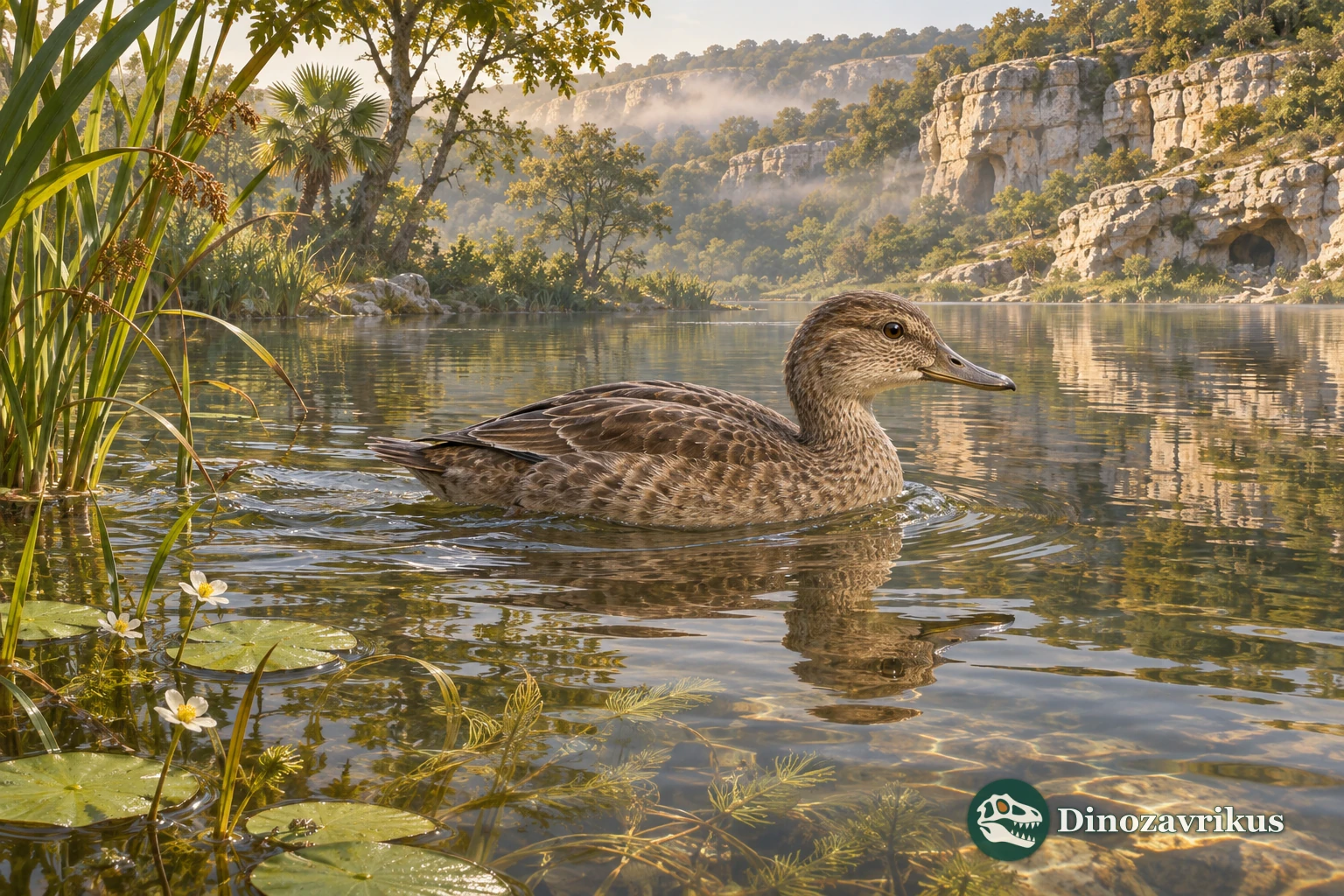
Why the small ducks needed a second look
In 2023 Nikita Zelenkov revised the smaller bones from the French deposits. Some belonged to a duck he named Mionetta defossa. The specimen that fixes the meaning of the name natator belongs to a different genus, named Caerulonettion in that study. Overlap in the size of these bones helps explain why earlier work had grouped them together.
The larger form Mionetta consobrina has also been interpreted as unusually large individuals of the type species. The 2023 revision retained it as a separate species on the basis of reported differences in bone shape as well as size. In practice, the largest bones from the type species and the smallest ones assigned to M. consobrina can overlap in their measurements.
Fossils east of Europe
In 2024 Zelenkov described Mionetta turgaiensis from Early Oligocene Chelkar-Teniz in Kazakhstan. It is older than the main French series and extends the known range of the genus. The same fossil fauna includes Cygnopterus, another waterfowl genus with a history of changing identification.
Phylogenetic studies have placed the type species close to the stiff-tailed ducks or nearer the base of the branch leading to several living duck groups. These are alternative results from comparing skeletal characters. They inform discussions of relationships, while the living bird’s plumage and much of its behaviour remain unknown.
Frequently asked questions
Why was Mionetta moved out of the genus Anas?
Re-examining the bones revealed a combination of characters supporting a separate genus for the type species.
Where is the largest sample of the type species from?
Early Miocene sites around Saint-Gérand-le-Puy in France.
Does the species formerly called Mionetta natator still belong to this genus?
The 2023 revision assigned it to Caerulonettion. Other small fossils from the French collections were used to name a different species of Mionetta.
Was Mionetta a diving duck?
Some skeletal features have been interpreted as adaptations for diving. The fossils do not show how frequently or deeply the birds dived.