

Modocia was a Cambrian trilobite whose cheek spines ranged from long and robust to absent, depending on the species. Articulated shells from western Utah document those differences and let researchers count the trunk segments. Some other shells preserve local deformations that can be compared with breaks made after death.
Quick facts
| Group | Trilobites |
|---|---|
| Age | Cambrian |
| Genus named | Charles Walcott, 1924 |
| Type species | Modocia oweni |
| Measured shell | 35 mm, M. comforti holotype |
| Utah occurrences | Marjum and Weeks formations |
What can the fossils tell us?
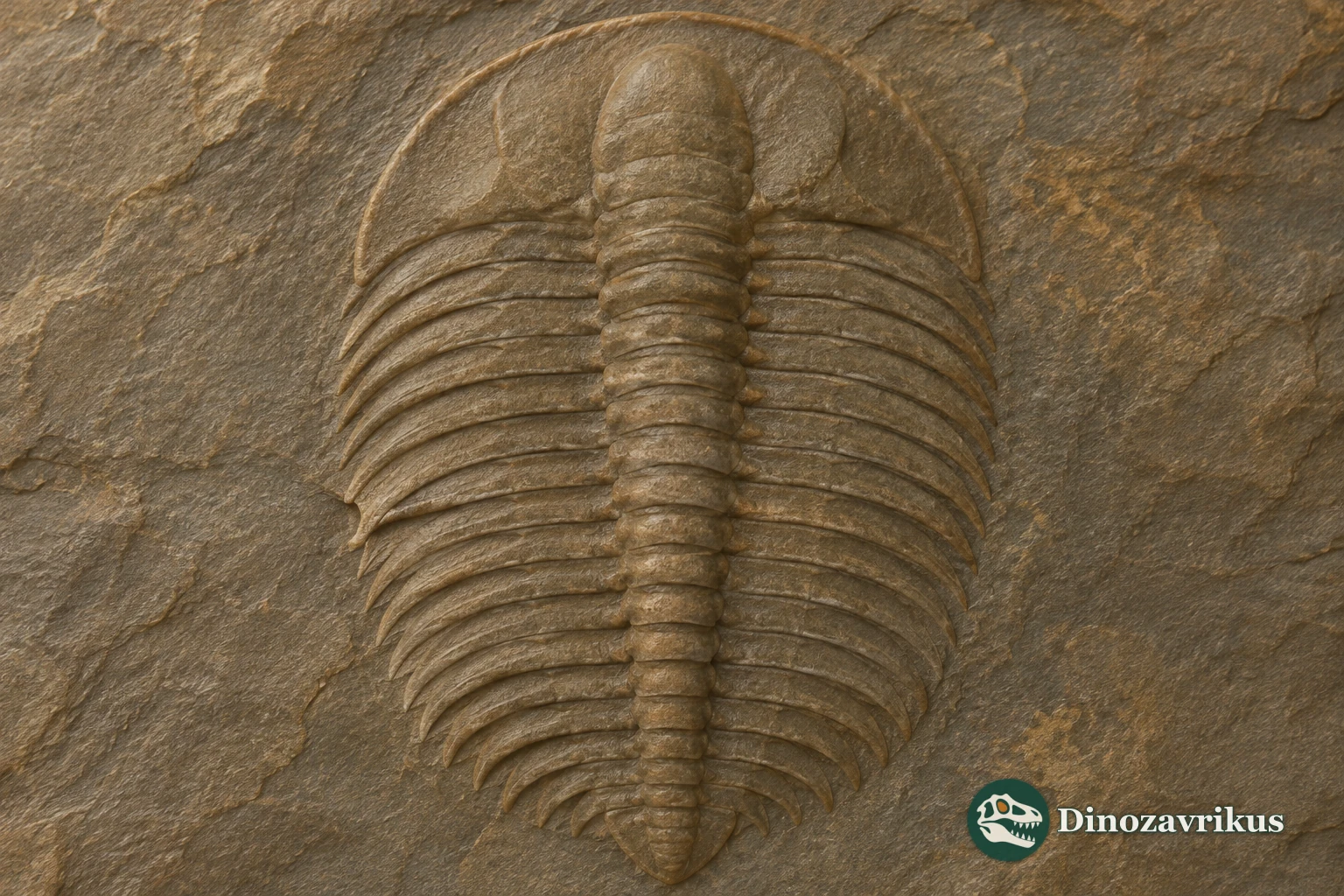
M. comforti had rounded corners without spines, whereas M. kohli had long, stout spines. Tail shields add diagnostic details to isolated head material.
In the Marjum material, some shortened segment tips have rounded ends. Other segments on the same material broke after death and have abrupt edges.
On some articulated specimens the central part of the head has collapsed while the trunk remains in place. Its height in the fossil reflects preservation as well as anatomy.
How the species are told apart
Charles Walcott named Modocia in 1924. Its type species, M. oweni, was first described by Fielding Meek and Ferdinand Hayden in 1861 as Arionellus (Crepicephalus) oweni. The central part of the head shield, called the cranidium, supplies some of the characters used for identification. The form of the tail shield and the surface ornament of the shell provide additional evidence.
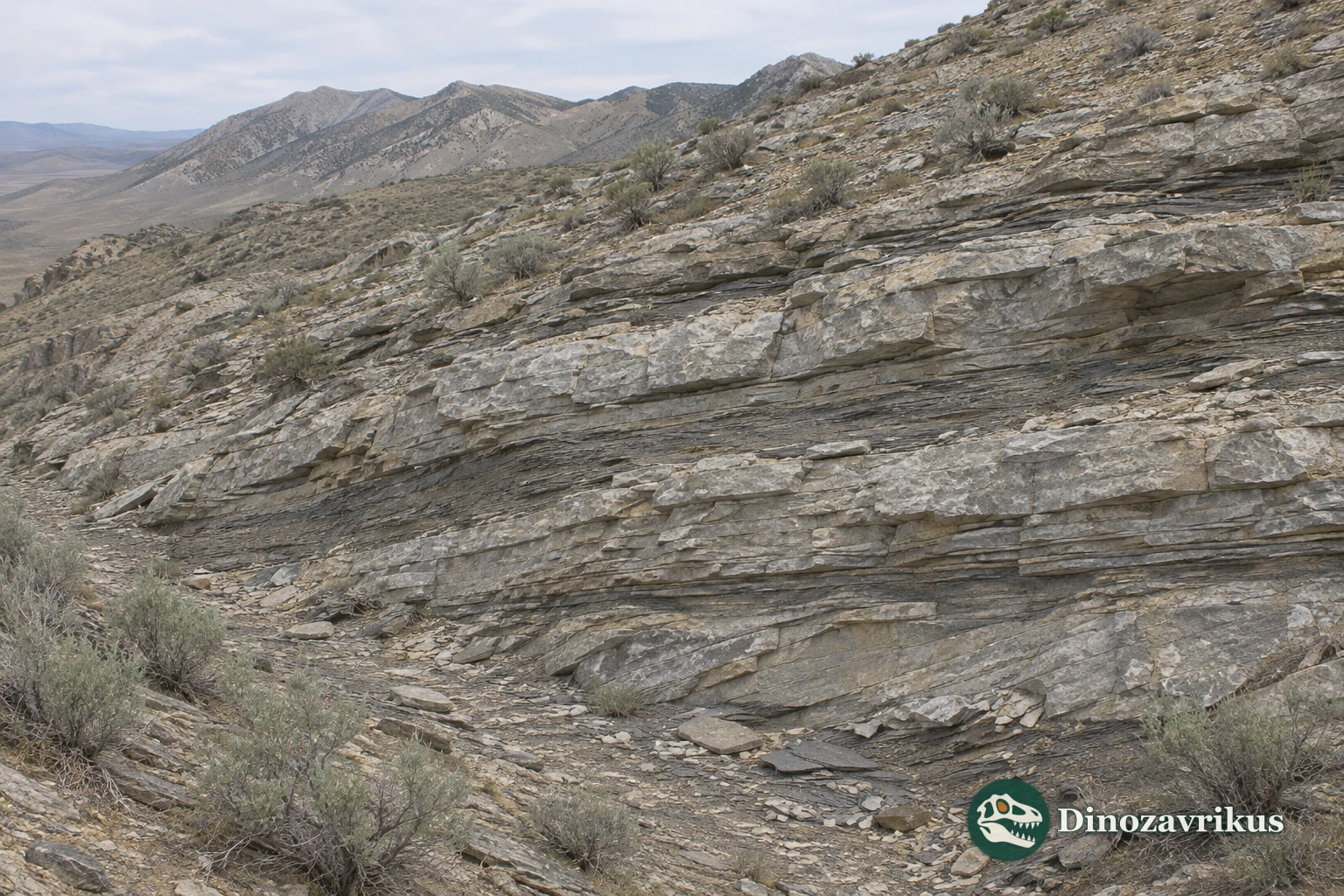
The 35 mm holotype of M. comforti, BPM 1009, comes from North Canyon in the upper Weeks Formation of the House Range. It has 13 trunk segments, a relatively wide axis and no cheek spines. M. kohli has the same number of segments but exceptionally long, robust cheek spines. M. whiteleyi has 12 segments and short cheek spines. These are observations from articulated exoskeletons, where the pieces can be assigned to the same individual.
Unusual segment tips in the Marjum Formation
On the articulated M. typicalis specimen AMNH-FI-116562, the left tip of the eleventh trunk segment is shorter than its counterpart, with a rounded end. A second specimen preserves shortened tips on both the tenth and eleventh left segments. Its fifth and sixth segments also have sharp breaks, which the researchers interpreted as postmortem damage.
A rounded outline is compatible with repair in life. The individual defects give no secure indication of how the injury occurred. Abrupt breaks and healed-looking edges are therefore recorded separately when assessing these fossils.
What burial changes
In some Weeks specimens the raised central part of the head has collapsed, even though the trunk remains articulated. Richard Robison and Loren Babcock recorded the same contrast in Coosella and interpreted the collapse as a change after burial. That distinction matters when comparing the original head relief of specimens preserved in different ways.
Frequently asked questions
What is the type species of Modocia?
Modocia oweni, first described by Meek and Hayden in 1861. Walcott established the genus in 1924.
Did every Modocia species have cheek spines?
M. comforti has none in the described material. M. kohli has particularly long, robust examples.
How long is the holotype of Modocia comforti?
The exoskeleton BPM 1009 measures 35 mm in length.
What can a rounded segment tip tell researchers?
It can help distinguish possible damage sustained in life from an abrupt break after death. The rounded tip does not reveal what caused the initial damage.