

Namibchersus left shells and isolated plates in the Early Miocene sediments of southwestern Namibia. Its name now rests on a small individual from the same locality as the original finds. Part of a far larger shell at Auchas shows how different the proportions could look in an adult.
Quick facts
| Group | Turtles, tortoises (Testudinidae) |
|---|---|
| Age | Early Miocene |
| Region | Africa (Namibia, with a comparable specimen from Egypt) |
| Type species | Namibchersus namaquensis |
| Neotype | EF X1’00, shell from Elisabethfeld |
| Scientific name | Namibchersus |
| Diet | Exact diet unknown |
What can the fossils tell us?
The Elisabethfeld specimen preserves the upper and lower shell of one individual. It can be compared with the figures of the lost specimens.
A 10.7-centimetre plate was used to estimate a carapace length of about 81.5 centimetres for an individual at Auchas.
Eight borings follow scute grooves in the Egyptian specimen. They record activity at the shell surface. The specimen’s identity at species level remains provisional.
A name anchored in Elisabethfeld
Ernst Stromer described the species in 1926 as a possible member of Testudo. The specimens he studied were destroyed in Munich during the war. Later fieldwork led by Brigitte Senut and Martin Pickford recovered new fossils from Elisabethfeld. In 2003, France de Lapparent de Broin named Namibchersus and designated EF X1’00 as the neotype. The name combines Namib and a Greek word referring to dry land.
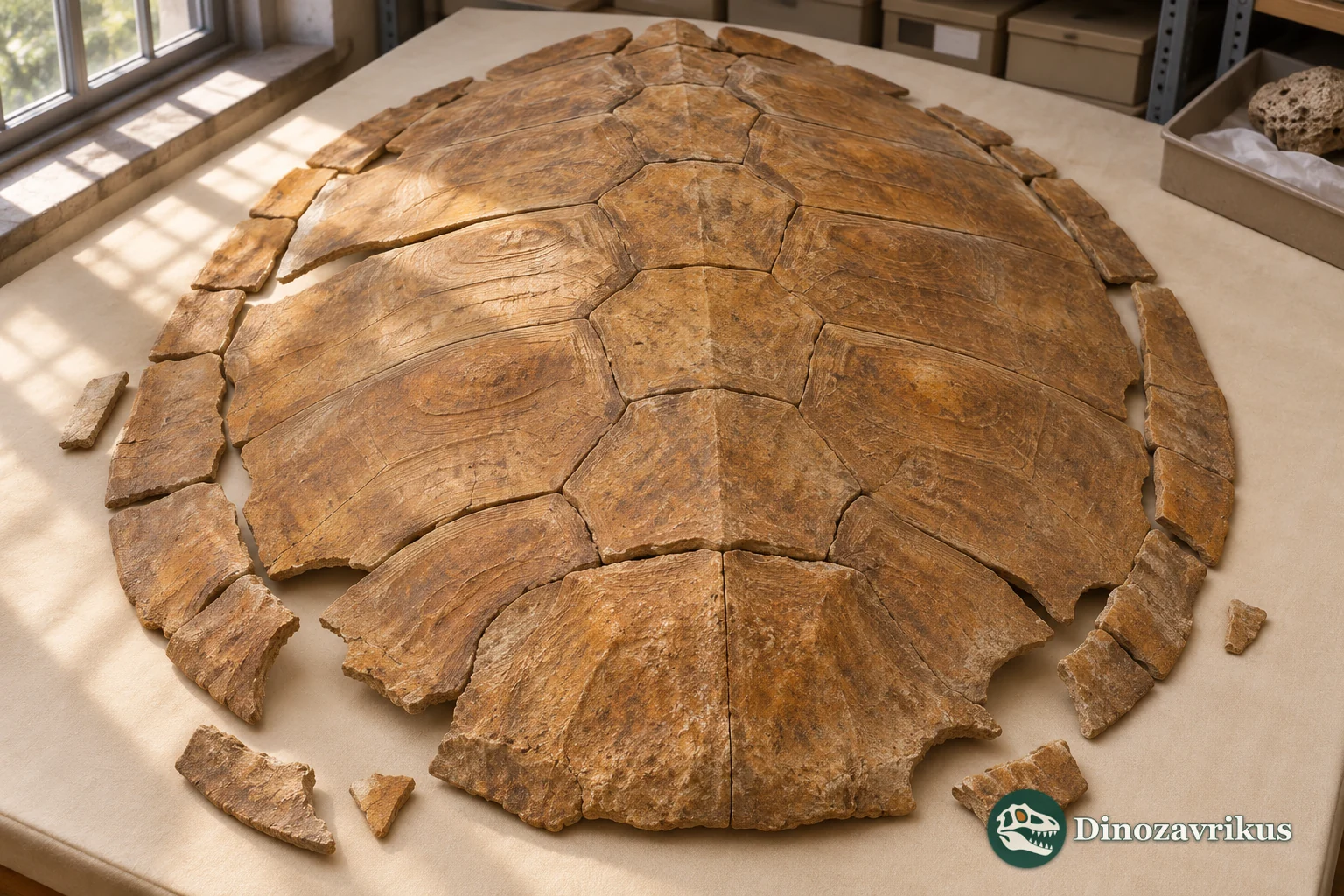
The new type preserves a carapace about 30 centimetres long and a plastron 24.4 centimetres long. Loosely joined dorsal bones and the form of the lower shell informed its description as a young female. The deposits were placed at about 19–20 million years ago in that study.
The larger shells at Auchas
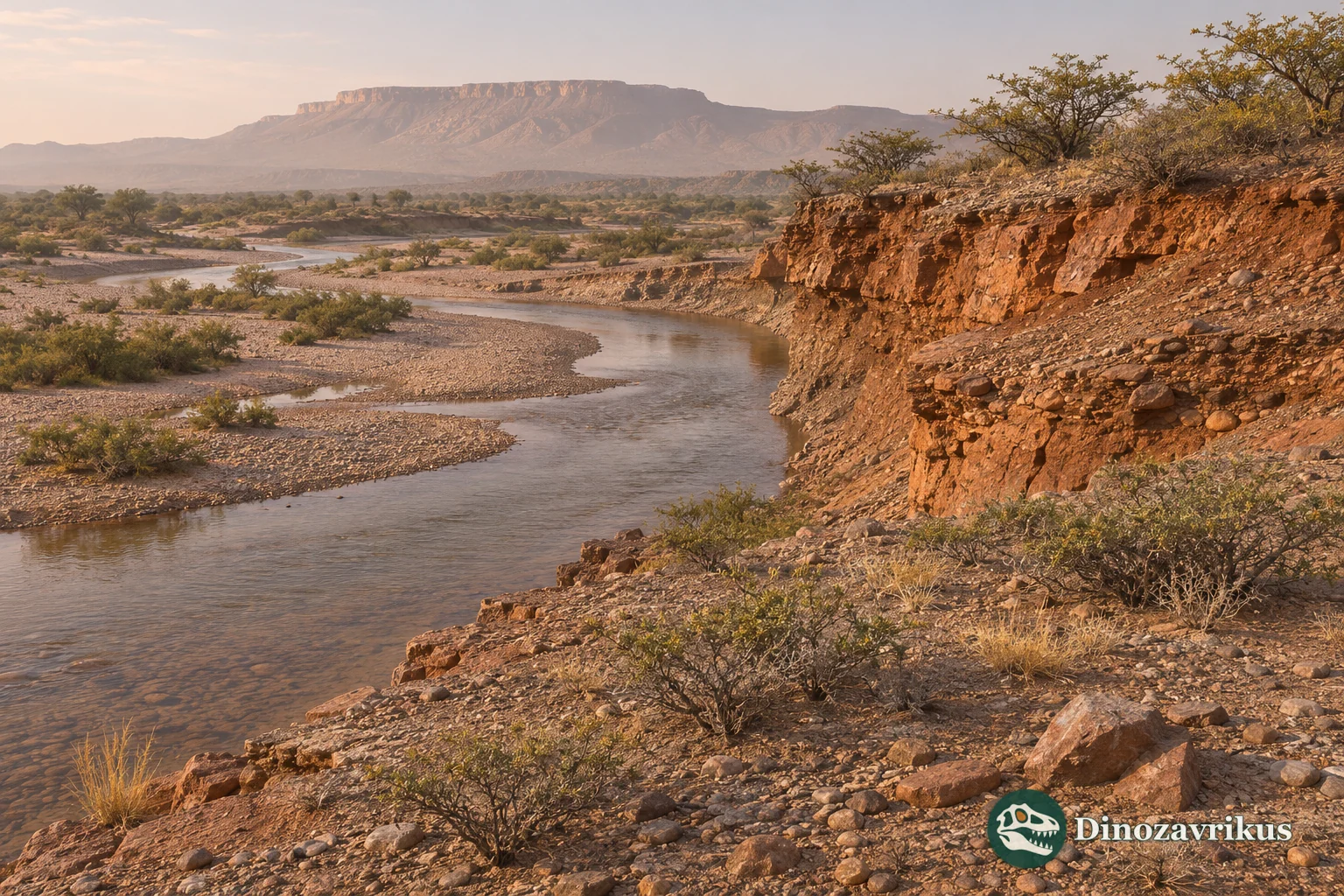
A fossil meander of the ancestral Orange River yielded specimens of several sizes. The more complete carapaces show a moderately high dome, nearly parallel sides and a long bridge between the upper and lower shell. Some marginal grooves end in small points at the rim. A posterior peripheral from the largest known shell at Auchas measured 10.7 centimetres. Scaling from that bone gave an estimated carapace length of about 81.5 centimetres for the specimen. Another example of large size among Miocene tortoises is the European Titanochelon.
From shell anatomy to shell damage
The front of an Early Miocene plastron from the Moghra Formation in Egypt was identified as Namibchersus cf. N. namaquensis. The grooves of the throat scutes form a heart-shaped outline comparable to those on Namibian shells, but the comparison is tentative at species level. Eight small borings occur along the grooves that once separated surface scutes. Their placement gives evidence about where traces were made on the shell. It does not identify the animals that made them or establish that the Egyptian tortoise belonged to the same species as the neotype.
Frequently asked questions
Why did Namibchersus need a neotype?
The original material was destroyed. EF X1’00 came from the same locality and was selected as the replacement name-bearing specimen.
How big was the neotype?
Its upper shell was about 30 centimetres long. The lower shell measured 24.4 centimetres.
What does cf. mean for the Egyptian fossil?
The authors found it comparable to Namibchersus namaquensis, with the species-level identification left open.
Where does the name Namibchersus come from?
It combines Namib with a Greek word for dry ground, a reference to the locality and its terrestrial relationship.