

Navahoceros is a name proposed for a Pleistocene North American deer with unusually sturdy, shortened lower limbs and comparatively simple antlers. Schultz and Howard first described the species as Rangifer? fricki in 1935 from Burnet Cave, New Mexico. Kurtén erected Navahoceros in 1975 using additional Mexican material. Later researchers disagreed about whether the fossils warrant a separate genus or belong with Odocoileus. The cover is a plausible deer portrait, not the known coat of a type animal.
The antlers, skull and limb collections come from distinct finds. Their taxonomic association has to be tested rather than assumed.
Quick facts
| Original species | Rangifer? fricki Schultz and Howard, 1935 |
|---|---|
| Genus proposed | Navahoceros Kurtén, 1975 |
| Family | Cervidae |
| Type locality | Burnet Cave, New Mexico |
| Comparative series | San Josecito Cave, Nuevo León, Mexico |
| Direct material | Antler, cranial and limb bones from separate finds |
| Taxonomic question | Separate genus or material of Odocoileus |
What can the fossils tell us?
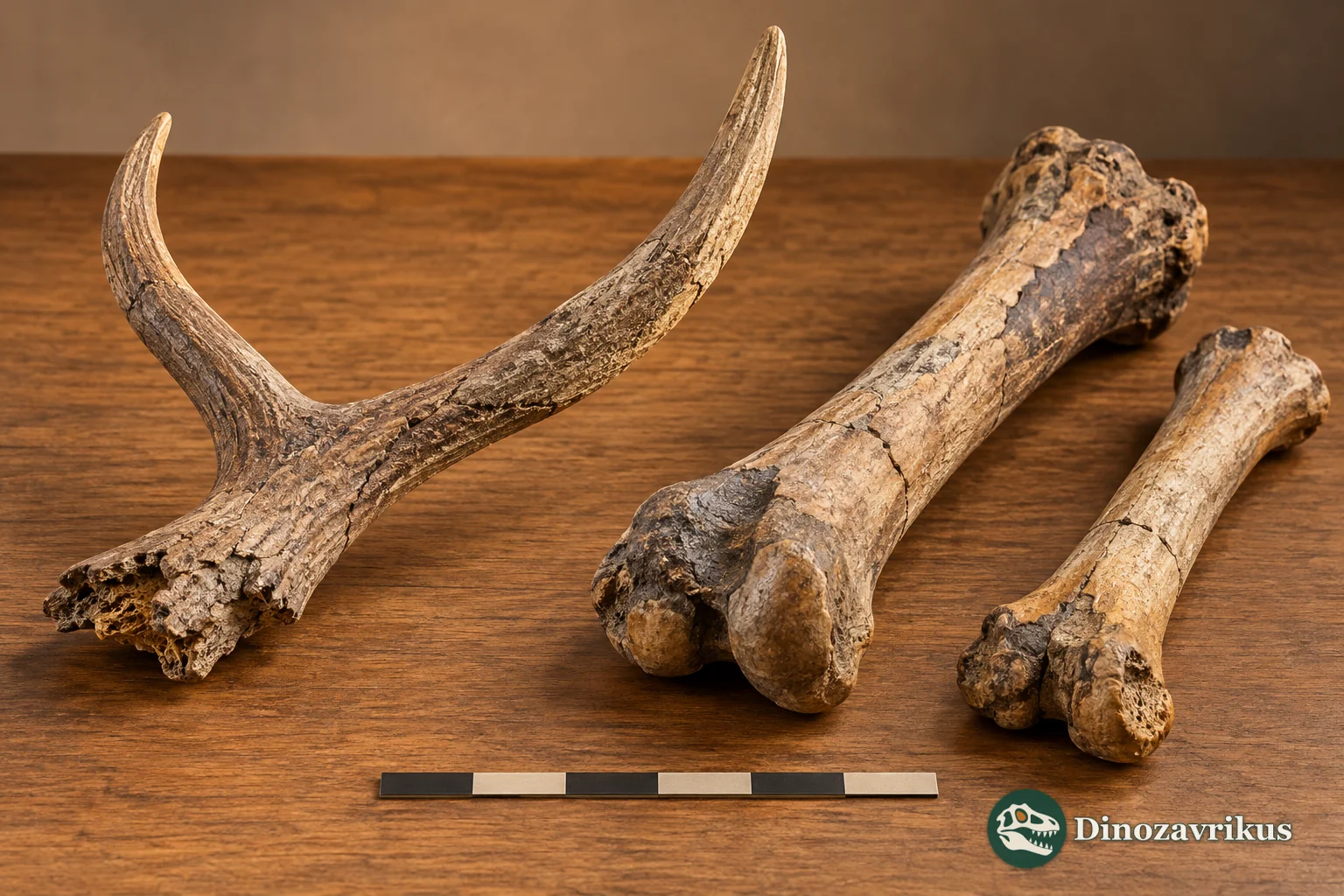
Kurtén described relatively simple forked antlers in assigned males. An isolated antler cannot automatically be joined to limb bones from another deposit.
Short, robust metapodials can be measured. Locomotion on rocky slopes is an inference rather than fossilized behavior.
Webb's Mexican cranium supported a distinct relationship near Rangifer. Morejohn and Dailey reassigned studied museum material to Odocoileus.
From Burnet Cave to the San Josecito sample
The question mark in the original Rangifer? fricki signaled an uncertain comparison with reindeer. Kurtén's later diagnosis emphasized short metapodials, strong limb bones and simple forked antlers. He compared a substantial series from San Josecito Cave in Nuevo León, Mexico. Measurements express differences among collections, not the body size of one assembled animal.
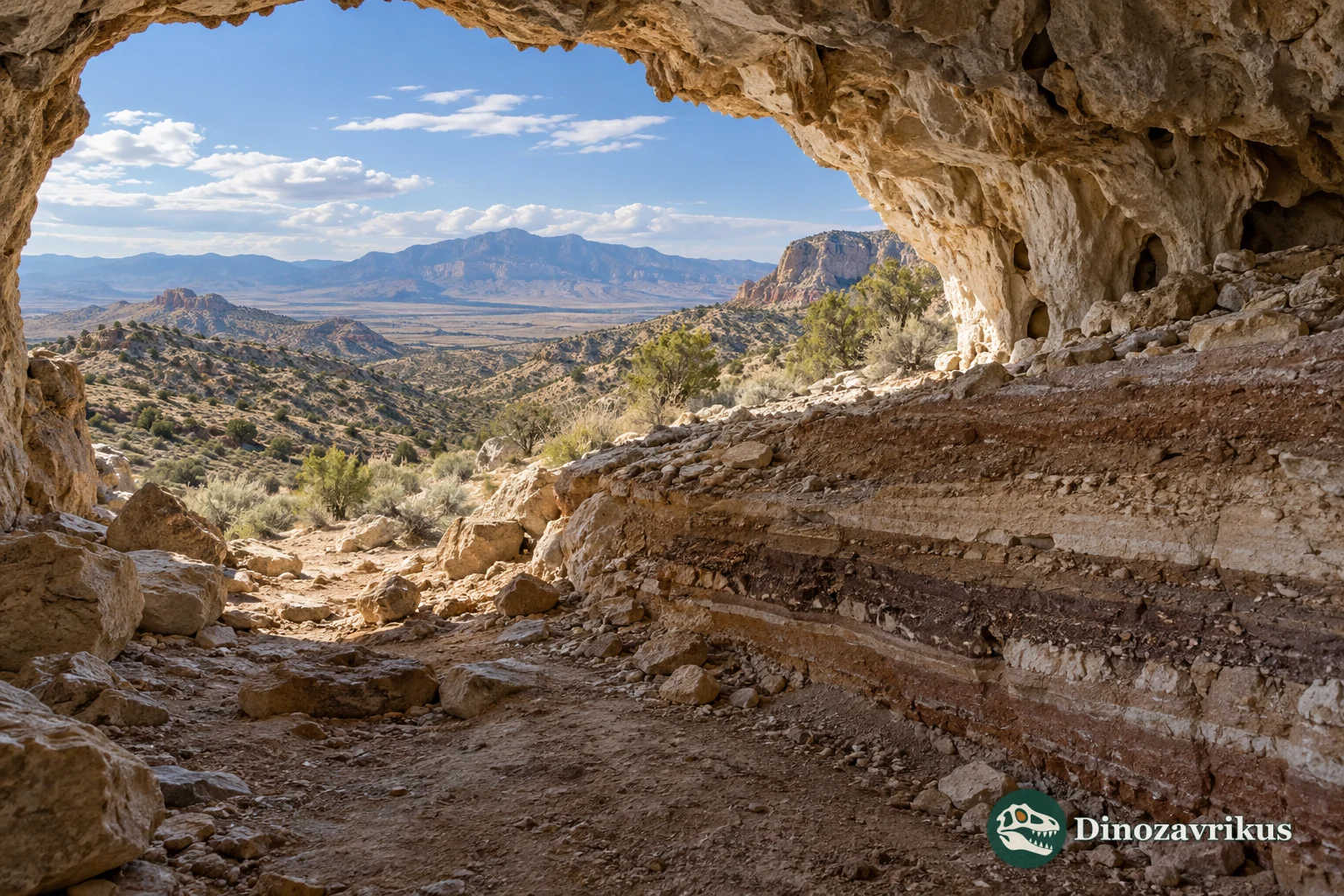
Cave deposits accumulate at different times. A limb from one layer and an antler from another do not become a skeleton merely because both have the same old label. Cervalces represents another North American deer lineage and supplies a useful comparison without merging the collections.
What limb proportions suggest
Kurtén interpreted the compact lower limbs as an adaptation for rocky, mountainous terrain. This is a functional hypothesis. Fossil shafts and joints preserve anatomy, not observations of where each animal walked. A 2024 conference study remeasured juvenile and adult San Josecito limb bones and reported greater robustness during growth for the humerus and femur, but no significant departure from isometry for the radius or tibia.
The growth result refines an anatomical question without settling genus-level taxonomy. Body mass, coat and climbing ability cannot be read directly from this sample. The wider Quaternary record gives a time framework, but locality ages must be evaluated individually.
Why the genus is disputed
Webb described a Mexican skull under Navahoceros and inferred a relationship near Rangifer from cranial features. Morejohn and Dailey later reviewed museum material labeled Navahoceros and assigned the specimens they studied to Odocoileus. A New Mexico museum synthesis considers a distinct genus defensible on combined cranial and limb evidence. These are different interpretations of assigned material, not new measurements of one complete type skeleton.
A mounted museum animal may incorporate disarticulated bones. Resolving the dispute calls for direct comparison of type material, securely provenanced skulls, antlers and limb series. The uncertain boundaries also prevent a precise last-occurrence date for a single uncontested mountain-deer species.
Frequently asked questions
Is Navahoceros accepted as a separate genus?
There is no single interpretation: some accounts retain it, while a museum re-examination assigned studied specimens to Odocoileus.
Where was fricki first described?
Its original type locality is Burnet Cave in New Mexico; Mexican cave material was compared later.
Do the short legs prove rock climbing?
No. Climbing is a functional hypothesis inferred from proportions, not a directly preserved behavior.
Is its coat known?
No. The article cover uses an artistic choice of color and soft tissue.