

Nebraskophis was a North American snake known from vertebrae. The genus was named from Miocene material in Nebraska. On its type vertebra the low neural spine slopes into the arch at the rear. A comparable vertebra from the Oligocene of Florida was later named as a second species.
Quick facts
| Group | Snakes (Serpentes) |
|---|---|
| Age | Oligocene and Miocene |
| Region | North America, United States, Florida and Nebraska |
| Type vertebra length | 3.7 mm from the front to the rear joints |
| Type species | Nebraskophis skinneri |
| Scientific name | Nebraskophis |
| Diet | No direct evidence |
What can the fossils tell us?
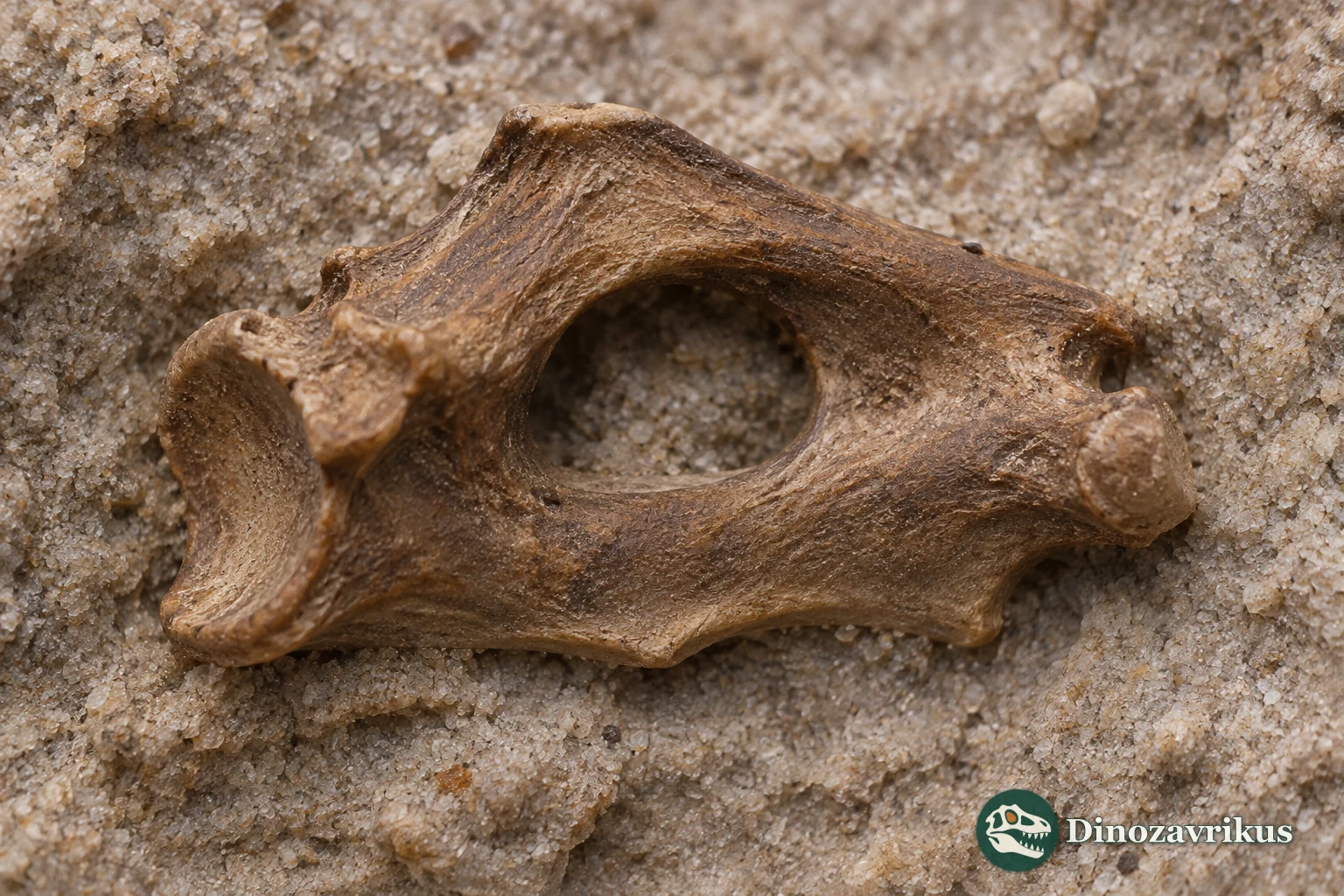
The type specimen, MSU-VP 708 from Egelhoff, is a trunk vertebra. A second, fragmentary vertebra was included in the original description.
The arch, processes and keel provide the characters used to compare the Nebraska and Florida vertebrae with other fossil snakes.
Isolated vertebrae may come from different parts of the trunk. No continuous series shows how the features varied within one animal.
Naming the snake
J. Alan Holman named Nebraskophis skinneri in 1973 from the Egelhoff site in northern Nebraska. He honoured Morris Skinner, who discovered the locality in 1964. The holotype MSU-VP 708 and paratype MSU-VP 709 came from the lower Valentine Formation. The type species was also reported at Norden Bridge.
What the type vertebra shows
Holman measured a length of 3.7 mm from the front to the rear joints. In side view, the neural spine is low and slopes gently into the arch at the rear. A relatively narrow keel runs underneath. In Anilioides, an important ridge instead sits on a projection at the front of the vertebra. Position as well as shape matters when comparing these features.
Older finds
Holman named Nebraskophis oligocenicus in 1999 from the early Oligocene at the I-75 locality in Florida. Its neural spine is even more reduced and its ventral keel broadens towards the rear. A similar vertebra from the late Eocene of Georgia has been compared with the Florida material, although the identification is less secure.
Frequently asked questions
Who was the type species named after?
Morris Skinner, who discovered the Egelhoff locality where the type material was found.
How large is the type vertebra?
It measures 3.7 mm across its articular processes. That measurement does not establish total body length.
Where was the Oligocene species found?
It comes from the I-75 locality near Gainesville, Florida.
Which parts of the skeleton are known?
Both named species are based on isolated trunk vertebrae. These preserve details of the joints and neural arch.