

Neocnus is an extinct Antillean sloth known from Cuba and Hispaniola. Several named species come from separate island deposits. Limb anatomy suggests notable climbing ability, rather than the strictly terrestrial life often imagined for large mainland sloths. This is an inference from bones, not an observation of a living Neocnus.
The cover portrays one plausible island sloth. Coat color, exact posture and vegetation are artistic choices; they should not be mistaken for a documented fossil specimen.
Quick facts
| Group | Extinct Antillean sloths |
|---|---|
| Islands | Cuba and Hispaniola |
| Hispaniolan species | N. comes, N. dousman and N. toupiti in a 2000 revision |
| Fossils | Skulls, jaws and limb elements |
| Direct dates | Some Haitian N. comes bones around 4.4–4.5 ka radiocarbon BP |
| Locomotion | Climbing inferred from wrist and limb anatomy |
| Limit | Latest recovered fossil is not the extinction date |
What can the fossils tell us?
A 2000 revision described N. dousman and N. toupiti alongside N. comes. Later morphometric work raised questions about character overlap without formally resolving all species boundaries.
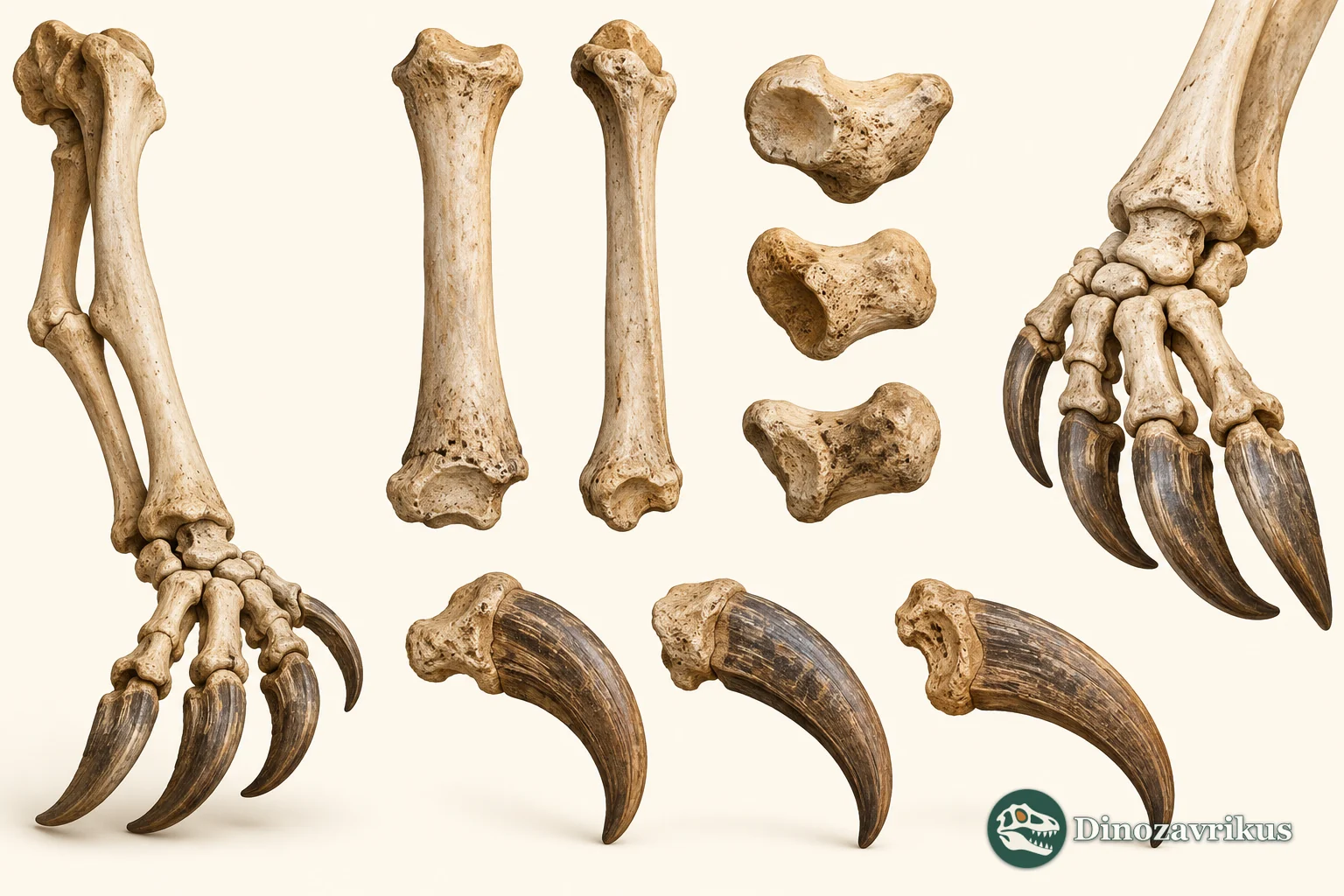
Radius and wrist anatomy from Dominican material indicate mobility compatible with arboreal use. This is a functional inference, not observed behavior.
Haitian N. comes bones yielded 4391 ± 42 and 4486 ± 39 radiocarbon years BP. Calibration changes the calendar intervals; the ages do not directly establish a cause of extinction.
Different forms on two islands
Cuban records include forms named N. major and N. gliriformis. On Hispaniola, a 2000 study compared N. comes and named N. dousman and N. toupiti. It used skull, dental and skeletal differences. Similar appearance does not make fossils from separate islands the same species.
A later conference report found overlapping cranial measurements among some Hispaniolan forms and proposed further testing of species limits. This is a question for renewed analysis, not a completed synonymization. Fossils in caves may have been accumulated after death; a cave find alone does not imply that these sloths lived underground. Acratocnus shows another branch of Antillean sloth diversity without making the two genera interchangeable.
What the wrist and limbs suggest
Dominican Republic material includes radius and wrist elements provisionally referred to N. dousman. Their joint surfaces suggest a wider range of wrist motion than in the heavier Antillean sloth Parocnus. The researchers interpreted this as evidence for more developed arboreal ability.
Anatomy cannot tell us a precise climbing speed or the fraction of a day spent in trees. The illustrated bones are conceptual rather than copies of a museum specimen, and living sloths provide only a broad comparison for soft tissue and posture.
Direct dates and survival after the Pleistocene
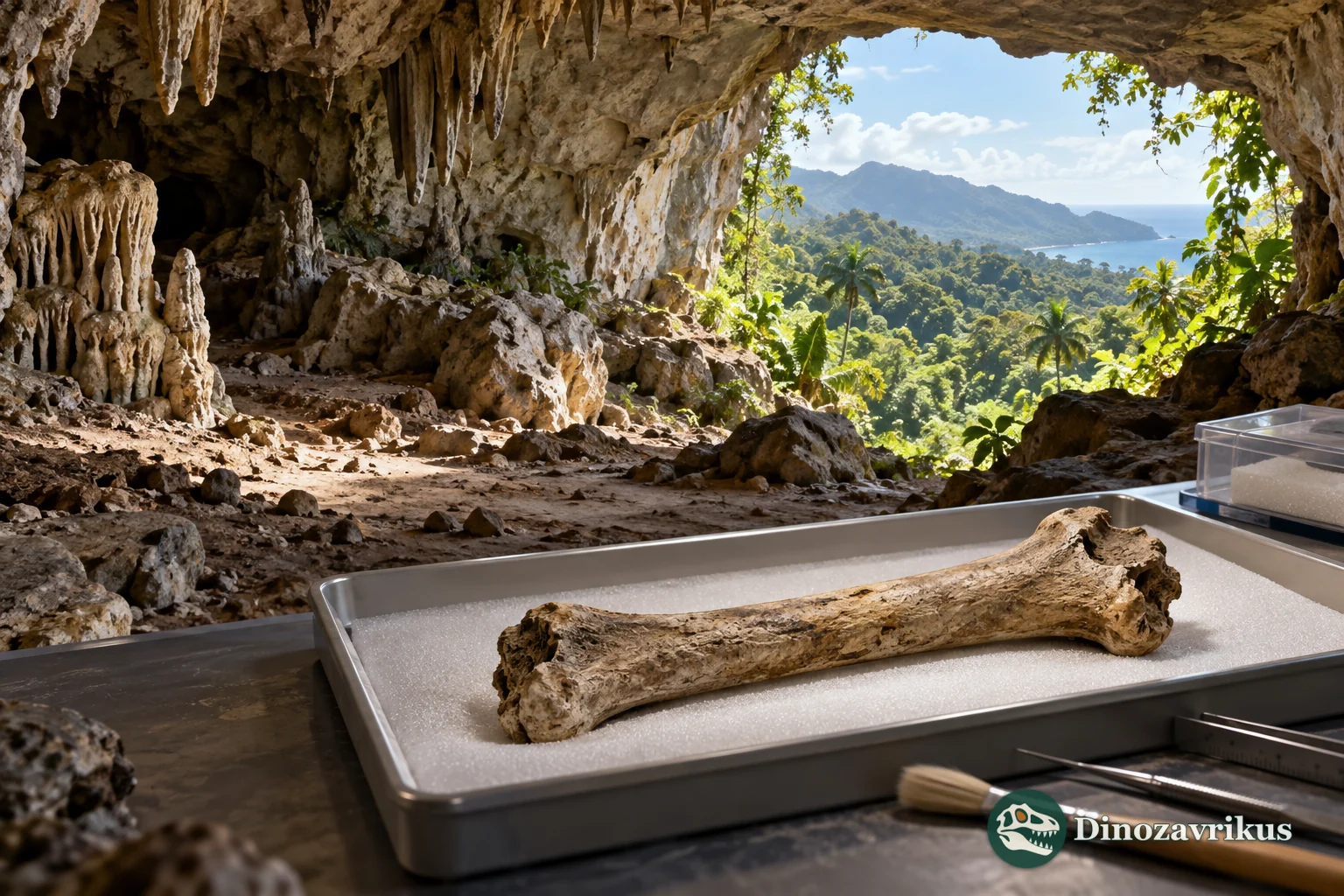
Radiocarbon tests directly dated two Haitian N. comes bones to 4391 ± 42 and 4486 ± 39 radiocarbon years BP. Their calibrated calendar ranges are different from those raw values. Another N. dousman bone yielded 9897 ± 65 radiocarbon years BP, a substantially older result.
The directly dated N. comes material shows survival well into the Holocene, within the Quaternary. A youngest recovered bone gives a minimum survival age for the sampled record, not the exact time of disappearance. It does not, alone, demonstrate whether people or environmental changes caused extinction.
What remains unknown
Fossils do not preserve this animal's coat color, call or detailed feeding behavior. More directly dated, securely identified specimens and independent archaeological and environmental evidence would narrow the history of the island populations. The cave illustration is a conceptual preservation scene, not a photographed dig or dated bone.
Frequently asked questions
Was Neocnus a ground or tree sloth?
Limb and wrist anatomy supports substantial climbing ability, but its exact behavior was not observed.
Where was Neocnus found?
Fossils are reported from Cuba and Hispaniola, including sites in Haiti and the Dominican Republic.
What do the roughly 4400 BP ages mean?
They are direct radiocarbon results for individual Haitian N. comes bones, not calibrated calendar dates or a precise extinction moment.
Is its extinction cause known?
The dated bones alone do not identify a cause. Archaeological and ecological evidence must be assessed separately.