

Neptunidraco ammoniticus was a Middle Jurassic marine crocodylomorph from northern Italy. Parts of its skull, jaw and neck appear in the cut faces of polished red limestone. The slices expose details inside the fossil while making other features difficult to reconstruct.
Quick facts
| Species | Neptunidraco ammoniticus |
|---|---|
| Family | Metriorhynchidae |
| Age | Late Bajocian to early Bathonian |
| Rock unit | Rosso Ammonitico Veronese, red nodular limestone |
| Holotype | Four slabs with skull, jaw and neck bones |
| Repositories | Museums in Bologna and Ferrara |
What can the fossils tell us?
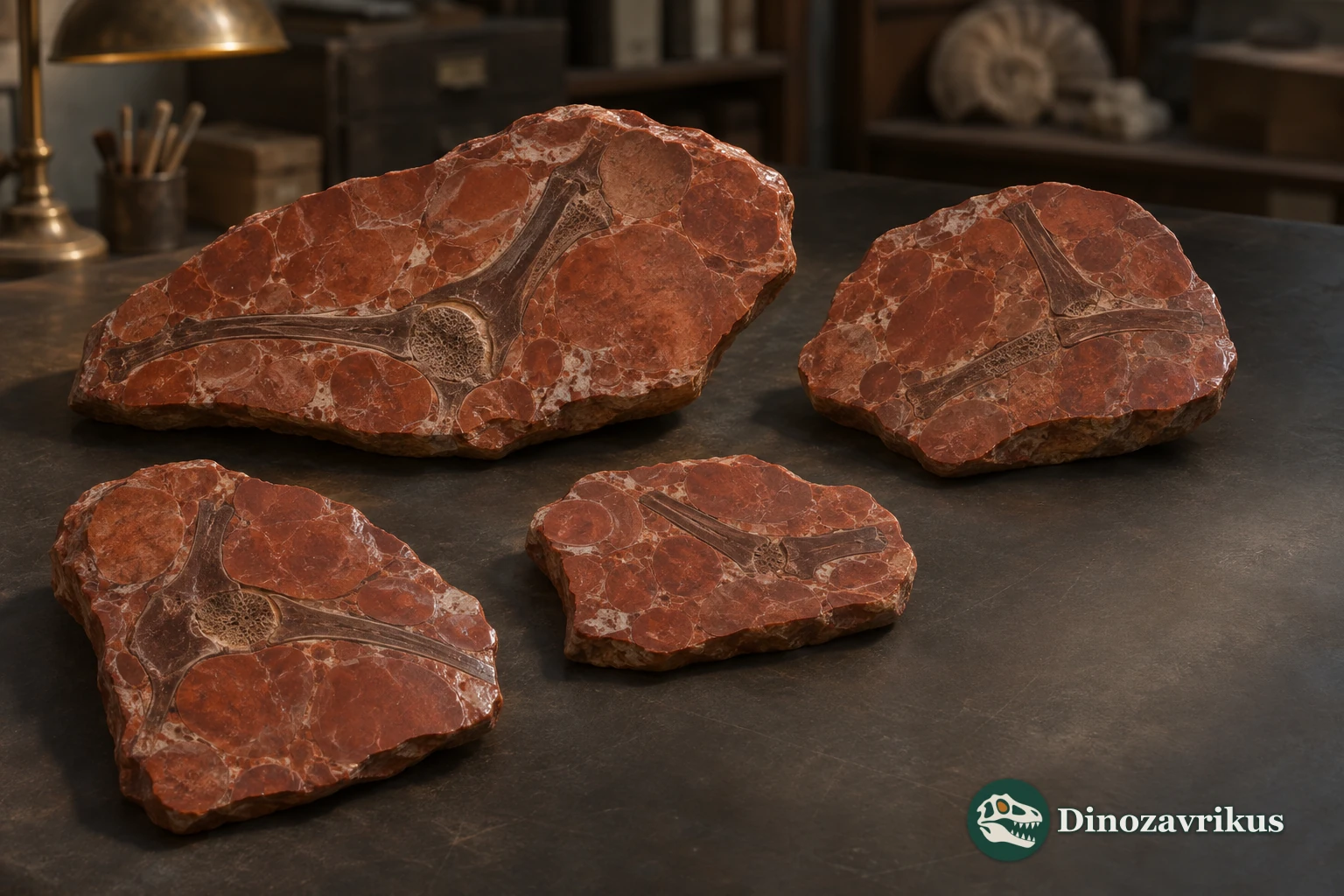
Their opposing faces provide eight successive longitudinal sections. They expose interior structure without preserving every part of each bone.
Foraminifera in the limestone point to the late Bajocian or early Bathonian. The precise quarry is uncertain.
Ultraviolet light distinguished tooth tissues and belemnite guards in the rock. Their proximity to the skull does not establish the animal’s diet.
A fossil spotted by a stoneworker
In 1955 a stoneworker at Portomaggiore noticed bone in four polished slabs of red limestone brought from the Verona area. The precise quarry was not recorded. The material most likely came from near Sant’Ambrogio di Valpolicella.
Piero Leonardi initially referred the fossil to Metriorhynchus. Two slabs went to Ferrara and two to the Giovanni Capellini museum in Bologna. Andrea Cau and Federico Fanti named Neptunidraco ammoniticus on the strength of these slabs in 2011.
Skull anatomy from successive cuts
The slab faces show parts of the skull, lower jaw and cervical vertebrae. Some bones remain close to their anatomical positions. In a 2019 revision Cau removed several characters from the diagnosis because displacement or preparation could account for them.
Other useful features remain. The prefrontal is tear-shaped when seen from above. More than eleven sockets occur in both the maxilla and dentary, separated by narrow spaces. The first description put Neptunidraco near the early geosaurines. The later revision retained it in Metriorhynchidae without resolving the subgroup. A younger member of the family, Gracilineustes, is known from the English Oxford Clay.
Dating the slabs and reading the burial environment
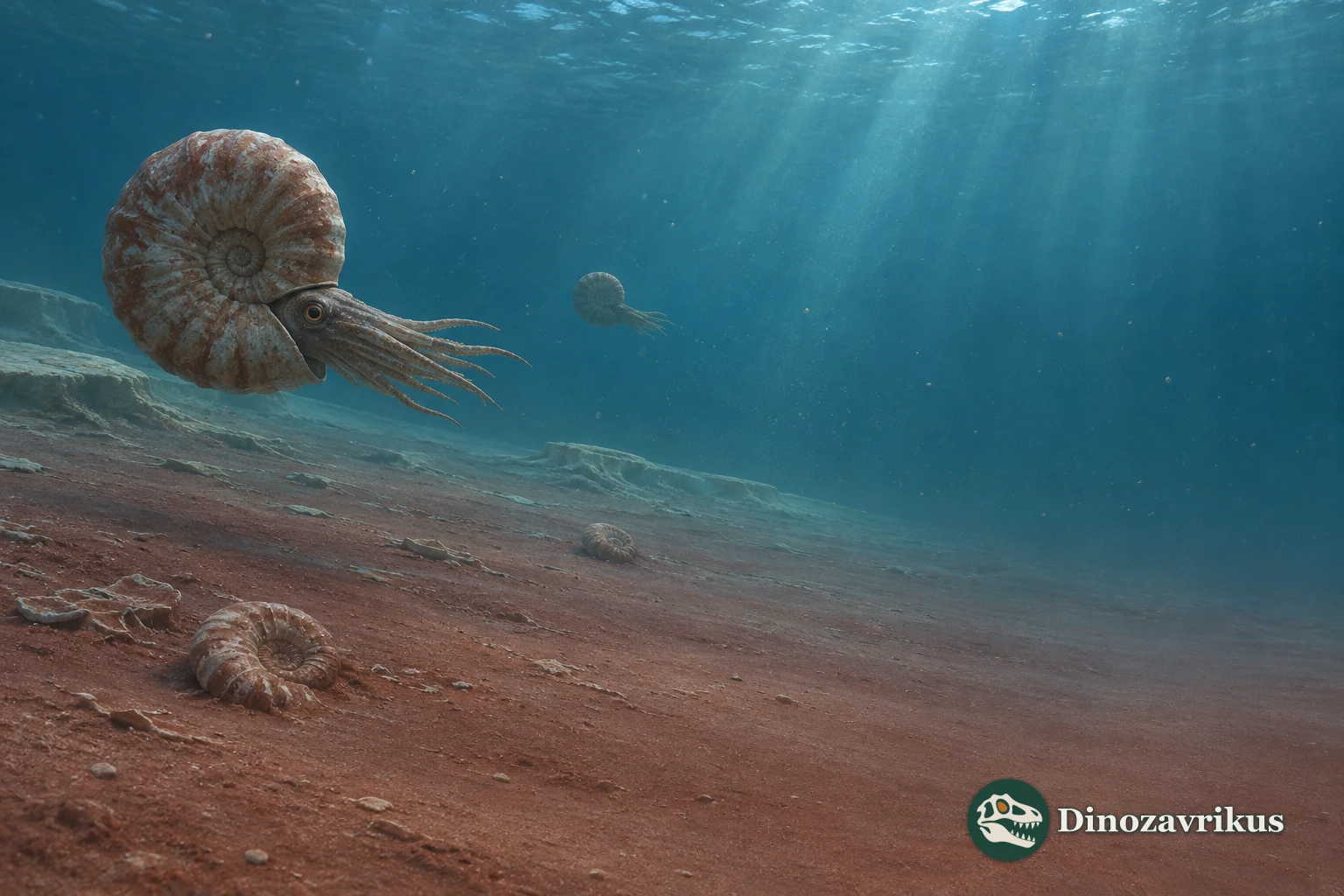
The rock matches the lower part of the Rosso Ammonitico Veronese. Planktonic foraminifera narrow the age to the late Bajocian or early Bathonian, making this one of the early records of metriorhynchids.
In 2023 investigators used ultraviolet light to examine the slab faces they could access. They distinguished dentine in some roots and enamel in replacement crowns. They also mapped more than forty belemnite guards around the skull. The concentration is part of the marine burial assemblage, and the fossil offers no direct link between the belemnites and the animal’s feeding.
Frequently asked questions
Where was Neptunidraco found?
The fossil was noticed in a workshop at Portomaggiore. The rock most likely came from near Sant’Ambrogio di Valpolicella in the Verona area.
Do the four slabs preserve several animals?
No. They contain successive sections through the bones of one animal.
Is its total body length known?
The fossil preserves parts of the head and neck, so there is no direct measurement of total length.
How was the rock dated?
The limestone texture identifies the lower part of the local rock unit and planktonic microfossils narrow its age to the late Bajocian or early Bathonian.