

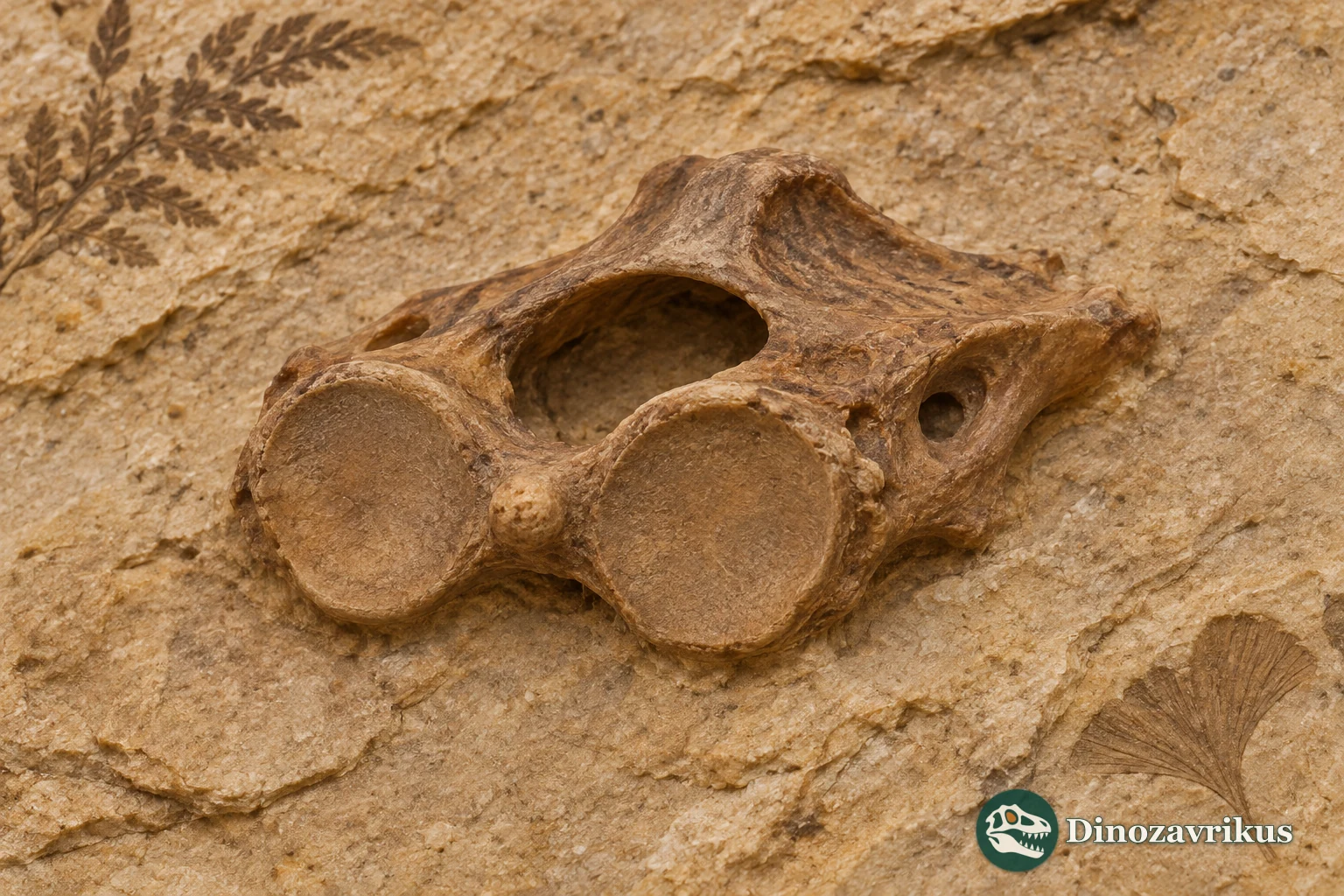
Nesovtriton was a small salamander from the Turonian of Uzbekistan. Its type specimen is the first vertebra, which articulated with the skull. Comparing this and other bones with fossils from the same beds showed that part of a collection previously assigned to one salamander belonged to a different genus.
Quick facts
| Group | Salamanders (Caudata) |
|---|---|
| Age | Late Cretaceous, Turonian |
| Region | Asia, Uzbekistan (Kyzylkum Desert) |
| Type species | Nesovtriton mynbulakensis |
| Scientific name | Nesovtriton |
| Diet | Exact prey is unknown |
What can the fossils tell us?
Holotype ZIN PH 1/85 has two nearly round anterior articular surfaces and a projection between them. It lacks a prominent process projecting downwards.
Some bones once assigned to Mynbulakia were recognised as juvenile Eoscapherpeton. Atlases with a different structure provided the basis for Nesovtriton.
The trunk vertebrae resemble those of cryptobranchoids in some respects. Their relevant features also occur in other salamanders, leaving the exact position unresolved.
The source of the type vertebra
Pavel Skutschas named Nesovtriton mynbulakensis in 2009. Holotype ZIN PH 1/85 came from site CBI-14 at Dzharakuduk in Navoi Region, Uzbekistan. The fossil dates to the Turonian Bissekty Formation. The genus honours palaeontologist Lev Nesov, and the species name refers to the village of Mynbulak.
How the material was separated
Some of the vertebrae were originally assigned to Mynbulakia surgayi. Re-examination identified the type jaw of that species as belonging to a small individual of Eoscapherpeton. The associated vertebrae in the old interpretation had almost round anterior articular surfaces and lacked the downward projection typical of Eoscapherpeton. This recurring combination helped distinguish Nesovtriton.
Other bones and possible affinities
Further atlases, several trunk vertebrae, an anterior tail vertebra and fragments of the lower jaw were assigned to the new species. The trunk vertebrae are elongate, with one rib articulation on each transverse process. This arrangement occurs in cryptobranchoids and is also known in other salamanders. The original description treated these affinities as possible and left the animal’s precise position open.
Frequently asked questions
When did Nesovtriton live?
In the Turonian stage of the Late Cretaceous. Its fossils come from the Bissekty Formation.
What is the atlas of Nesovtriton?
It is the first vertebra, where the spine meets the skull. The type specimen is an atlas.
How does its atlas differ from that of Eoscapherpeton?
Its forward-facing articular surfaces are nearly round. It lacks the prominent downward projection present under these surfaces in Eoscapherpeton.
What does its name refer to?
The genus honours Lev Nesov. The species name refers to the Kyzylkum village of Mynbulak.