

Nominosuchus was a small Jurassic crocodyliform from what is now south-western Mongolia. Its fossils preserve a narrow slit in the bony palate that opened into the rear nasal passage. Comparisons with other early crocodyliforms show several ways the bones around that passage were arranged.
Quick facts
| Type species | Nominosuchus matutinus |
|---|---|
| Family | Shartegosuchidae |
| Age | Late Jurassic, exact stage disputed |
| Locality | Shar Teg, Mongolia, Ulan Malgait beds |
| Type specimen | PIN 4174/4, partial skull and lower jaw |
| Second named species | Nominosuchus arcanus, PIN 4174/6 |
What can the fossils tell us?
A narrow slit between them opened behind into the internal nostril. The fossil shows the arrangement of the bones, while the soft tissues are unknown.
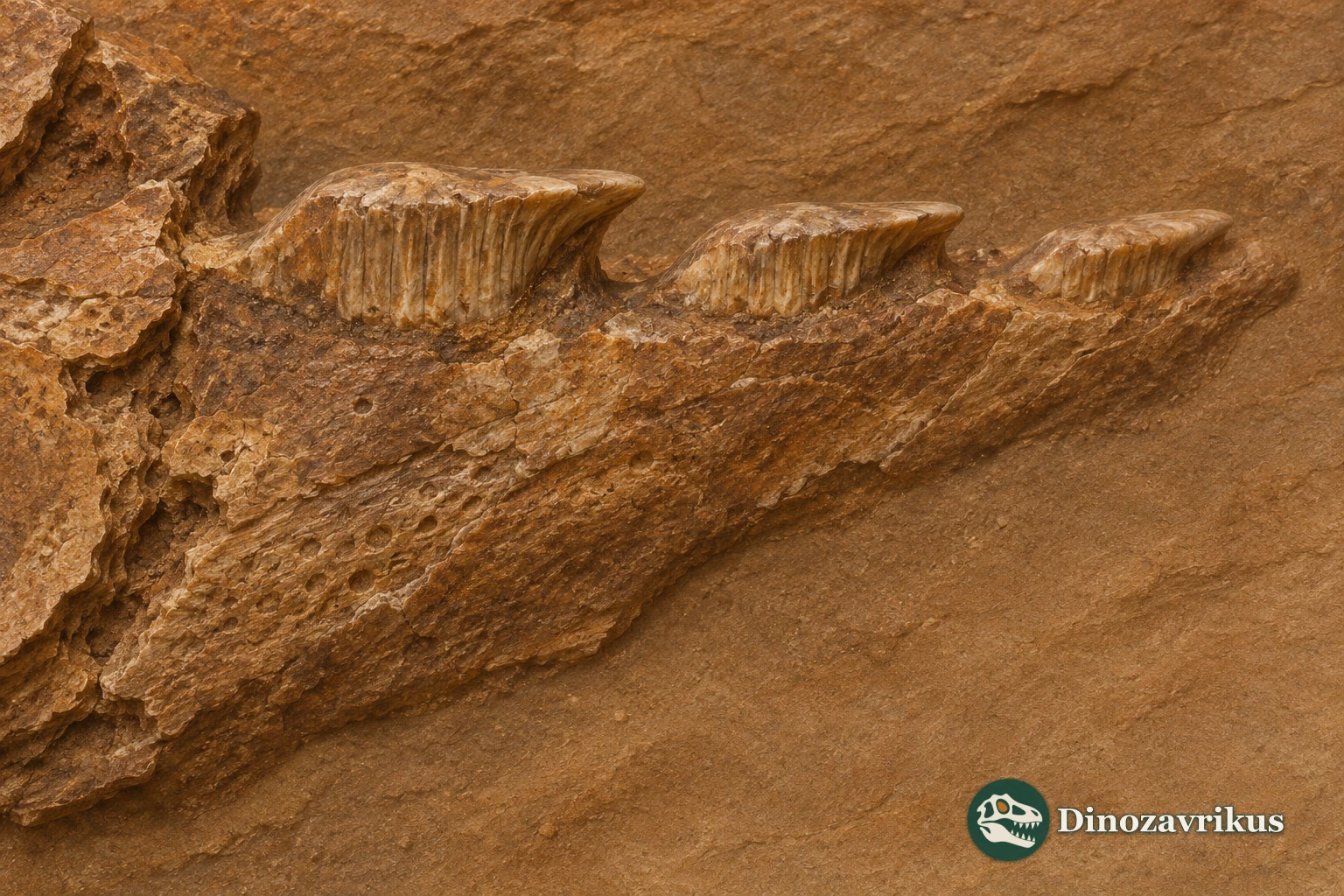
Vertical ridges extended below the long, flat tips. These shapes are useful for identifying relatives and do not resolve what Nominosuchus ate.
Specimens from the upper Shishugou Formation have been assigned to the genus. Correlating the sites by this material still depends on the species identification.
Two named forms from Shar Teg
Mikhail Efimov named Nominosuchus matutinus in 1996. The type, PIN 4174/4, is held at the Palaeontological Institute of the Russian Academy of Sciences. A second species, N. arcanus, was named in 2003 from the front of a skull, PIN 4174/6. Its describers identified a flatter snout and fewer maxillary teeth than in the type species.
Both specimens came from the Ulan Malgait beds at Shar Teg. The sediments record shallow lakes that sometimes dried out. That setting can explain why the deposits preserve both land and water animals. It does not establish how much time Nominosuchus spent in the water.
A slit in the palate
The paired palatine bones did not meet beneath the nasal passage. A narrow gap between them ran back into the choana, or internal nostril. The North American Fruitachampsa had a rounder palatal opening that lay farther forward. Both belong to Shartegosuchidae, a family that included several palatal arrangements.
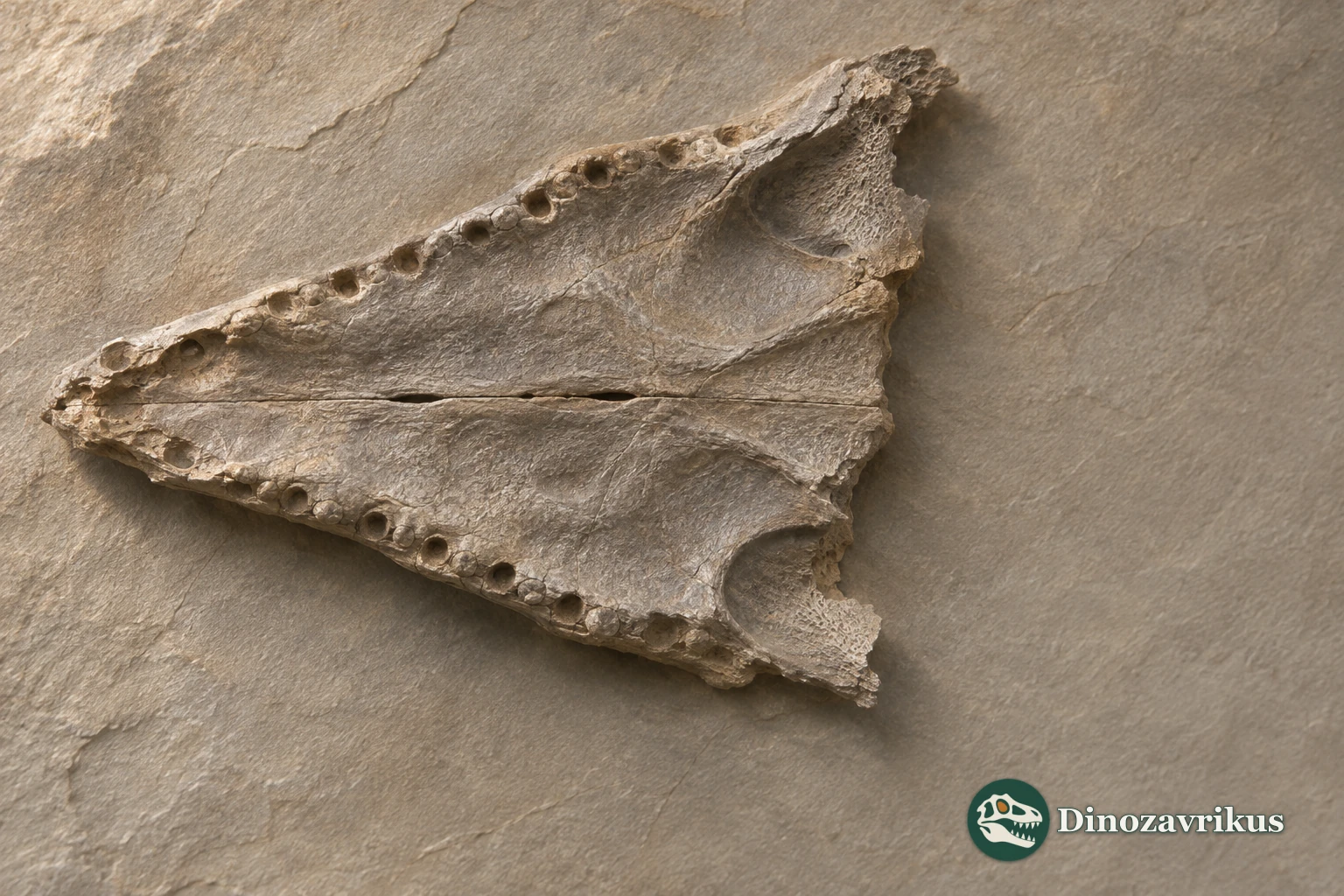
Teeth and skull openings
Behind the large canine-like teeth were crowns with long, flat tips and vertical ridges. Related shartegosuchids show similar crowns. Nominosuchus also retained a small opening in front of the eye socket that is absent in several related genera.
How closely do the Mongolian and Chinese fossils match?
Shar Teg has often been assigned to the end of the Jurassic. A 2018 study suggested an earlier Late Jurassic age by comparing its animals with those of the Shishugou Formation. The strength of that correlation depends on how closely the Mongolian and Chinese fossils match.
A 2022 review documented numerous specimens attributed to Nominosuchus in the upper Shishugou Formation at Wucaiwan. Some are nearly complete. The authors noted similarities to N. matutinus, while a detailed comparison is needed to establish the range of that particular species.
Frequently asked questions
Where was the type found?
In the Ulan Malgait beds at Shar Teg in south-western Mongolia.
What was unusual about the palate?
A narrow slit in the bony palate opened behind into the internal nostril.
How did the second named species differ?
Its describers identified a flatter snout and fewer maxillary teeth in N. arcanus.
Is the Mongolian species known from China?
The Chinese specimens were assigned to Nominosuchus, but their identity at species level needs further comparison.