

Nothrotheriops was an extinct North American sloth best known from N. shastensis, the Shasta ground sloth. Pleistocene bones document its skeleton, while unusually dry caves preserved coprolites. These remains allow researchers to inspect actual plant food, not only infer diet from teeth. The cover is an artistic reconstruction; the fossils do not preserve its precise coat color.
The named animal should be distinguished from the South American genus Nothrotherium, under which the Shasta fossils were initially described.
Quick facts
| Group | Nothrotheriidae, extinct sloths |
|---|---|
| Best studied species | N. shastensis, the Shasta ground sloth |
| First described material | Potter Creek Cave, California; William Sinclair, 1905 |
| Age | Pleistocene North American deposits |
| Places | California and the Southwest, including Arizona and Texas |
| Evidence | Bones, skeletons and dry preserved dung |
| Food | Plant remains directly identified in coprolites |
What can the fossils tell us?
Sinclair described Potter Creek Cave material under the older name Nothrotherium shastense. More complete finds later allowed the North American form to be separated and compared by limb and cranial anatomy.
Dry Rampart Cave dung contains identifiable plant tissue. Percentages in that sample cannot be treated as a universal diet for every population and season.
Spirit Eye Cave in Texas yielded two studied complexes at about 30,800 and 12,900 calibrated years ago. A single dated layer cannot date the entire genus.
From Potter Creek Cave to a separate genus
William Sinclair studied mammal fossils from Potter Creek Cave in Shasta County, California, and named the sloth Nothrotherium shastense in 1905. At that time the North American material was compared with South American nothrotheres. Subsequent anatomical studies placed it in Nothrotheriops. The older combination does not mean that Nothrotherium itself was found in that California cave.
Bones from different cave sites preserve the long narrow skull, tooth rows, limb proportions and large claws to varying degrees. A connected skeleton tells more about proportions than a detached phalanx. The browsing pose on the cover is functionally plausible but does not record an observed behavior.
Direct evidence of food
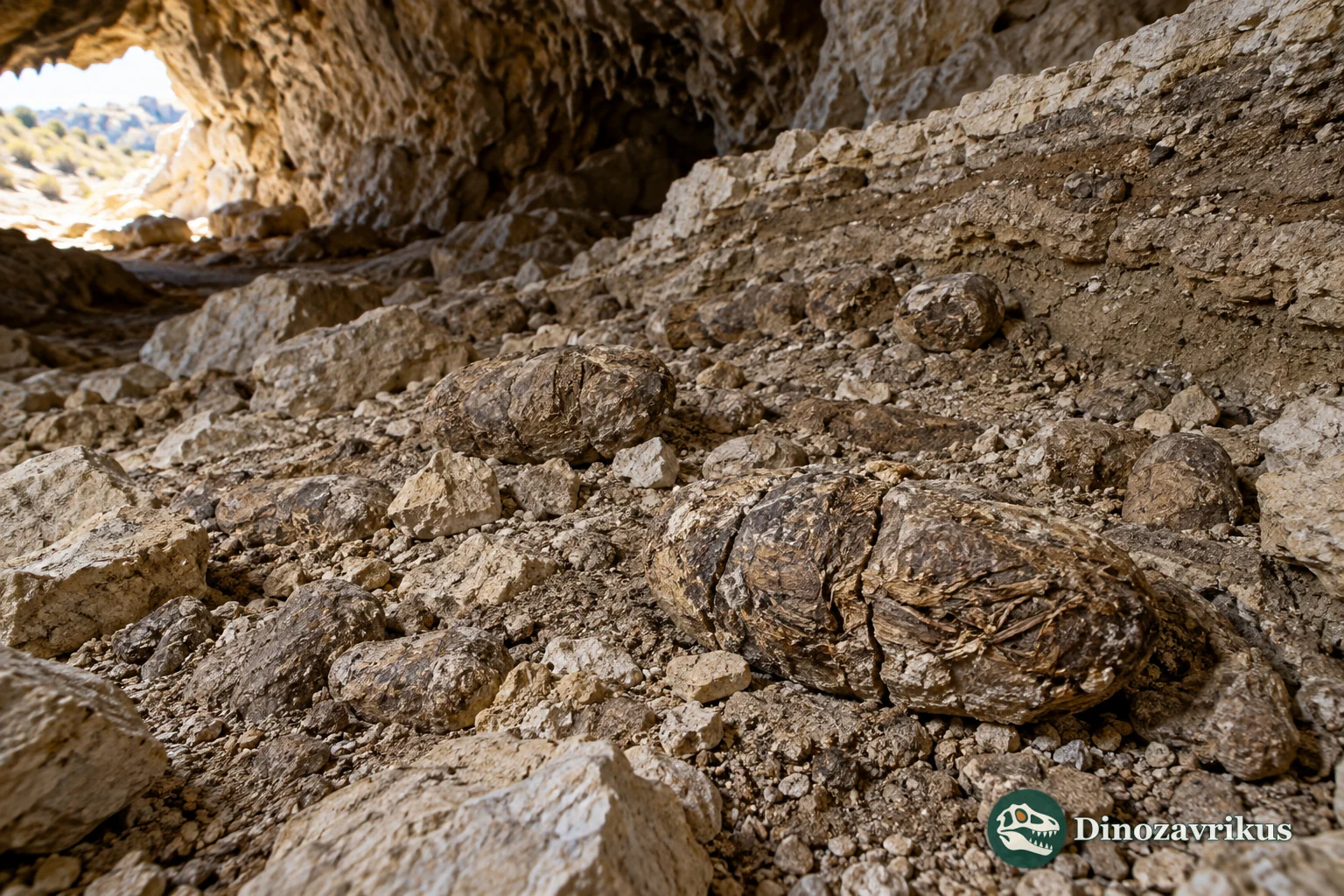
Richard Hansen examined more than 500 pieces of Shasta sloth coprolite from Rampart Cave, Arizona. Microscopic plant tissues in that sample frequently included globemallow, ephedra, saltbush, acacia, reed, cactus and yucca. The published percentages summarize selected Rampart samples, not the unchanged diet of all Shasta sloths across North America.
Later molecular analyses recovered plant DNA from some ancient coprolites. Plant tissue and DNA provide different evidence for herbivory, but preservation and sampling vary. Absence of one plant from a single dung bolus does not prove it was never eaten.
Caves and changing local environments
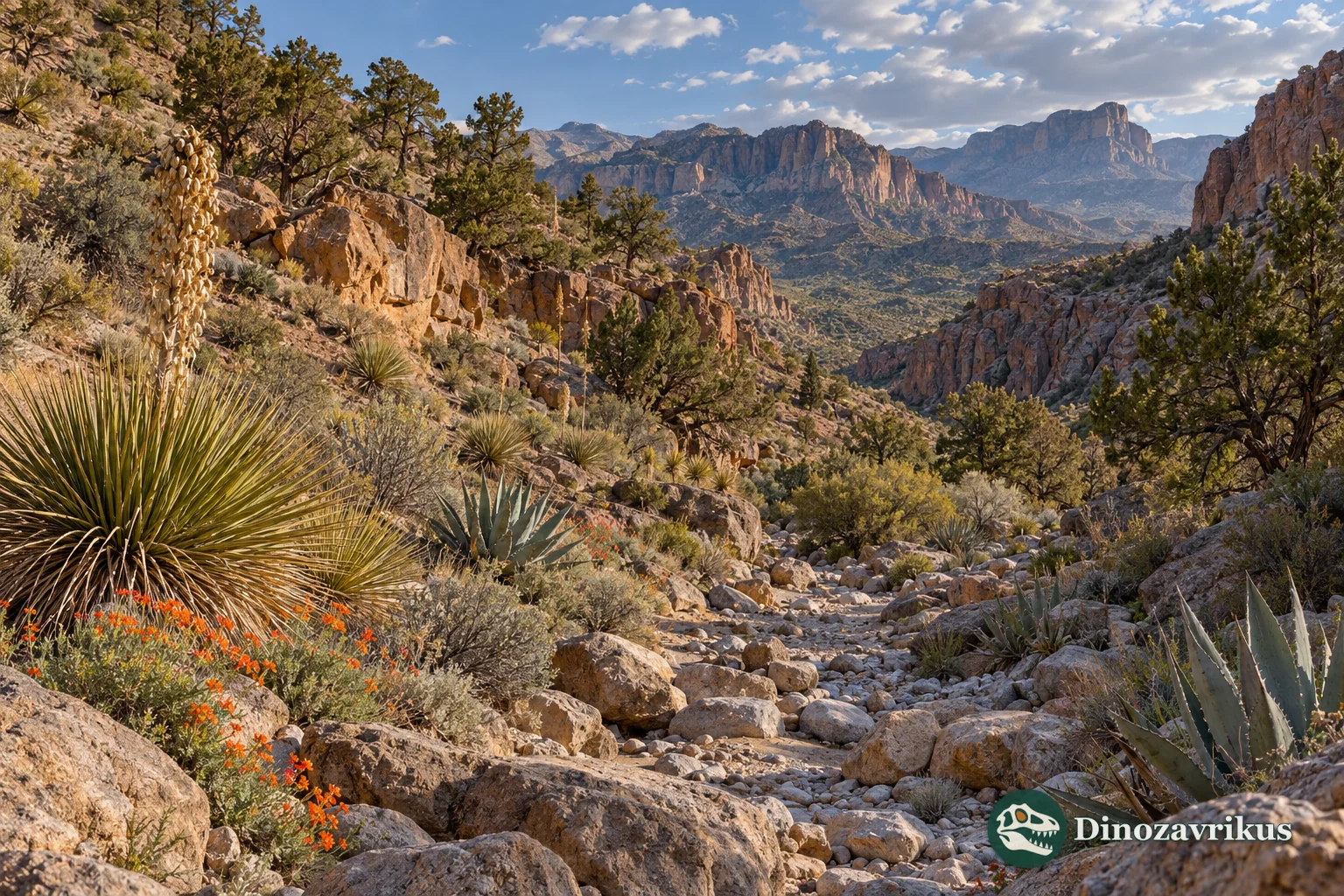
At Spirit Eye Cave in the Sierra Vieja of Texas, researchers compared sloth dung with plant remains from nearby packrat middens. Two complexes were placed near 30,800 and 12,900 calibrated years ago. The older vegetation included pinyon and juniper woodland with yucca and cactus; dung indicated grasses and agave. The younger complex recorded a different plant mixture. These local data should not be assigned wholesale to Arizona or California.
Rampart Cave dung accumulated discontinuously. A radiocarbon measurement dates the tested sample, not every layer in a cave; uncalibrated and calibrated years also differ. These finds belong to the Quaternary, but the youngest recovered dung does not identify the exact extinction moment.
What the remains cannot tell us
Some Rampart dung contained parasite eggs or juvenile stages. That records infection in studied samples, not a prevalence rate for the entire species. Bones and coprolites together are informative, but cannot establish voice, precise fur color or a single cause for the loss of all late Pleistocene populations.
Frequently asked questions
Are Nothrotheriops and Nothrotherium the same genus?
No. Sinclair first used Nothrotherium shastense, but the North American species was later separated in Nothrotheriops.
How do we know what the Shasta sloth ate?
Dry coprolites preserve plant tissues and, in some cases, recoverable plant DNA from particular animals and places.
Is all sloth dung the same age?
No. Cave layers and dated complexes differ by many millennia, so a single radiocarbon result cannot date an entire cave.
Does dung reveal the cause of extinction?
No. It informs diet and local conditions, but cannot independently determine why the last populations disappeared.