

Nuominerpeton was an Early Cretaceous salamander from northeastern China. Fossils in the shales of Inner Mongolia preserve larvae, a juvenile and adults. The series records the loss of teeth from part of the palate during metamorphosis and the later ossification of small bones in the limbs.
Quick facts
| Group | Salamanders (Caudata) |
|---|---|
| Age | Early Cretaceous, Barremian–Aptian |
| Region | Asia: Inner Mongolia, China |
| Type species | Nuominerpeton aquilonaris |
| Scientific name | Nuominerpeton |
| Diet | Exact prey is unknown |
What can the fossils tell us?
The type series includes larvae, a postmetamorphic juvenile and adults. Some of the material preserves the outline of soft tissue around the tail.
Small larvae have teeth on a projection beside the pterygoid. The projection is reduced or absent in later stages.
No prey remains were identified. The changes to the palate reveal how the mouth developed without establishing what the animals ate.
The Pigeon Hill fossils
Jia Jia and Ke-Qin Gao named the genus in 2016 from material collected at Pigeon Hill near Taipingqiao in Inner Mongolia. The shale belongs to the Guanghua Formation and accumulated in a pond. The genus takes its name from the Nuomin River. The species epithet aquilonaris means northern.
What the adult skeleton preserves
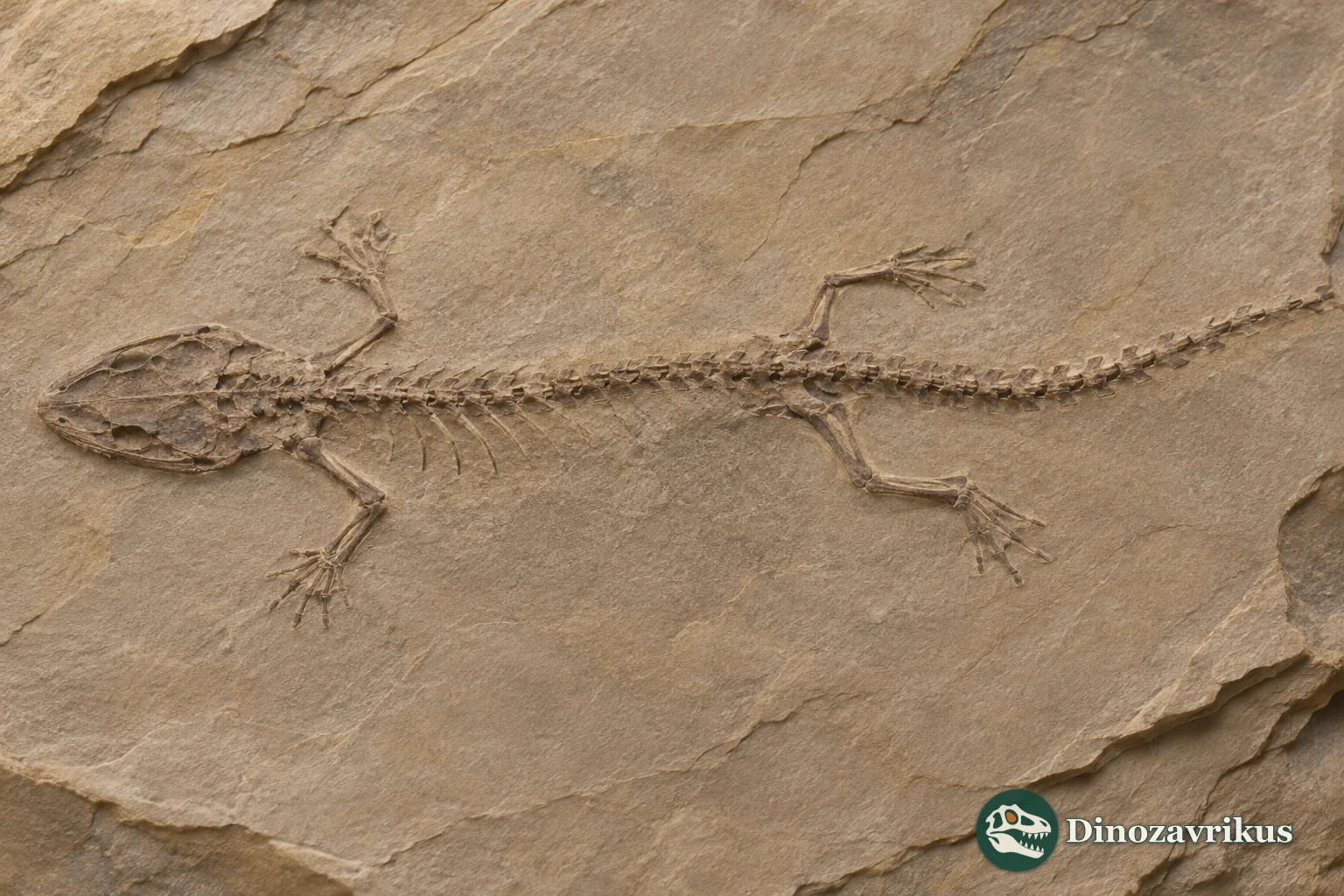
The holotype, PKUP V0414, is exposed on two surfaces of a split shale slab. It measures 77.7 mm from snout to pelvis, compared with 79.8 mm in the largest measured adult. The tail made the complete animal considerably longer. One adult preserves a tail outline without dorsal or ventral fin folds. The snout was short and rounded.
A changing palate and growing limbs
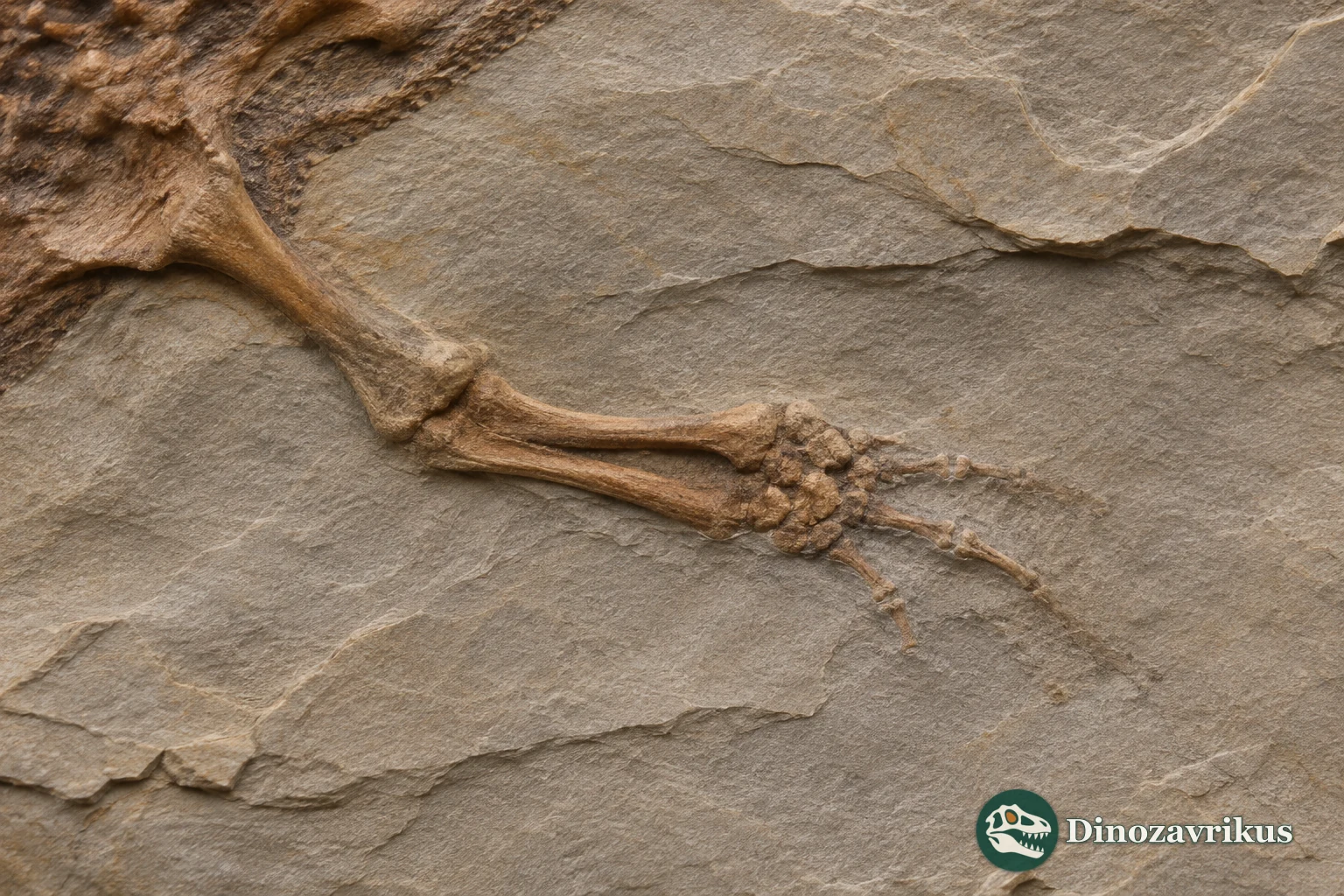
Three small larvae, measuring 33.9–43.8 mm from snout to pelvis, retain multiple rows of teeth on the palatal projection next to the pterygoid. A larger larva has a thin, toothless remnant. In the postmetamorphic juvenile, PKUP V0416, that part of the palate has disappeared, while the wrist and ankle remain cartilaginous. The adult specimens preserve ossified elements in both joints, so development continued after the palate changed.
Reading age in fossil salamanders
The describers compared the skull and limb anatomy with that of living hynobiid salamanders. Fossils of Nesovtriton illustrate how much an isolated vertebra can reveal. The articulated specimens of Nuominerpeton offer a different opportunity: they show how several features changed within one animal’s development.
Frequently asked questions
Where was Nuominerpeton found?
Near Taipingqiao in Inner Mongolia, in the Early Cretaceous Guanghua Formation.
How many specimens were described?
Nine, comprising the holotype and eight other individuals from the same site.
What happened to the larval teeth?
Several rows on a palatal projection were lost as the projection diminished during metamorphosis.
Did the adults have fin folds along the tail?
The preserved outline of one adult tail shows no dorsal or ventral fin fold.