

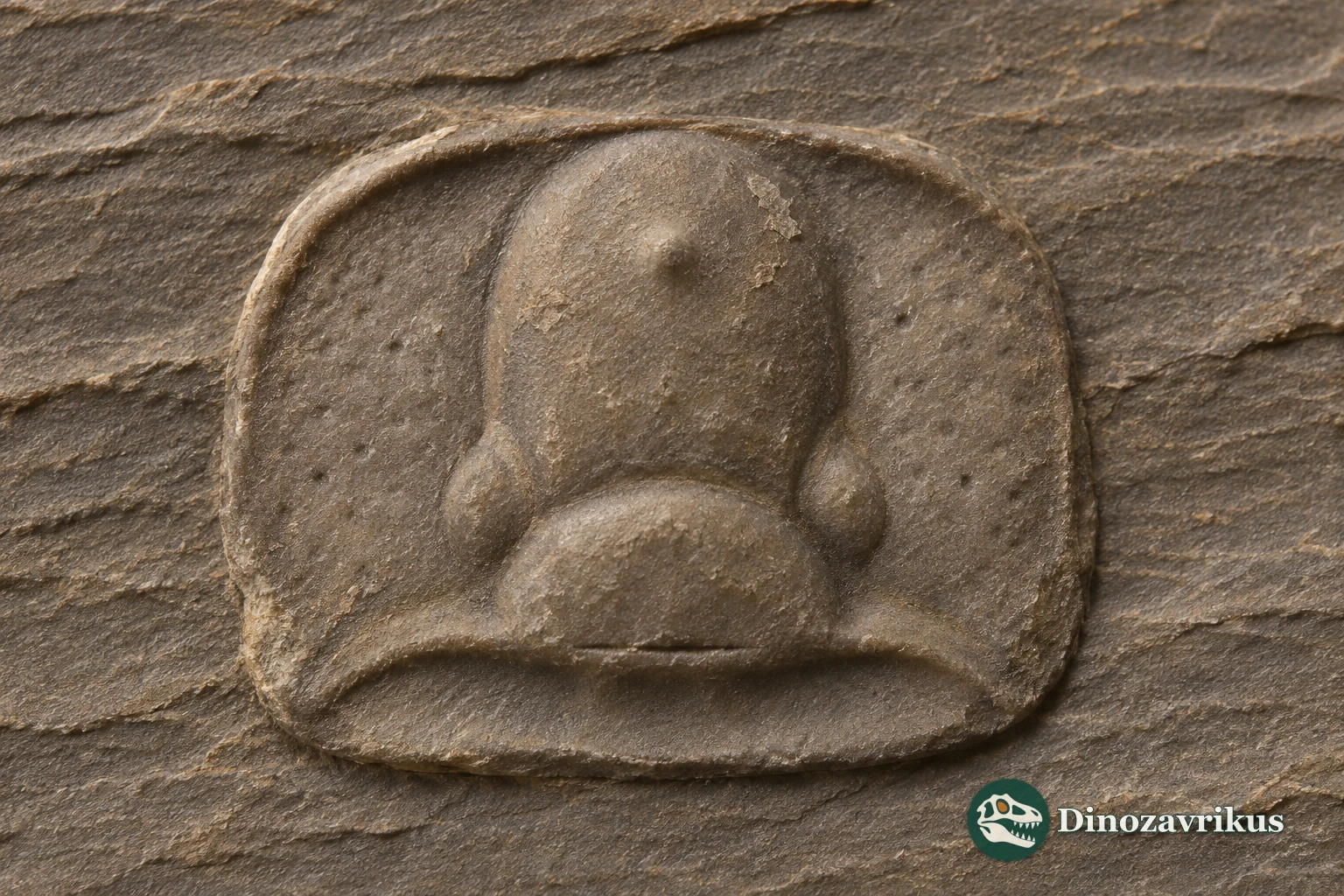
A large tail shield of Oidalagnostus from Gudhem in Sweden preserves a short spine at each rear corner and a third at the centre of the rim. The Swedish shields defined the genus. Later finds from North Greenland show how the relief of its tail changed as it grew.
Quick facts
| Group | Agnostids |
|---|---|
| Age | Cambrian |
| Named by | A. H. Westergård, 1946 |
| Type species | Oidalagnostus trispinifer |
| Type locality | Gudhem, Sweden |
| Holotype | About 6.2 × 6.7 mm, excluding the median spine |
What can the fossils tell us?
The Gudhem tail shield preserves all three spines. Westergård’s Swedish material consisted of detached shields.
Three spines usually occur on large tail shields of the type species. Smaller specimens differ in the development of their relief.
Its position during enrolment was inferred from shell shapes and articulated specimens of a different agnostid.
The type shield from Gudhem
A. H. Westergård named Oidalagnostus trispinifer in 1946 and chose it as the type species of the new genus. The original material comprised four head shields and three tail shields. The holotype is a pygidium from Gudhem in Västergötland. It is about 6.2 mm long excluding the central spine and 6.7 mm wide.
The head shields are eyeless, with a short, broad anterior glabellar lobe and shallow pits and grooves on the cheeks. The outline and parts of the glabella resemble those of Linguagnostus. The relief of the tail provides additional characters for distinguishing the individual species.
How a tail shield changes with growth
The rear of the O. trispinifer tail axis is swollen and blunt. Westergård described the enlarged region as a pseudolobe. From the Greenland material Richard Robison identified the swelling as part of the axis itself, with separate elevations to either side.
A narrow depression separates the outer border from a low inner collar on smaller specimens. That depression fades with growth. A large tail shield usually bears two spines at the rear sides and a third in the middle. Some specimens once assigned to Ovalagnostus have been transferred to Oidalagnostus. Researchers have drawn different boundaries between individual species.
An oval plate from Greenland
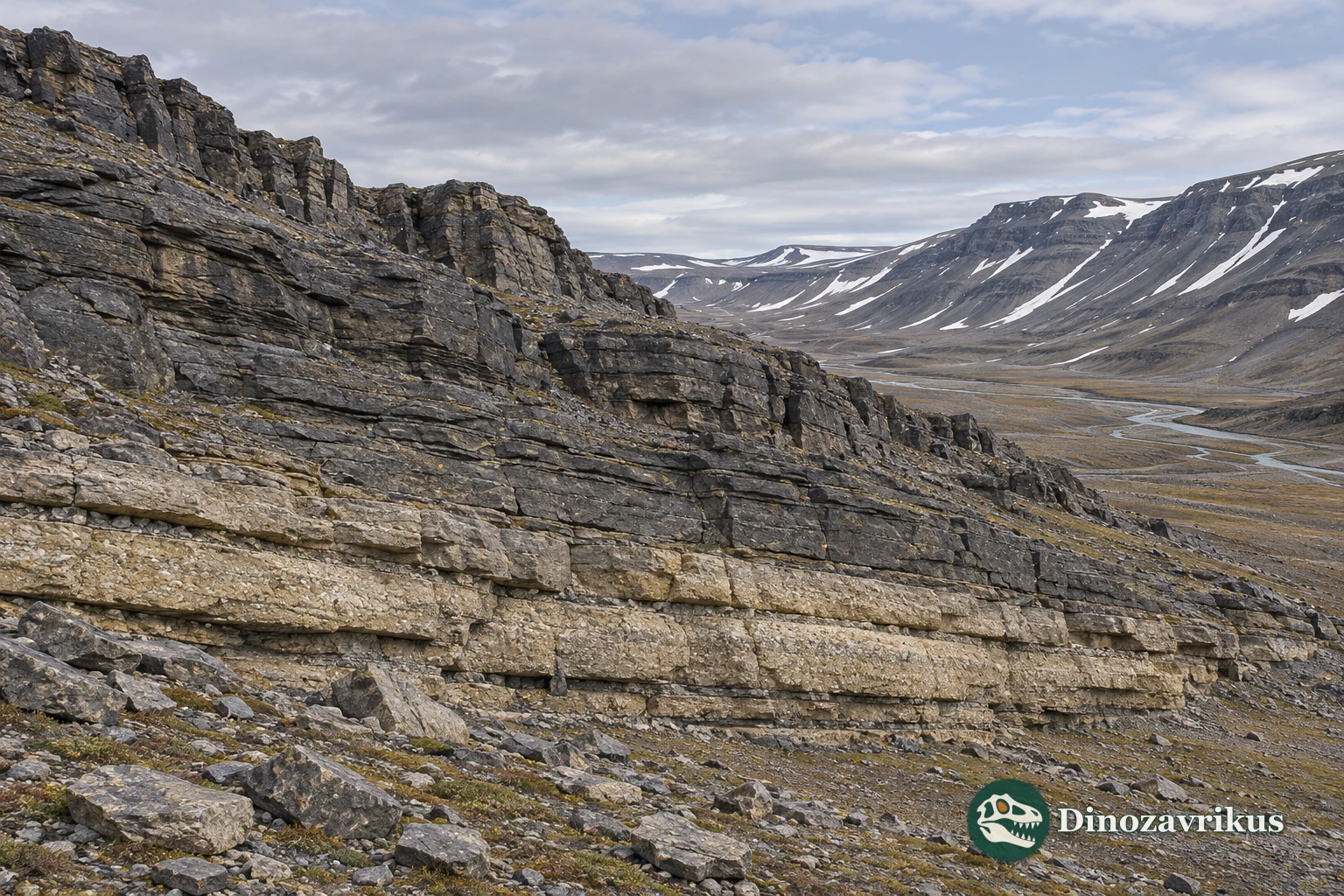
In North Greenland, the type species occurs in the basal 22 m of the Holm Dal Formation. Most finds are in coarse-grained limestone. The collections also contain isolated oval plates with a raised centre, which Robison assigned to Oidalagnostus by size and association with the shields in several samples.
The plate is interpreted as a structure from the underside of the head. Robison suggested that it fitted beneath the swollen tail axis during enrolment. His hypothesis drew on comparison with complete specimens of another agnostid and on the positions of transverse grooves on the two parts.
Frequently asked questions
Where was the Oidalagnostus holotype found?
The type tail shield comes from Gudhem in Västergötland, Sweden.
How large is the Swedish tail shield?
The holotype is about 6.2 mm long without the middle spine and 6.7 mm wide. These measurements refer to one isolated shield.
Do all tail shields have three spines?
Three spines are usual in large tail shields of the type species. Preservation and stage of growth matter when comparing smaller fossils.
Why is the underside plate assigned to Oidalagnostus?
Its size matches the head shields, and it occurs with them in several Greenland collections.