

Oligopherus was a land tortoise whose type specimen comes from the late Eocene of Colorado. Its upper shell was low and made up of relatively thin bones. Comparing that shell with finds from neighbouring states led researchers to propose that some separately named tortoises belonged to the same species.
Quick facts
| Group | Turtles, early relatives of living tortoises |
|---|---|
| Age | Late Eocene (Priabonian) |
| Region | North America (Colorado, United States) |
| Type species | Oligopherus laticuneus |
| Holotype | AMNH 1160, shell and limb elements |
| Locality | Head of Horsetail Creek, Weld County |
| Formation | White River Formation |
| Scientific name | Oligopherus |
| Diet | Exact diet unknown |
What can the fossils tell us?
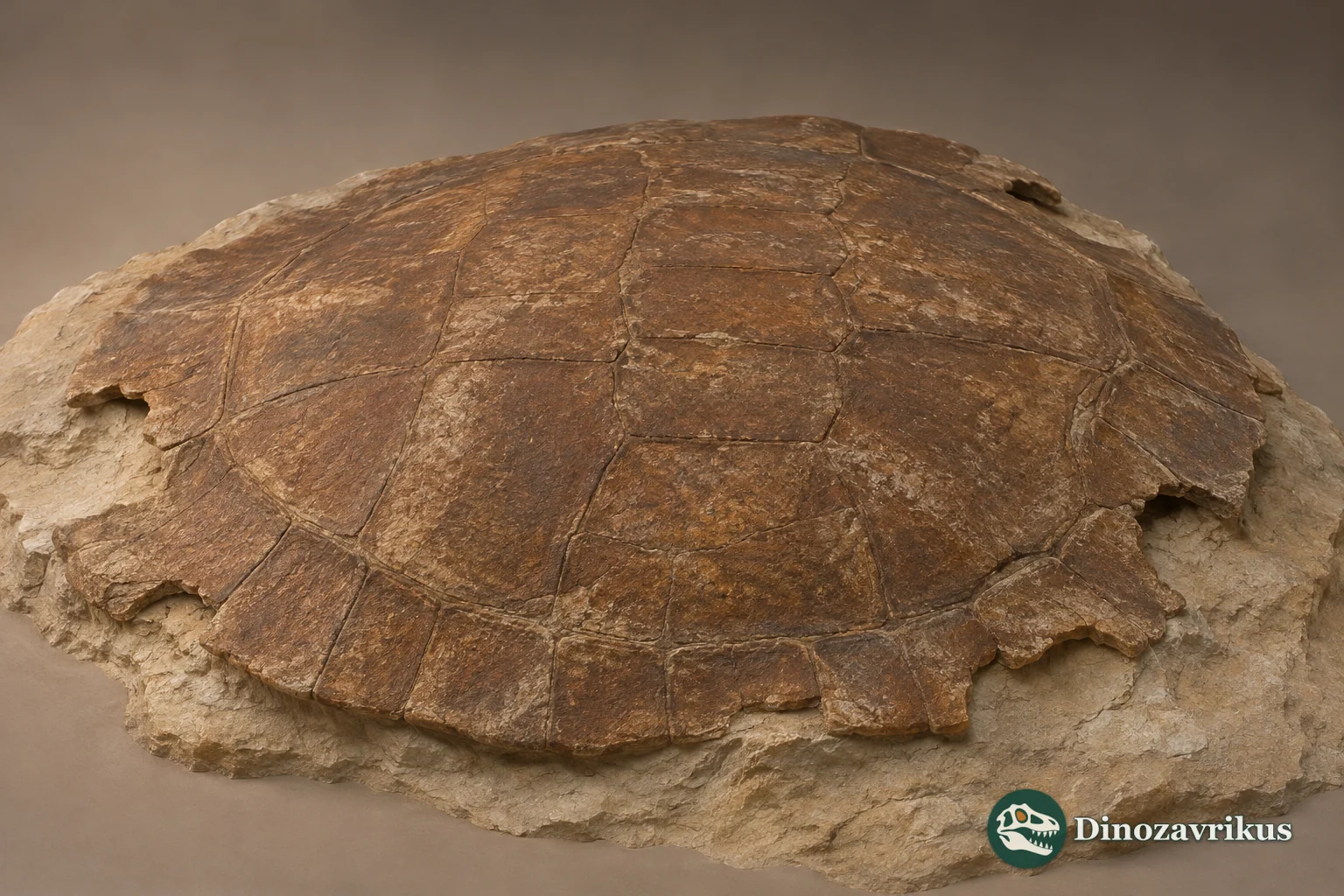
AMNH 1160 preserves a shell and limb elements. It comes from Priabonian beds in Weld County, Colorado.
One of the front bones in the midline series is rectangular. Its position and the bones around it help distinguish the fossil from other early tortoises.
A revision referred material from South Dakota and Wyoming to Oligopherus. The wider age range depends on whether the proposed synonymies are accepted.
The Colorado specimen
Edward Cope named Testudo laticuneus in 1873. The shell and limb material numbered AMNH 1160 came from the head of Horsetail Creek in Weld County, Colorado, in the late Eocene part of the White River Formation. Howard Hutchison placed the species in the separate genus Oligopherus in 1996.
The carapace had a low dome. The third bone in the row along its midline is rectangular. This is one character researchers use when comparing the fossil with Stylemys and other early tortoises. The seams between bones and the grooves left by the scutes are examined separately.
Why the species has several names
Similar shells from South Dakota and Wyoming were described as Testudo thomsoni, T. praeextans and T. undabuna. Comparisons considered shell proportions, the shape of the cervical scute and similarities between skulls of the first two nominal species.
A 2018 revision treated all three names as junior synonyms of Oligopherus laticuneus. With those referrals the known record extends from the late Eocene into the early Miocene. The type specimen itself is late Eocene.
Its place among tortoises
Comparative analyses place Oligopherus near the base of the branch leading to living tortoises. The precise position depends on which characters the analysis uses and how they are weighted. The bones preserve the outline of the low shell but leave its precise diet unresolved.
Frequently asked questions
Where was the type specimen found?
At the head of Horsetail Creek in Weld County, Colorado, in the White River Formation.
When did Oligopherus live?
The type specimen is late Eocene. The proposed range into the early Miocene includes specimens formerly described as other species.
What did its shell look like?
The upper shell had a low dome and relatively thin bones.
Why are there several historical names for this tortoise?
*Testudo laticuneus* is the name originally based on the Colorado specimen. A revision proposed three further synonyms after comparing fossils from elsewhere in the region.