

Stylemys was a North American land tortoise. Its type species is known from many shells, but only a few fossils include a skull. CT scans of two Oligocene specimens reveal bones hidden inside their jaws and palate, allowing researchers to revisit a suggested relationship with living gopher tortoises.
Quick facts
| Group | Turtles, land tortoises |
|---|---|
| Age | Oligocene and Miocene |
| Region | North America, United States |
| Carapace length | Under 53 cm in described S. nebrascensis |
| Type species | Stylemys nebrascensis |
| Scientific name | Stylemys |
| Diet | Tough plant food inferred from jaw anatomy |
What can the fossils tell us?
Adult S. nebrascensis has a strongly domed upper shell and thick plastral bones. These traits form part of the diagnosis.
CT scans exposed a ridge at the front of the bony palate. Gopher tortoises have a comparable feature.
The shape of the jaws and the inferred muscle attachments suggest that the turtle could process tough vegetation. They leave the exact diet unresolved.
The shell that gave Stylemys its name
Joseph Leidy named Stylemys nebrascensis in 1851 from partial shell USNM 97 and later published illustrations of it. Adults have a tall dome, a thick plastron and a short, broad front lobe beneath the neck. A modern identification combines these traits with the shape of midline bones and the positions of scute boundaries. The earlier Eocene tortoise Hadrianus also had domed shells, making height alone a poor guide to the genus.
Looking past the lower jaw
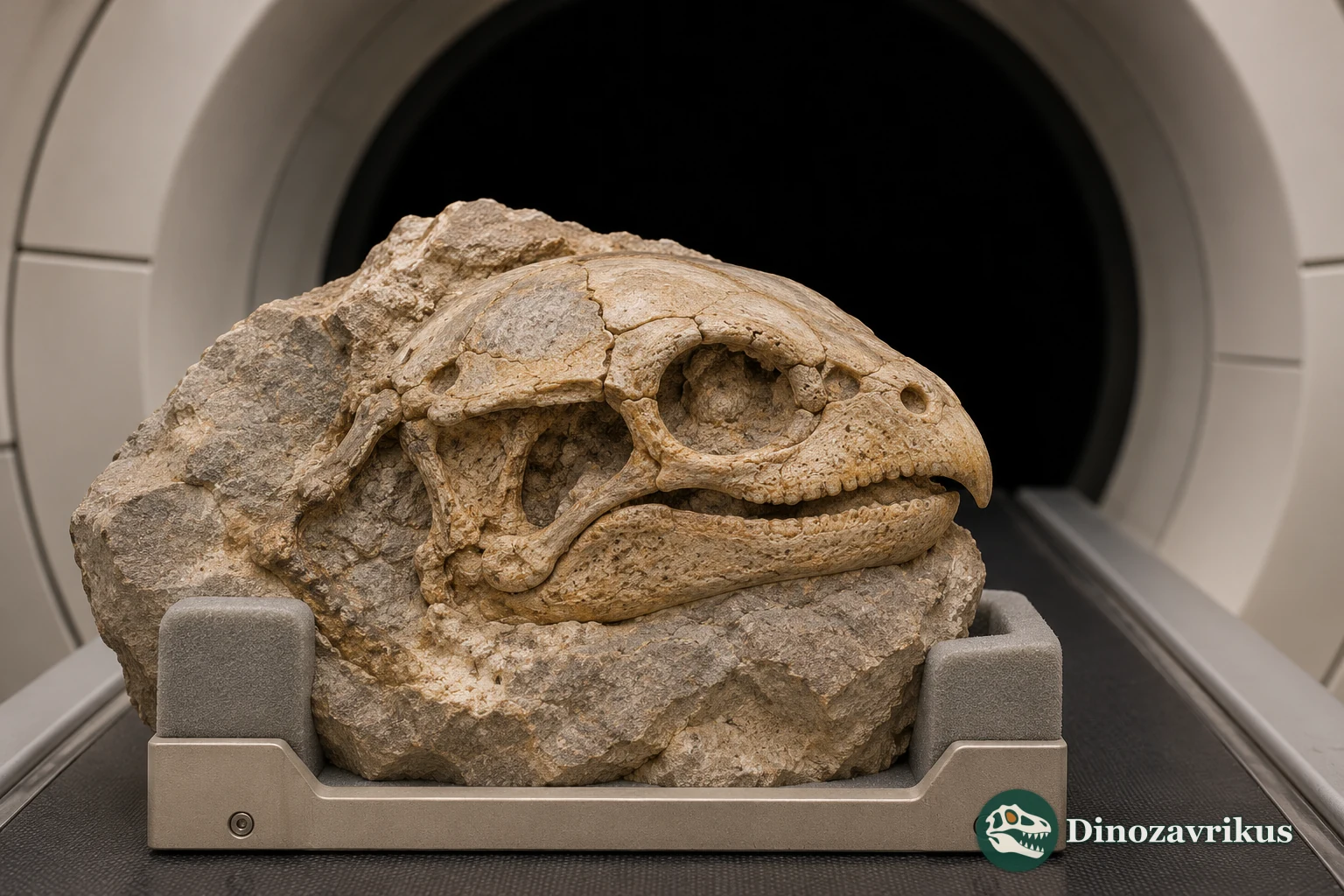
One of the specimens studied in 2024 came from the Brule Formation near Hat Creek, Wyoming. Its skull, UMMP 9318, is associated with a plastron that helps identify the species. A second skull, FMNH UC 1501, is held by the Field Museum. Sediment and joined bones obscured parts of the palate. Digital models reconstructed from CT scans let the researchers compare surfaces hidden in the original specimens.
What a ridge can say about ancestry
A median ridge on the premaxillae resembles a feature in living gopher tortoises. Stylemys also retained an older arrangement in which a process of the cheek bone contacts bones of the palate, a feature lost in living tortoises. That combination suggests a place near the base of the gopher tortoise lineage. Its palate and jaw surfaces also appear suited to processing tough plant food. Their form offers evidence of feeding mechanics, with the actual diet still unknown.
Oligocene species and a Miocene record
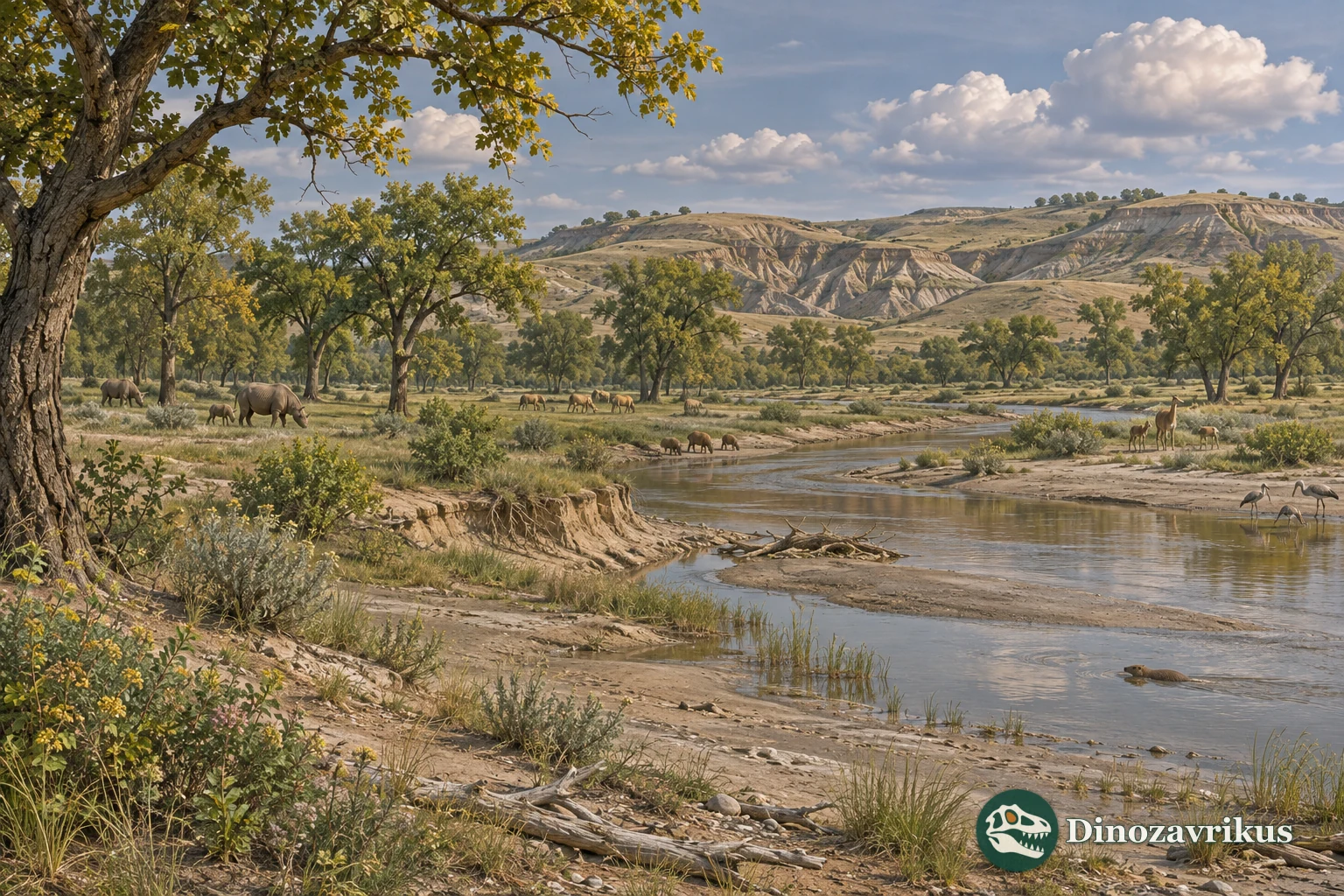
The type species occurs in Oligocene deposits in the central United States. Another Oligocene species, S. capax, was named from a shell from Oregon’s John Day Formation. A 2018 revision also assigned the Miocene Montana species S. inusitata to the genus. With less cranial evidence for those species, shell characters carry most of the comparison. Older European and Asian records have yet to be confirmed by modern revisions.
Frequently asked questions
Why did researchers CT scan a Stylemys skull?
The lower jaw was still attached in one specimen. CT scans revealed the bones of the palate and details hidden beneath sediment.
What specimen is the basis of the genus?
Joseph Leidy named the type species in 1851 from partial shell USNM 97.
Which living tortoises may be its relatives?
The palate has a median ridge like the one in gopher tortoises. That and other traits support a possible relationship, while its precise position remains open.
Does Stylemys occur in the Miocene?
A 2018 revision referred the Montana species Stylemys inusitata to the genus. The type species is Oligocene.