

Omochoerus was a name used for African fossil pigs studied from jaws and teeth of the Omo Basin in Ethiopia. Arambourg introduced it in the mid-twentieth century, but later systematic treatments place the genus in the synonymy of the older Kolpochoerus. Several species and regional samples once received Omochoerus labels, so the name does not identify one animal of fixed size and age. The cover is a generalized Kolpochoerus-like reconstruction, not a portrait proven by one Omo jaw.
A jaw can preserve valuable dental anatomy. It cannot show the exact hair, behavior or full body of every individual referred to the historical genus.
Quick facts
| Historical genus | Omochoerus Arambourg, 1943 |
|---|---|
| Older genus | Kolpochoerus van Hoepen and van Hoepen, 1932 |
| Family | Suidae |
| Original region | Omo Basin, Ethiopia |
| Historical species example | O. pachygnathus, later K. pachygnathus |
| Evidence | Molars and fragments of jaws from separate deposits |
| Age | Late Pliocene to early Pleistocene, depending on locality |
What can the fossils tell us?
Omochoerus was proposed after Kolpochoerus. When their genus concepts are united, the older name has priority; species limits still need study.
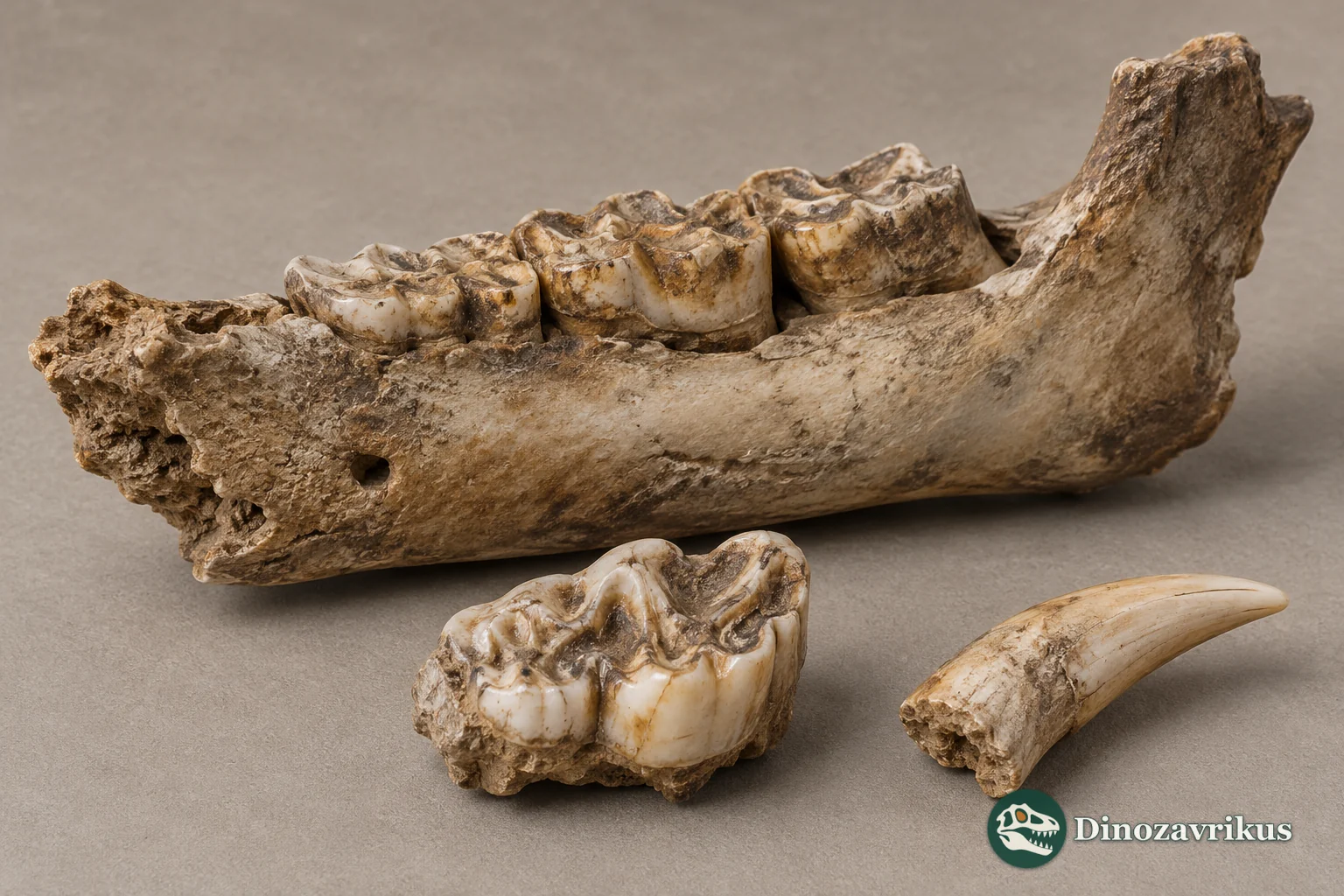
Molar crowns, accessory cusps and jaw robustness can be compared, but one isolated tooth cannot define every fossil assigned to an old name.
Omo, Moroccan and Algerian specimens belong to different deposits. Dental similarity does not make their layers coeval.
An Omo name under an older genus
Arambourg's Omo material included cheek teeth and jaw fragments from the river basin. Subsequent authors used several combinations, including Omochoerus pachygnathus. Geraads's systematic review explicitly lists Omochoerus as a junior genus synonym of Kolpochoerus, published in 1932. The change of genus does not automatically settle whether every historical species is distinct.
The earlier name Mesochoerus tells a related but separate naming story. Original combinations remain useful when tracing a particular specimen through older publications.
What jaws and third molars show
Researchers compare crown height, molar cusp pattern, accessory pillars, enamel wear and the robustness of the lower jaw. Tooth position and wear stage matter. A 2024 comparison of Algerian fossil jaws and teeth treats K. pachygnathus as a synonym or subgroup of K. heseloni under one species scheme, while other authors divide them differently. These are judgments about variation in documented series.
The broader Kolpochoerus profile discusses the lineage's dental evolution. Similar pig teeth do not make unrelated finds parts of one skeleton.
Why the geological context matters
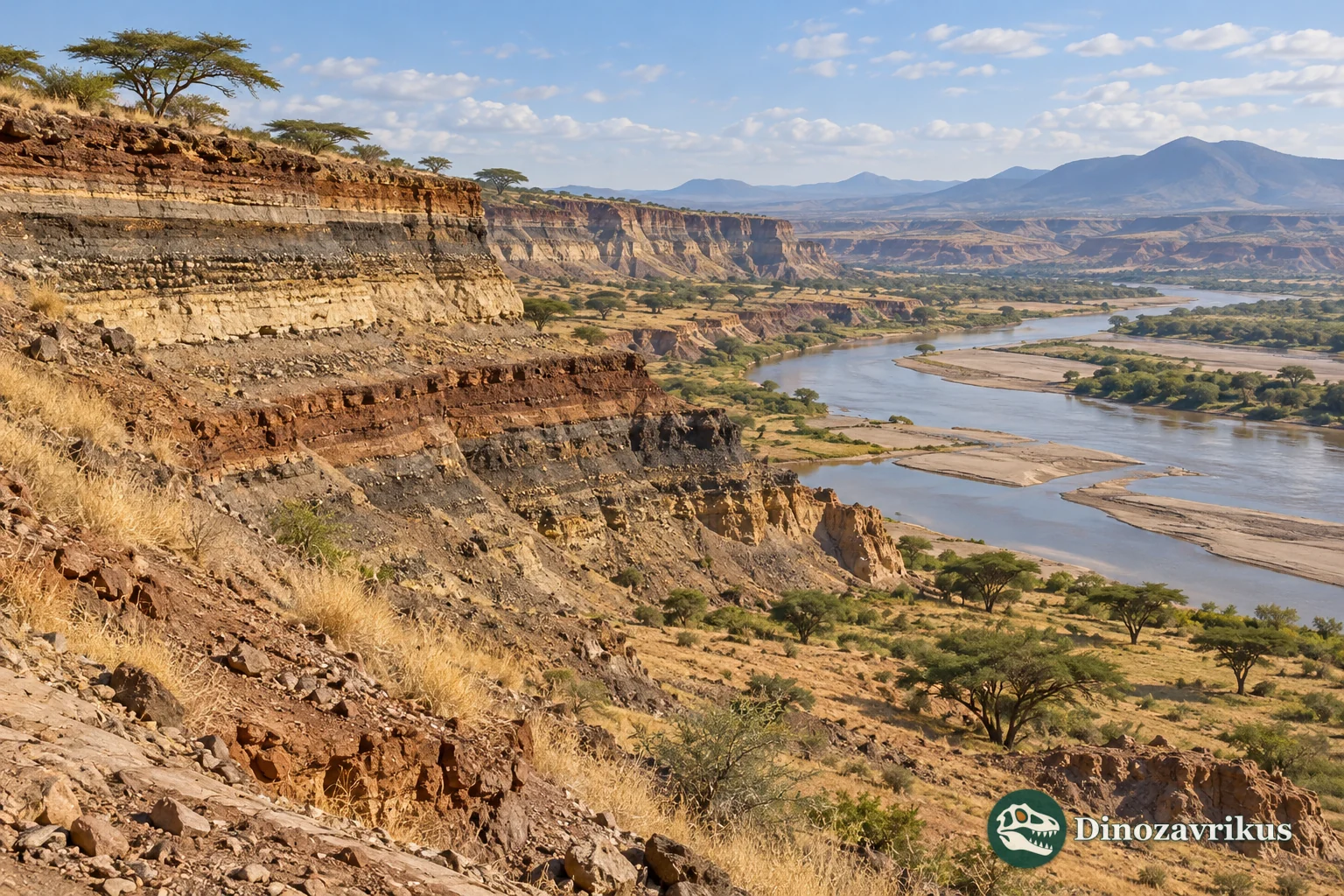
The Omo succession contains layers of different ages, and comparable fossils elsewhere in Africa have their own stratigraphy. The 2024 Algerian study questions an old Bou Hanifia locality label because the jaw resembles much younger material than that site's stated Miocene age. This provenance concern concerns that Algerian collection; it does not redetermine the whole Omo succession.
A river basin on the illustration suggests a setting, not a documented excavation. Diet may be investigated with wear and isotopes for particular species, but no single diet or coat can be assigned to all old Omochoerus specimens. Metridiochoerus was another fossil pig lineage that must be kept separate when similar teeth are compared.
Frequently asked questions
Is Omochoerus usually a separate genus today?
Most systematic accounts include it as a junior synonym of the older name Kolpochoerus.
What does pachygnathus refer to?
It is a historical species name associated with a robust jaw; its boundary relative to K. heseloni is interpreted differently.
Did all Omochoerus fossils come from one Omo layer?
No. The historical name was applied to specimens from different deposits and regions.
Can teeth establish coat color and behavior?
No. Teeth can inform dental anatomy and, with other analyses, aspects of diet, but not coat or social behavior.