

Onchocephalites was a Cambrian trilobite genus from North America. Articulated fossils of a Nevada species show 12 or 13 thoracic segments. Measurements of head shields from several collections help distinguish it from trilobites with similar heads.
Quick facts
| Group | Trilobites |
|---|---|
| Age | Cambrian, near the beginning of the Miaolingian |
| Region | North America (Canada and United States) |
| Diet | Unknown |
| Type species | Onchocephalites laevis |
| Genus named by | Franco Rasetti, 1957 |
What can the fossils tell us?
Fairly complete specimens preserve the segments and a small tail shield. The same count cannot be inferred for the type species from those fossils.
The inner cheeks are comparatively narrow and the cranidium is relatively long in the measured species. Some individual measurements overlap those of similar genera.
It has smaller eye lobes and more pronounced furrows than several previously known species. The other features suggested a possible relationship.
The Canadian type and the Nevada discovery
Franco Rasetti established Onchocephalites in 1957 from the Mount Whyte Formation of British Columbia. Its type species is O. laevis. The same formation also yields Plagiura, another trilobite identified largely through the proportions of the head.
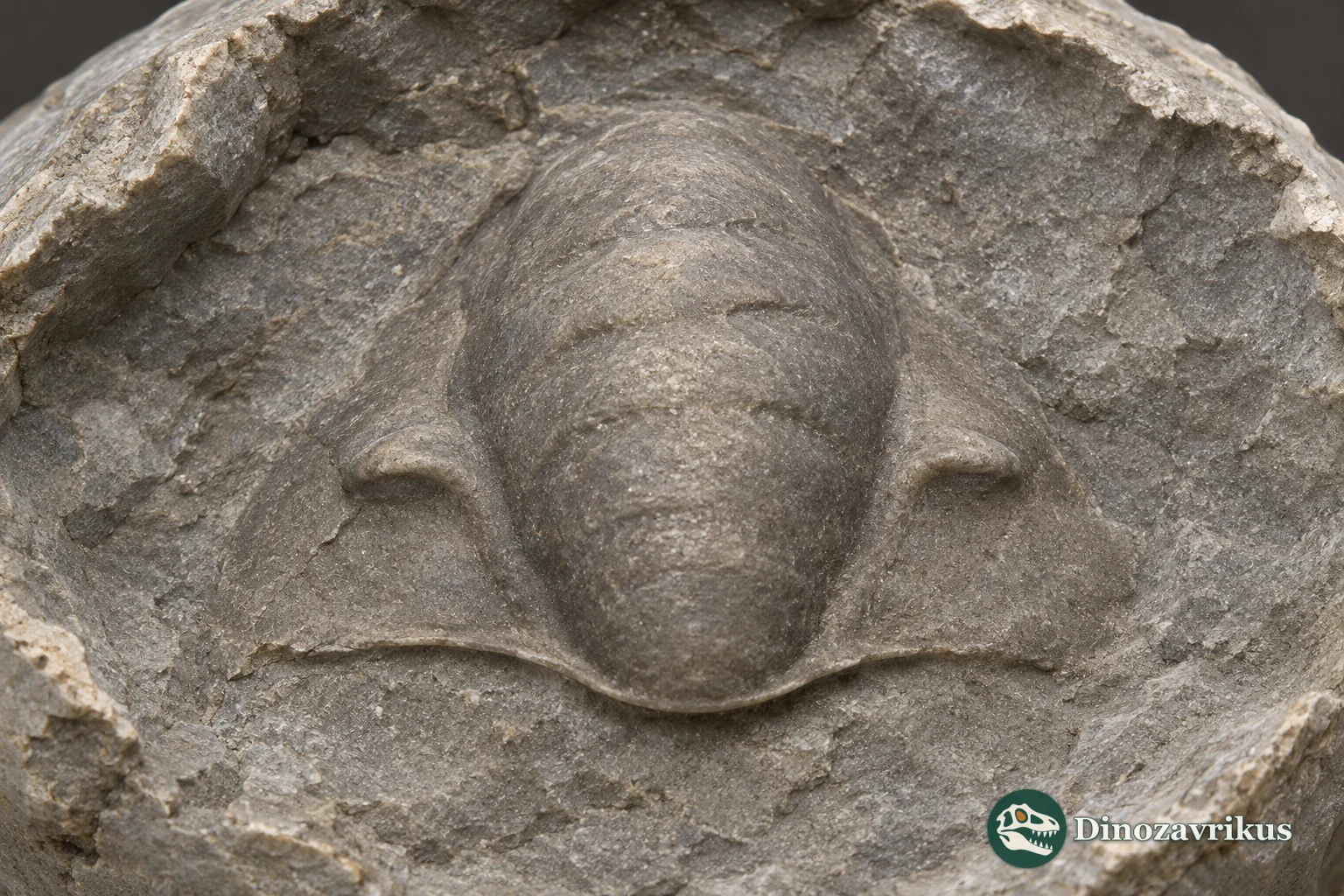
Frederick Sundberg and Linda McCollum described O. claytonensis in 2003. The holotype is a cranidium, USNM 517520, from the Emigrant Formation at Split Mountain, Nevada. Articulated material from the same formation shows 12 or 13 thoracic segments and a small pygidium.
Comparing the head shields
Measurements showed that the species examined have relatively narrow fixed cheeks and longer cranidia in proportion to their width than several superficially similar trilobites. Some characters, including the position of the eye lobes, overlap those of other genera. Identification draws on a combination of characters.
Allison Palmer named an Alaskan form Onchocephalites? versilis. Its small palpebral lobes and sharply defined furrows warranted caution about its generic placement. The preserved hard plates from Canada and Nevada record the shape of the armour. They give no direct evidence of the diet.
Frequently asked questions
What is the type species?
It is O. laevis from the Mount Whyte Formation of British Columbia.
What does the Nevada holotype preserve?
It is a cranidium. Other specimens show the thorax and tail shield.
How many thoracic segments did O. claytonensis have?
The described material has 12 or 13 thoracic segments.
Why is there a question mark in the name of the Alaskan species?
The small eye lobes and sharply defined furrows distinguish it from other species, so its assignment to the genus was provisional.