

Plagiura was a Cambrian trilobite. Large heads of the type species have a broad front border and a glabella that narrows towards it. Smaller specimens can resemble those of other species, so researchers compare shields of similar size and consider where each fossil was found in the rock sequence.
Quick facts
| Group | Trilobites |
|---|---|
| Age | Cambrian, including the early Miaolingian |
| Region | North America (Canada and United States) |
| Diet | Unknown |
| Type species | Plagiura cercops |
| Genus named by | Charles Resser, 1935 |
What can the fossils tell us?
The border, glabella and position of the eye lobes are most informative when compared across specimens of similar size.
It was assigned to Plagiura and compared with the type species. Weathering prevents a confident species identification.
Revision of the local faunas distinguished assemblages with different species. A match at genus level is only part of correlating a section.
Why the size of a head shield matters
Walcott described cercops in 1917. Resser made it the type species of Plagiura in 1935. It occurs in the Mount Whyte Formation of the Canadian Rockies, where Rasetti described several fossil assemblages rich in Plagiura.
In the American material, smaller cranidia, the central parts of the head shield, are often more alike across species than larger ones. Comparisons therefore take size into account. Similar heads can also occur in different genera. The broad, short pygidium of P. cercops helps distinguish it from some trilobites with comparable heads.
What the United States specimens show
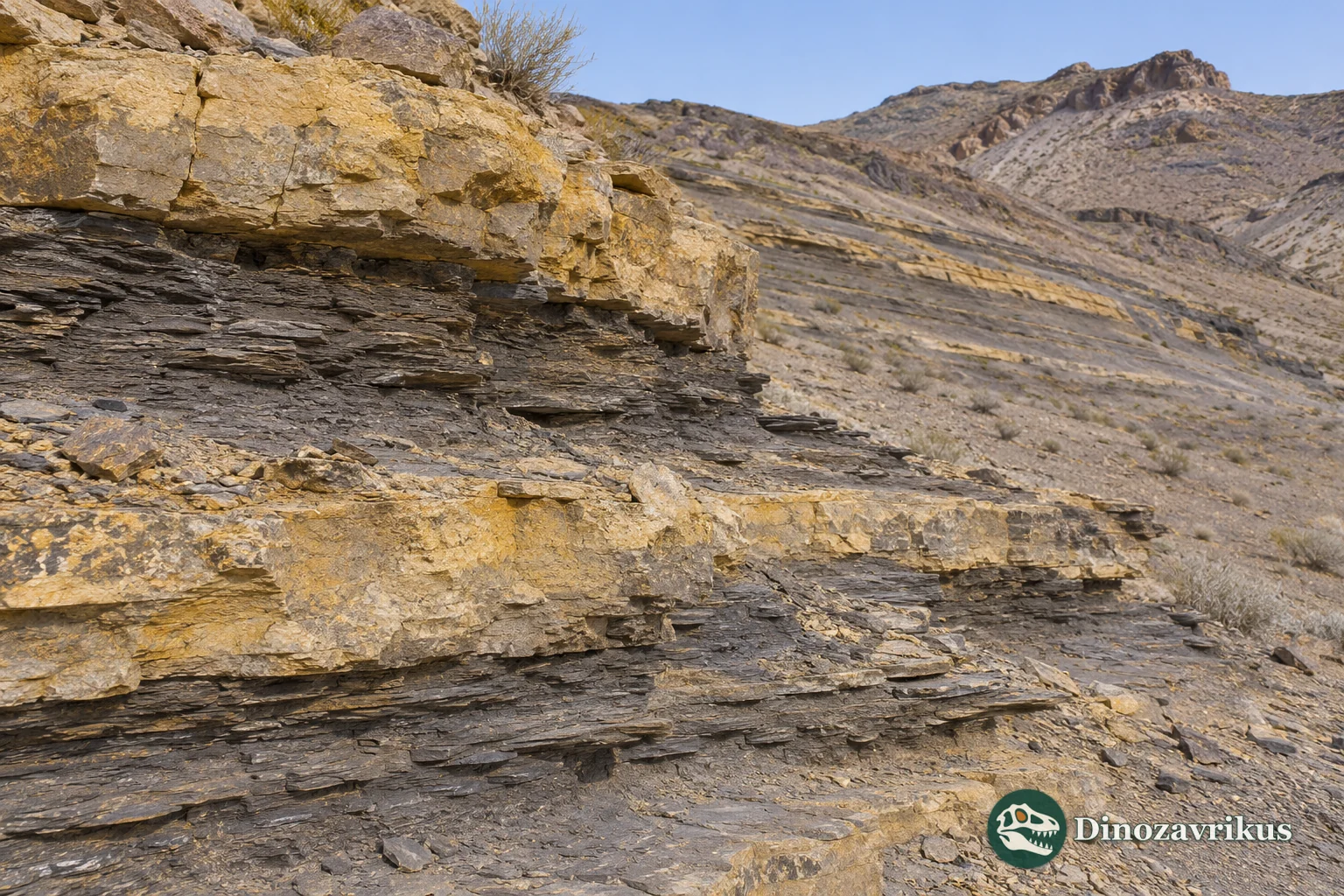
P. extensa was described from Nevada. Later collections include cranidia in the Pioche Shale within the Poliella denticulata Zone. A single weathered head from the Funeral Mountains in California retains a broad front border, well-forward eye lobes and large triangular posterior limbs. It was recorded as Plagiura cf. P. cercops, indicating a resemblance without a secure species identification.
Plagiura gave its name to the historical Plagiura–Poliella Zone. Sundberg and McCollum later distinguished several local assemblages by the species they contain. Elrathia is also useful for comparing Cambrian sections, in younger assemblages.
Frequently asked questions
What is the type species?
It is P. cercops, known from the Mount Whyte Formation of Canada.
Why can small heads be difficult to identify?
At small sizes, the head shields of different species may resemble one another. Comparing specimens of similar size helps reveal consistent differences.
Was P. cercops confirmed from the California fossil?
The incomplete head was assigned to Plagiura. Its observable features resembled P. cercops, but did not support a firm species identification.
Where does P. extensa occur?
Cranidia are recorded from Nevada, including the Pioche Shale in the Poliella denticulata Zone.