

Orkoraptor burkei was a predatory theropod from southern Patagonia. Its incomplete skeleton preserves distinctive tooth crowns with grooves along both sides near their bases. Comparable teeth occur in several theropod groups. Researchers have used the teeth together with the skull fragments and vertebrae to test where Orkoraptor belongs.
Quick facts
| Group | Theropods (Megaraptoridae) |
|---|---|
| Age | Late Cretaceous (probably Campanian) |
| Region | South America (Santa Cruz, Argentina) |
| Diet | Carnivore |
| Type species | Orkoraptor burkei |
| Holotype | MPM-Pv 3457, a partial skeleton |
| Locality | Cerro Los Hornos, south of Lago Viedma |
| Geological unit | Cerro Fortaleza Formation, called Pari Aike in the original description |
What can the fossils tell us?
Related megaraptorids preserve this shape. It also evolved in some other theropods, so tooth identity is more secure when other bones are associated.
Its processes give a point of comparison with other megaraptorids. The overall shape of the head remains uncertain.
The original account gave a Maastrichtian age. Fossil spores and pollen subsequently supported a Campanian age for the sampled section at Cerro Hornos.
The skeleton from Cerro Los Hornos
Fernando Novas, Martín Ezcurra and Agustina Lecuona named Orkoraptor in 2008. The Museo Padre Molina in Río Gallegos holds the type specimen, MPM-Pv 3457. It includes a postorbital and a quadratojugal from the skull, isolated teeth, parts of the first neck vertebra, two tail vertebrae and the upper half of a tibia. Fragments of ribs and chevrons were also recovered.
The postorbital has a forward process that rises towards the top of the eye socket. Its lower part bends around a broad recess. In the 2025 description of Joaquinraptor, the authors drew attention to the narrower postorbital of the latter and the straighter process extending below the eye. This comparison could be made without a complete skull of Orkoraptor.
Teeth, diet and relationships
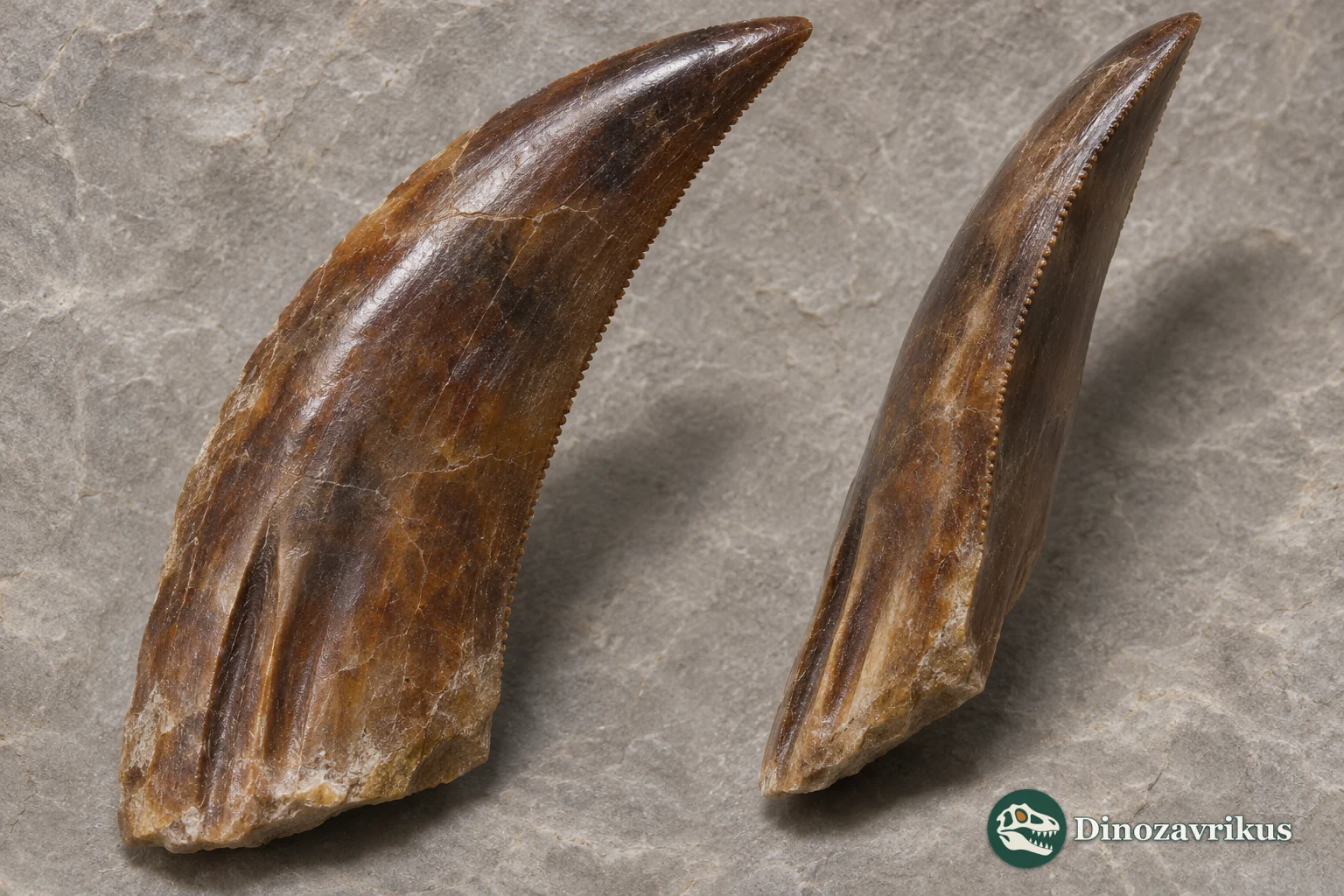
Grooves on both broad faces of the crowns make the base resemble a figure eight in cross-section. This shape also occurs in Megaraptor and some teeth of Australovenator, as well as in more distant theropods. The front cutting edge of an Orkoraptor crown lacks denticles, while the rear edge carries them. Recurved cutting teeth support a carnivorous diet. The available fossils give little evidence of its usual prey.
The original description noted some maniraptoran-like features. Later analyses place Orkoraptor within Megaraptoridae. The exact branching order inside that group can change as newly described specimens add characters from the skull and the rest of the skeleton.
Dating the Cerro Fortaleza beds
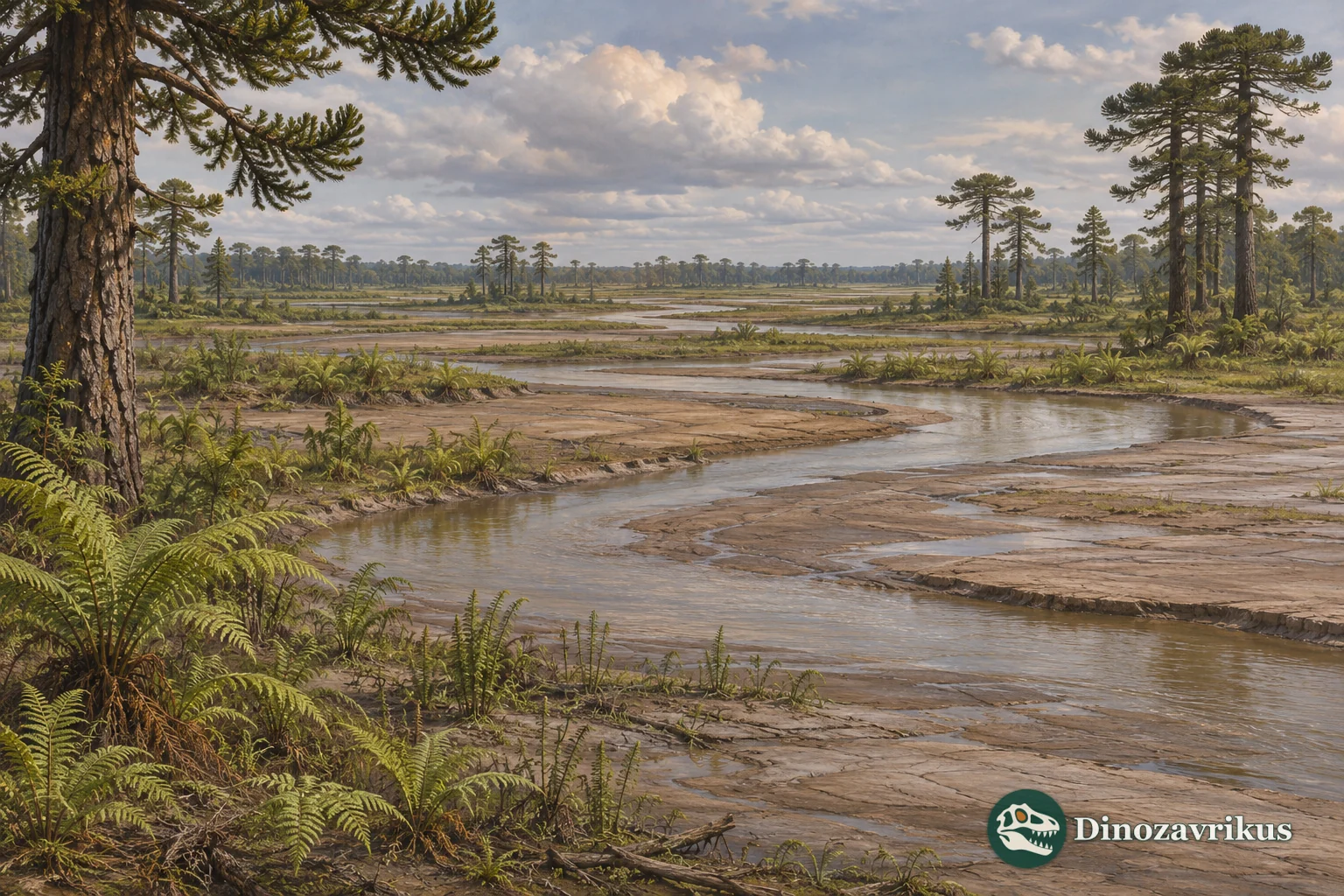
The locality lies south of Lago Viedma in Santa Cruz. The 2008 description referred the fossils to the Maastrichtian Pari Aike Formation. Later studies refer to the local succession as Cerro Fortaleza. A palynological study at Cerro Hornos found spores and pollen consistent with a Campanian age. Detrital zircons from other sections constrain when those sediments could have accumulated, with limited precision for the exact bed that yielded Orkoraptor.
Frequently asked questions
Where is the holotype kept?
It is held at the Museo Padre Molina in Río Gallegos, Argentina, as MPM-Pv 3457.
Have the large hand claws been found?
The type skeleton preserves no part of the forelimbs. Hands in reconstructions are inferred from megaraptorids that preserve those bones.
Which bones are most useful for comparison?
The postorbital around the eye socket, the tooth crowns and the vertebrae from the front part of the tail are especially informative.
How long was Orkoraptor?
The bones represent a large theropod. Its fragmentary spine and limbs leave the overall length uncertain.