

Oryctocephalites was a Cambrian trilobite. Its Nevada species O. palmeri provides one of the better samples for separating changes during growth from changes after burial. The fossils include articulated bodies as well as head shields preserved in two different ways.
Quick facts
| Group | Oryctocephalid trilobites |
|---|---|
| Age | Cambrian |
| Genus named | Charles Resser, 1939 |
| Type species | Oryctocephalites typicalis |
| O. palmeri holotype | Exoskeleton USNM 488926 |
| Head-shield sample | 36 O. palmeri cranidia |
What can the fossils tell us?
The holotype is harder to read where the trunk meets the tail shield. The difference in counts does not establish a difference in the living animals.
Larger cranidia have relatively longer front branches of the sutures. Measurements of equivalent points make different growth stages comparable.
Three-dimensional fossils from carbonate nodules provide a reference when interpreting flattened material in shale.
The Pioche Formation specimens
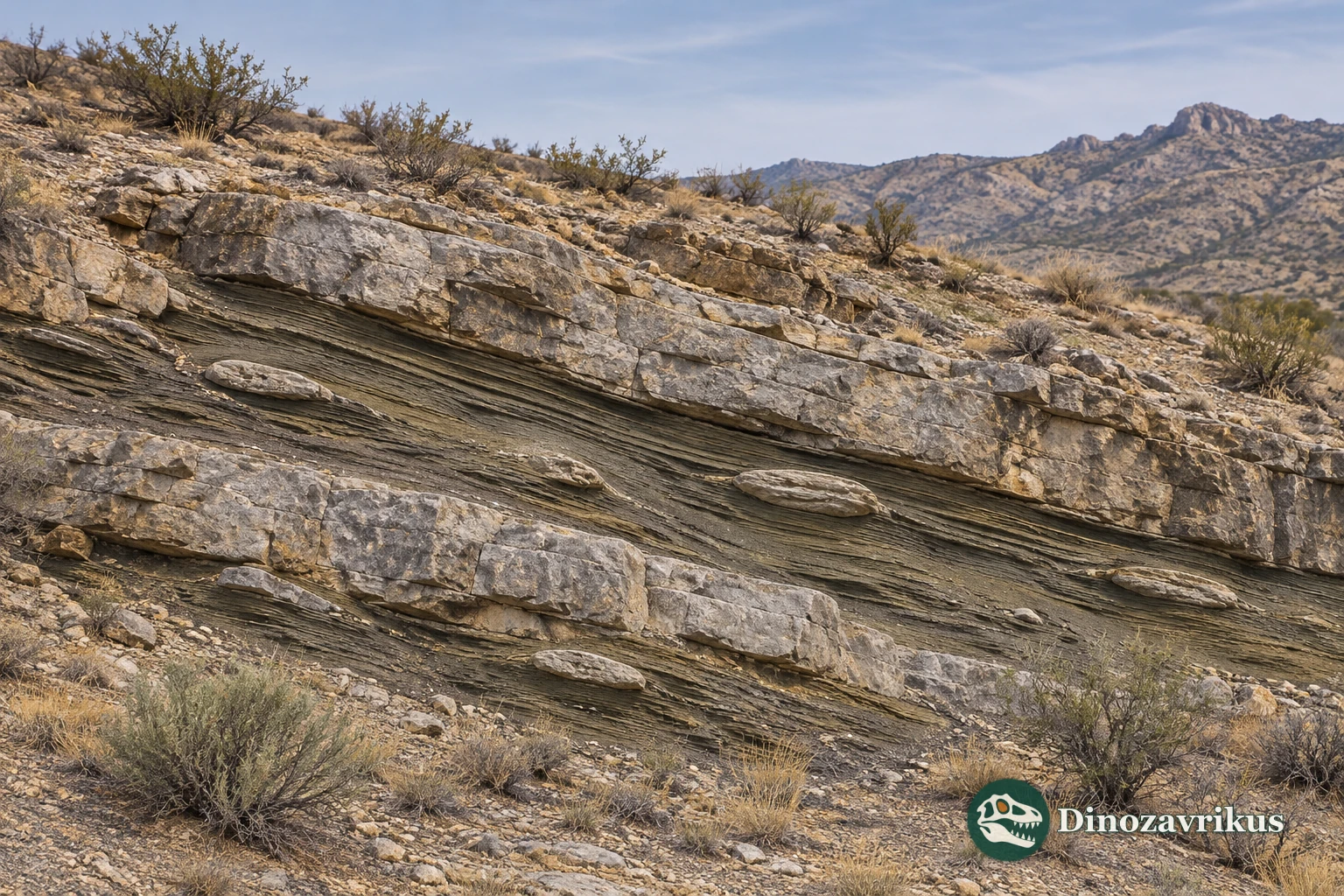
Charles Resser named Oryctocephalites in 1939 and designated O. typicalis as its type species. Oryctocephalites palmeri comes from beds near the top of the Combined Metals Member of Nevada's Pioche Formation. Its holotype, USNM 488926, is a dorsal exoskeleton from Oak Spring Summit.
The original description counted seven thoracic segments on the holotype. A second articulated specimen, FMNH PE58506 from Ruin Wash, shows eight. The boundary with the tail shield on the type specimen is difficult to read, so the counts do not establish that two segment numbers occurred. Three to five pairs of slender marginal spines are described on tail shields of the species.
Growth versus compaction
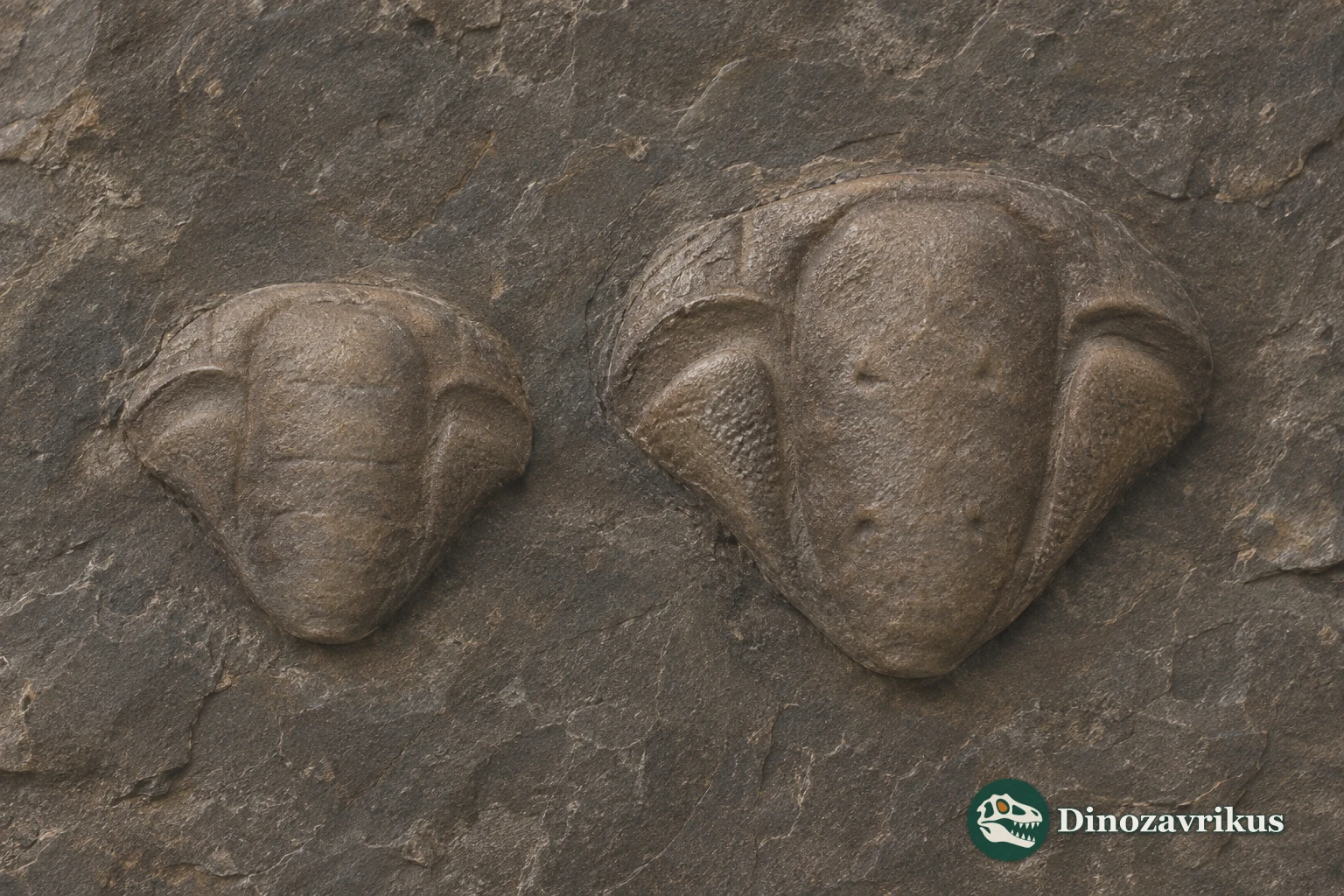
Mark Webster and Frederick Sundberg measured corresponding landmarks on 36 cranidia, the central parts of the head shield. As the cranidium grew, the front branches of the facial sutures lengthened in proportion to the rest of the shield. The rear part of each fixed cheek also widened. Growth-related changes accounted for the leading pattern of shape variation in the sample.
Some of the shale specimens fractured or acquired locally deeper furrows as they were compressed. Less compacted specimens from carbonate nodules help show which features of the shale fossils may be altered. A particularly deep furrow on a flattened cranidium can record preservation as well as anatomy.
Where the genus boundary is drawn
Sundberg's phylogenetic study placed Oryctocephalus species with a tapering or nearly parallel-sided glabella in a different branch from Oryctocephalites. Some authors have applied a broader Oryctocephalus concept. They weigh head furrows, eye ridges and segment counts differently when making assignments.
The Nevada revision also changed the identification of an individual fossil. USNM 488937 had been called O. palmeri, but its narrower fixed cheeks and its overall cranidial shape set it apart from the sample. Webster and Sundberg left it as an unnamed form within Oryctocephalites.
Frequently asked questions
What is the type species of Oryctocephalites?
Oryctocephalites typicalis. Resser designated it when he established the genus in 1939.
Where was the Oryctocephalites palmeri holotype found?
Near Oak Spring Summit, Nevada, in the upper part of the Combined Metals Member of the Pioche Formation. It is catalogued as USNM 488926.
How many movable trunk segments are visible on the Ruin Wash specimen?
Eight. On the holotype the boundary with the tail shield is less clear, so a count of seven remains possible for that fossil.
What changed in the head as O. palmeri grew?
The front branches of the facial sutures lengthened relative to the shield, and the backs of the fixed cheeks widened. Those changes can be traced by comparing different-sized cranidia.