

Osmotherium spelaeum is a fossil member of the skunk lineage from the Port Kennedy cave deposit in Pennsylvania. Edward Drinker Cope named it in the late nineteenth century while studying a rich Pleistocene mammal assemblage. Jaw and tooth fragments carry the most useful evidence. They do not preserve its fur, odor glands or a complete body. The cover is therefore a cautious artistic portrait rather than a documented coat pattern.
The name belongs to a distinct historical fossil collection. A broad age assigned to the cave fauna should not be mistaken for a direct date of each jaw.
Quick facts
| Type species | Osmotherium spelaeum Cope, 1896 |
|---|---|
| Group | Mephitidae, the skunk lineage |
| Confirmed locality | Port Kennedy Cave, Pennsylvania |
| Age | Pleistocene, Irvingtonian fauna |
| Direct evidence | Jaw fragments and teeth |
| Unknown | Exact body mass and coat pattern |
What can the fossils tell us?
Cope compared jaw fragments from Port Kennedy. Tooth position and form are preserved; coat color and soft tissues are not.
A National Park Service inventory lists O. spelaeum only from Port Kennedy. That does not establish that it lived nowhere else.
Comparisons with fossil and living skunks place Osmotherium in the lineage, but the fragmentary sample cannot reveal a complete skeleton.
A skunk from one cave assemblage
Port Kennedy was explored in the nineteenth century. Cope compared several small carnivores from its deposits and published a fuller account of the vertebrate remains in 1899. Early names for similar fragments have to be checked against the actual jaws and tooth positions rather than treated as separate animals by default.
The National Park Service cave fossil inventory lists O. spelaeum as known only from Port Kennedy. This is a statement about confirmed finds, not proof of a tiny geographic range. Large predators also occur in the assemblage; their presence does not document a particular encounter with this skunk. Brachyprotoma is a separate fossil skunk lineage useful for comparison.
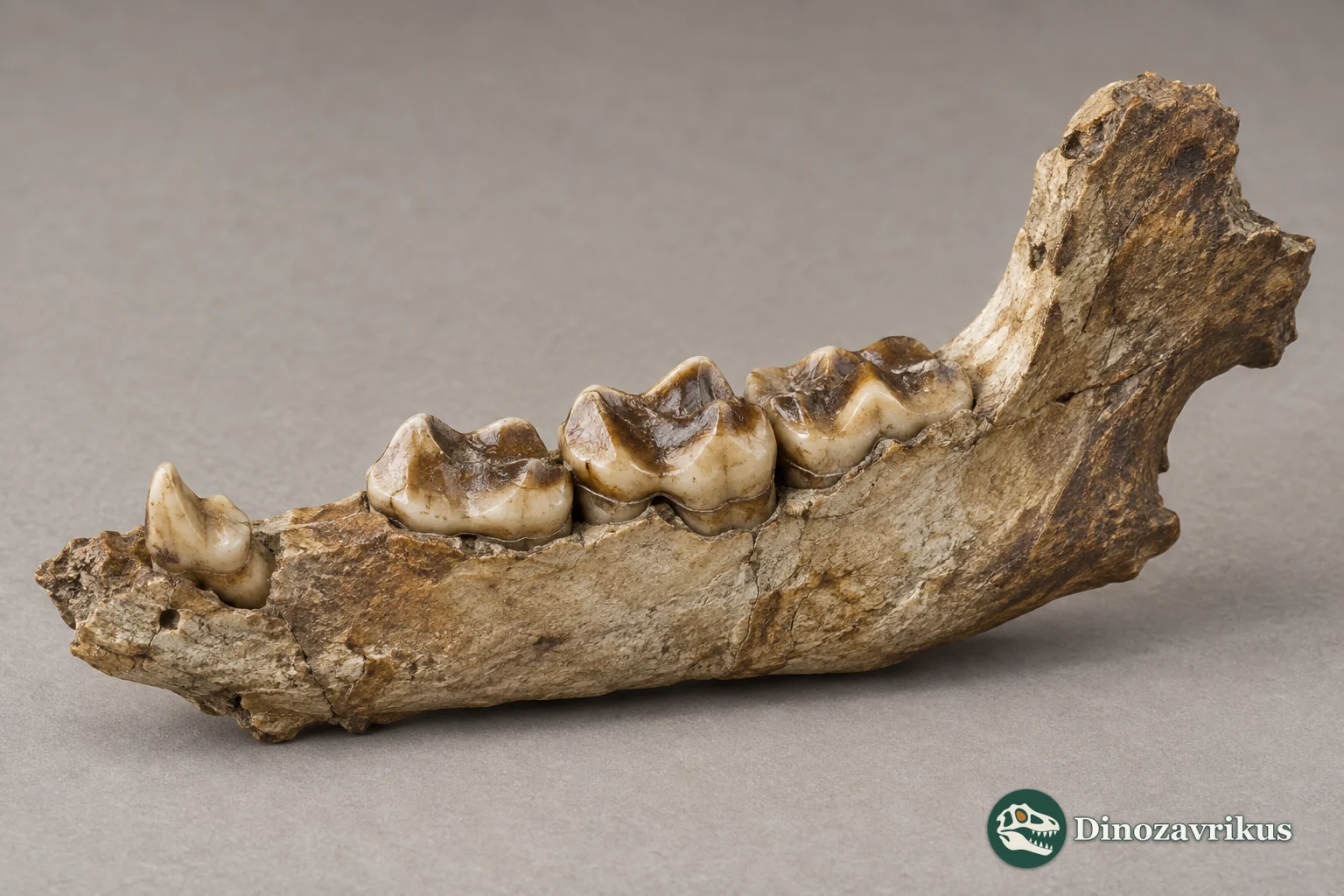
What the teeth can and cannot show
The cheek teeth and lower jaw can be compared with other mephitids. Their arrangement gives taxonomic evidence, although broken bone and wear complicate interpretation. Fossils from a single cave still need individual provenance and anatomical matching; they are not automatically one associated skeleton.
A 2005 study of New World fossil skunks included Osmotherium in its comparison of relationships near the modern Mephitis lineage. Such placement is an inference from anatomical characters, not DNA from the cave. A smaller comparative sample leaves room for reassessment if better material is found.
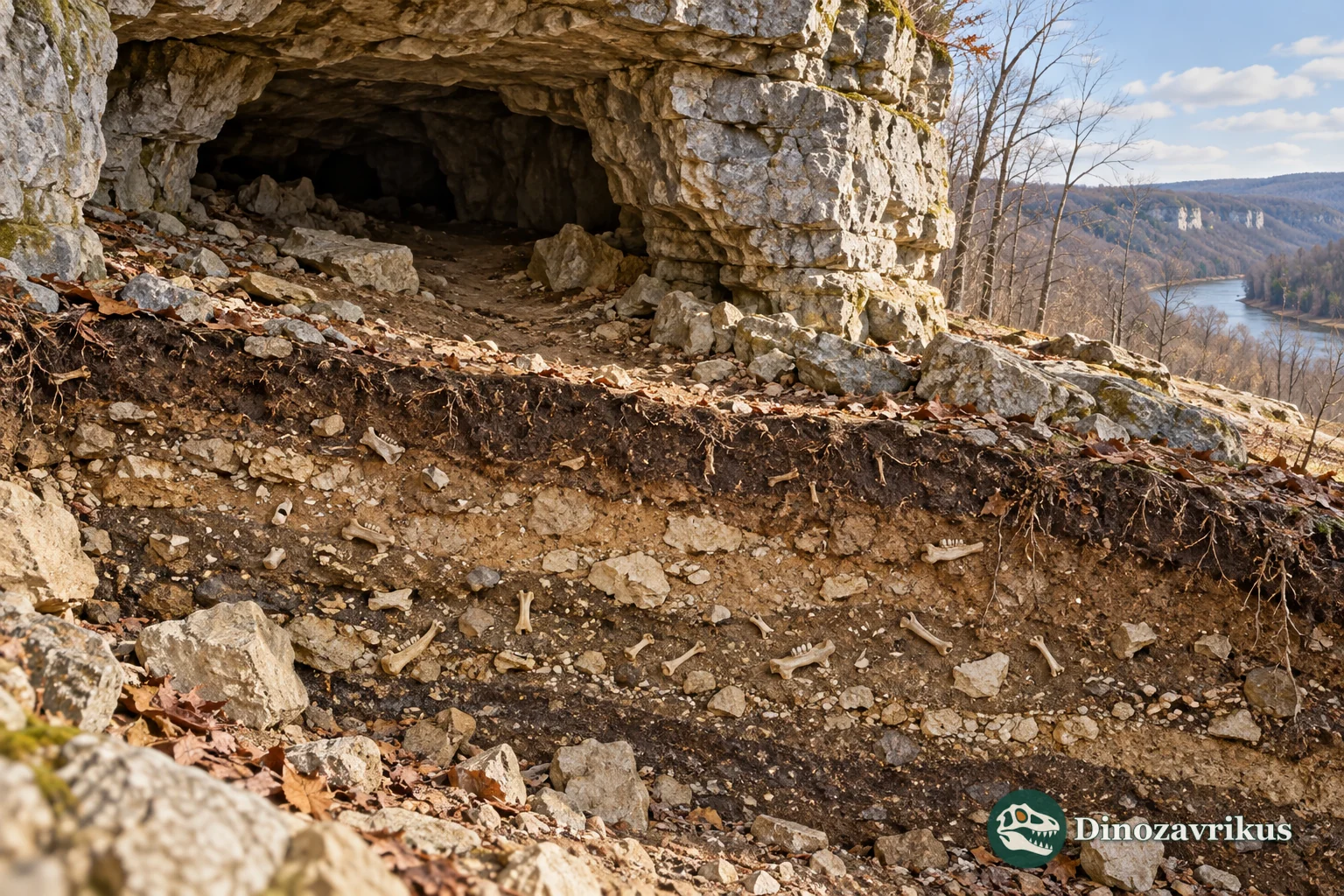
Age and reconstruction
The Port Kennedy assemblage is classed as Irvingtonian Pleistocene. Cave sediment can accumulate over time, so this label does not give a precise death date for each specimen. The Quaternary period supplies the broader time setting.
Kinship suggests a small skunk-like carnivore, but exact mass, diet, fur pattern and scent-gland anatomy remain unmeasured for this fossil. The illustrated cave and jaw are educational reconstructions and are not photographs of Port Kennedy specimens or the original excavation.
Frequently asked questions
Where was Osmotherium found?
Confirmed O. spelaeum fossils come from Port Kennedy Cave in Pennsylvania.
Was it a living striped skunk?
No. It is a fossil skunk relative; the fossils do not preserve a modern striped coat.
Is its exact size known?
No complete skeleton establishes a precise mass for the species.
Do all cave fragments belong to one individual?
No such association follows from the locality alone; each fragment requires anatomical and provenance checks.