

Pachyarmatherium was an extinct armored cingulate with unusually thick bony plates. The name was established for early Pleistocene Florida fossils and later applied to South American material. Its heavy carapace can look glyptodont-like, but the rest of the skeleton and the arrangement of armor plates complicate that comparison.
The North American type species P. leiseyi is not automatically the same animal as the later Brazilian P. brasiliense. The complete shape of the head remains less certain than the armor. The fossil Propraopus provides a comparison with another armored xenarthran whose plate pattern differs.
Quick facts
| Group | Cingulata, armored xenarthrans |
|---|---|
| Type species | Pachyarmatherium leiseyi |
| Named | Downing and White, 1995 |
| Type locality | Leisey Shell Pit 1A, Florida |
| Main evidence | Thick osteoderms and postcranial bones |
| Range | North and South America; different species |
What can the fossils tell us?
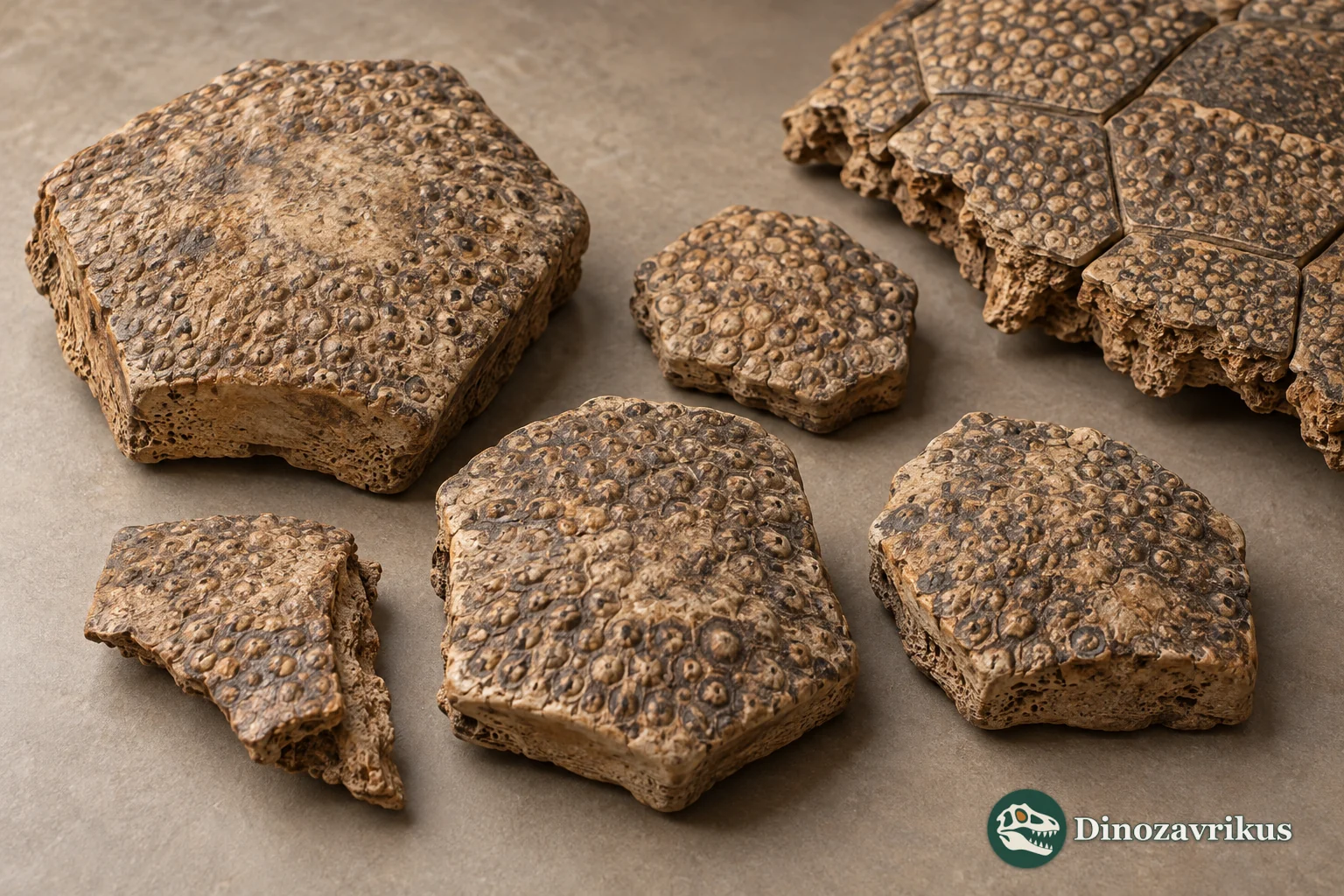
Large samples of isolated Florida osteoderms show unusually thick armor. A loose plate alone does not give a whole-body size or complete shell outline.
The shoulder and pelvic shields met across a narrow imbricating zone. This distinguishes Pachyarmatherium from many armadillos, yet armor similarity alone does not resolve its closest relatives.
Ungual phalanges and other postcranial parts support a powerful scratch digger. Ant- or termite-eating was proposed from anatomy, not demonstrated by preserved stomach contents.
The Leisey Shell Pit discovery
Kevin Downing and Richard White named P. leiseyi in 1995 from the Leisey Shell Pit local fauna in Hillsborough County, Florida. Leisey 1A and Haile 16A yielded large samples of detached armor plates, with some postcranial elements at Haile. The fauna also included Dasypus bellus, a pampathere and a glyptodont, so the thick plates had to be distinguished from several other armored mammals.
A nearly complete postcranial skeleton was mentioned from a private collection, but it was unavailable for detailed examination in the original study. Earlier museum collections had even confused some Pachyarmatherium plates with Dasypus. A large comparative sample, rather than an imagined complete shell, revealed the new genus.
Armor architecture and relatives
Downing and White described a narrow transverse imbricating zone between the shoulder and pelvic shields. Many familiar armadillos have several movable bands. Pachyarmatherium also had distinct border and tail plates, clawed ungual phalanges and free dorsal vertebrae. That combination separates it from a simple copy of a giant glyptodont such as Glyptotherium.
Its placement has changed with the characters under study. The 2009 description of Brazilian P. brasiliense compared 48 postcranial characters and recovered Pachyarmatherium beside a clade containing pampatheres and glyptodonts, rather than within glyptodonts. This is one morphological analysis, not a final genetic result; the broad resemblance of thick armor could reflect convergent evolution.
Different places, species and behaviours
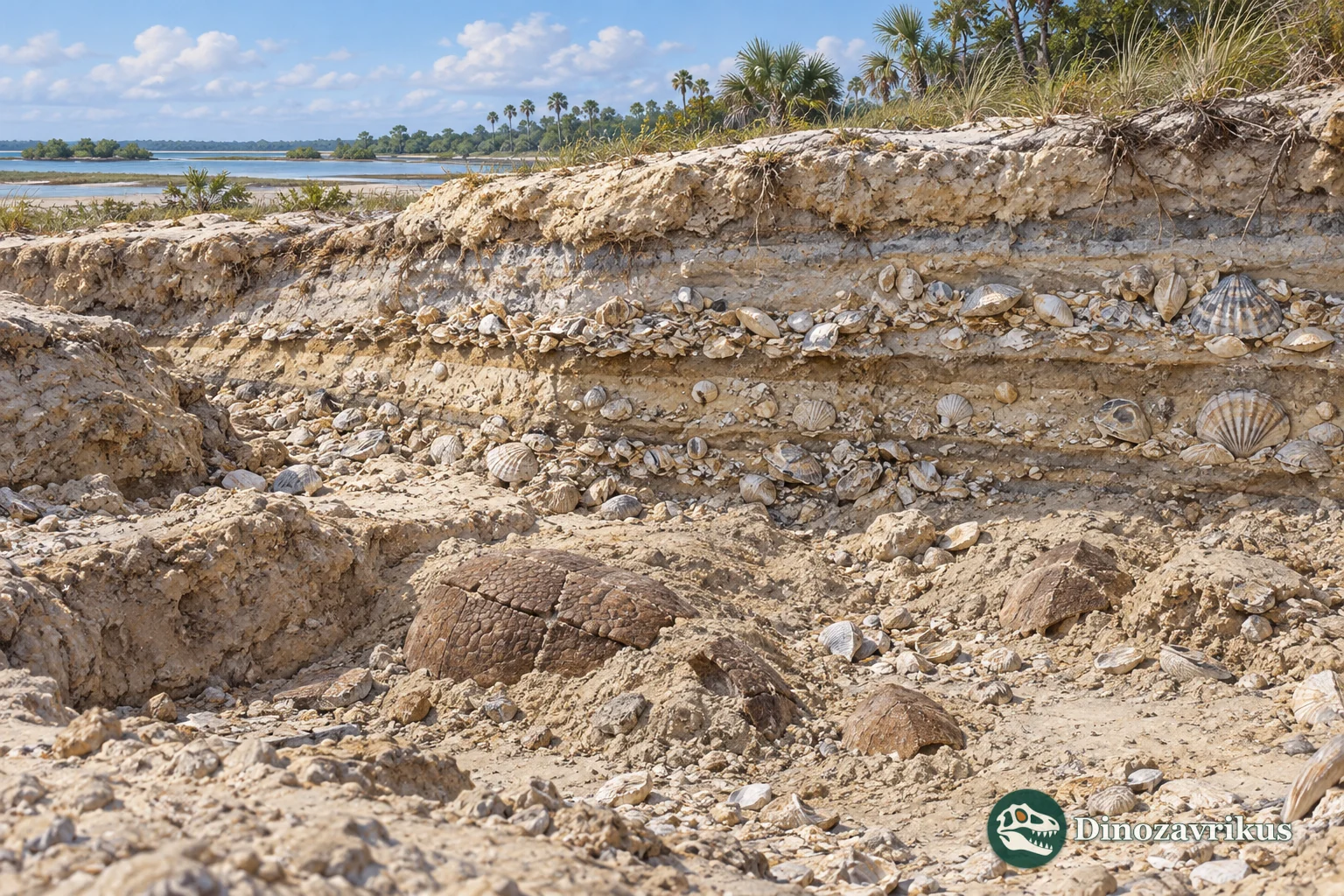
P. leiseyi is known from late Blancan and early Irvingtonian localities in Florida and South Carolina. Brazilian P. brasiliense was described from late Pleistocene osteoderms, shell fragments and other bones; Venezuelan material bears the name P. tenebris. The validity of the two South American names has been debated because isolated plates vary by position and preservation. They should not be merged or separated as a settled fact without a broader revision.
Claws and a sturdy skeleton support an animal capable of forceful scratching. The first describers suggested possible myrmecophagy, but no fossil meal directly establishes ants or termites. Separate Brazilian studies identified pitting and other damage on some fossil cingulate armor, including Pachyarmatherium, and compared infection with parasite traces. Such altered plates do not reveal an individual's cause of death. The cover and quarry scene are interpretive art rather than photographs of a recovered specimen or excavation.
Frequently asked questions
Was Pachyarmatherium a glyptodont?
Its armor resembles glyptodont armor, but skeletal and carapace characters have produced a different placement in at least one phylogenetic analysis. Its exact closest relatives remain debated.
What made its armor unusual?
Very thick osteoderms and one narrow overlap zone between two large shields distinguished it from many familiar armadillos.
Did it eat ants?
Ant- or termite-eating was proposed from claws and skeletal comparisons. Direct fossil stomach contents have not confirmed the diet.
Was it found only in Florida?
No. The type species is well recorded in Florida and nearby North America, while other named species are based on South American fossils.