

Pachyvaranus was a Late Cretaceous lizard from the southern margin of the Tethys. Its vertebrae and ribs show both increased bone volume and increased compactness. Those features, together with the sediment in which the fossils occur, point to a predominantly aquatic way of life.
Quick facts
| Group | Anguimorphs (Anguimorpha), varanoids (Varanoidea) |
|---|---|
| Age | Late Cretaceous, Maastrichtian |
| Region | Africa and Asia, Morocco and Syria |
| Type species | Pachyvaranus crassispondylus |
| Scientific name | Pachyvaranus |
| Diet | Diet unknown |
What can the fossils tell us?
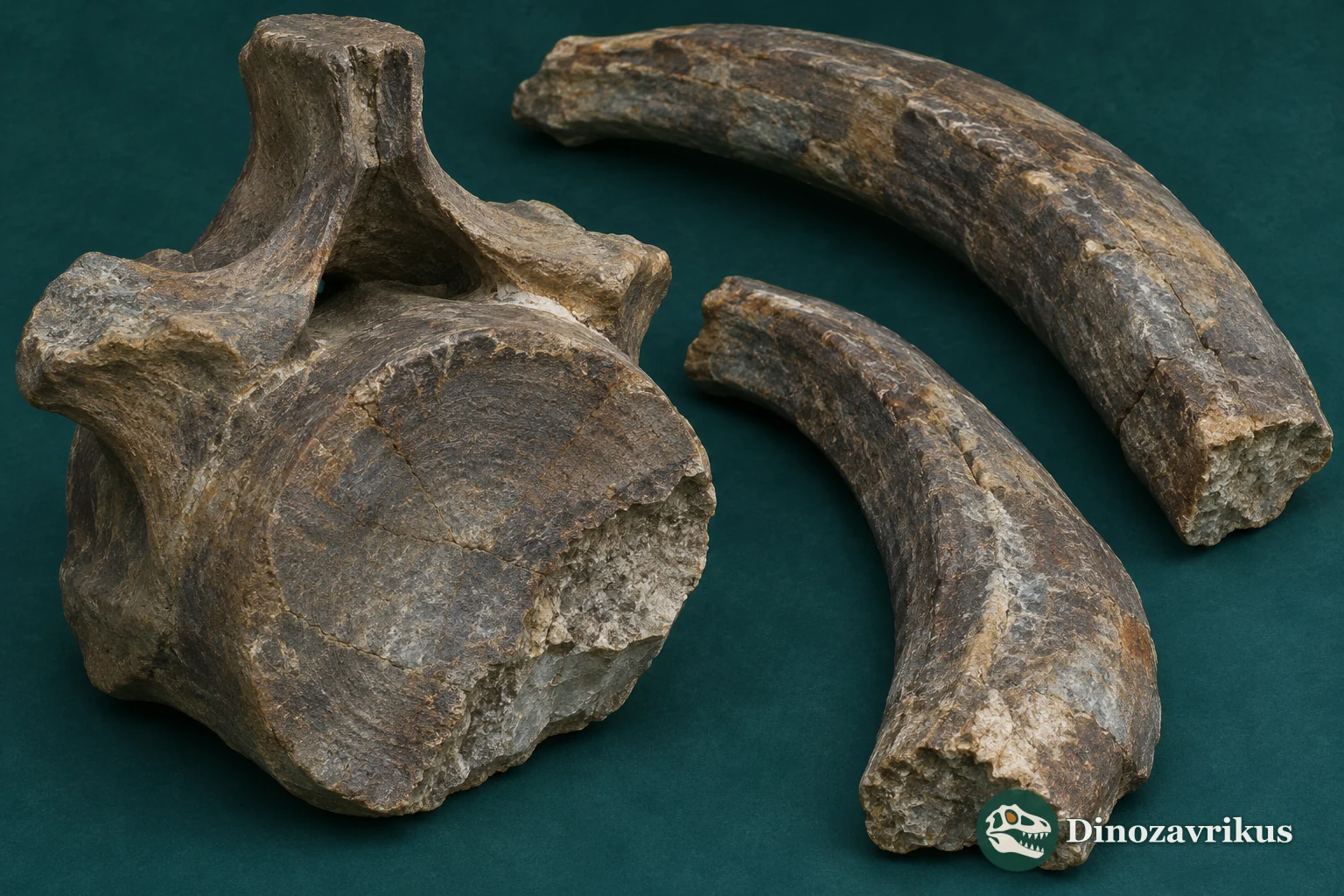
The fossils from Morocco and Syria include thickened bones. Sections of the vertebrae reveal an increase in the compactness of the bone tissue.
Heavy bones may have reduced the effort needed to submerge or remain below the surface. The shallow marine deposits support this interpretation.
The classification relies chiefly on the vertebrae. The material is insufficient to reconstruct the proportions of the head, limbs and tail with confidence.
Phosphate deposits of Morocco and Syria
Camille Arambourg described Pachyvaranus crassispondylus in 1952 from isolated Moroccan vertebrae. Additional material from Maastrichtian phosphates in Morocco and Syria allowed the species to be redescribed. It was placed in a separate varanoid lineage, Pachyvaranidae.
Where the extra mass comes from
Researchers studied sections of two dorsal vertebrae from Oulad Abdoun and Ganntour. Pachyostosis is an increase in the volume of the bone. Osteosclerosis is an increase in its compactness. Both are present in Pachyvaranus. Heavy vertebrae and ribs are also known in Simoliophis, a marine reptile from a different squamate lineage.
Clues to swimming
The extra bone mass may have offset some of the animal’s buoyancy. That interpretation fits the shallow marine setting in which its fossils occur. Working out its swimming speed or stroke would require more of the tail, limbs and trunk than the surviving material provides.
Frequently asked questions
When did Pachyvaranus live?
Its fossils come from Maastrichtian deposits dating to the end of the Cretaceous.
What might the heavy bones have done?
They may have helped the animal submerge and stay below the surface with less effort.
Was Pachyvaranus a mosasaur?
The modern redescription places it in Pachyvaranidae, a separate lineage of varanoids.
What did it eat?
The known remains do not establish the diet.