

Pagetides was a small Cambrian trilobite with a spine at the back of the head and a broad tail shield. The genus was first described from detached shields in a limestone clast in Québec. Northern Greenland later yielded entire juvenile shells, tightly rolled into balls.
Quick facts
| Group | Eodiscina |
|---|---|
| Named by | Franco Rasetti, 1945 |
| Type species | Pagetides elegans |
| Type material age | End of Cambrian Stage 4 |
| Largest cranidium | 4 mm, central shield |
| Greenland finds | Over 100 enrolled juveniles |
What can the fossils tell us?
The type shields come from a limestone clast in a conglomerate. They record the head and tail separately.
MGUH 23189 is one example. Acid processing etched some of the fine surface detail.
Small shields have ridges. Granules are more prominent in a larger specimen, although preservation can also alter the surface.
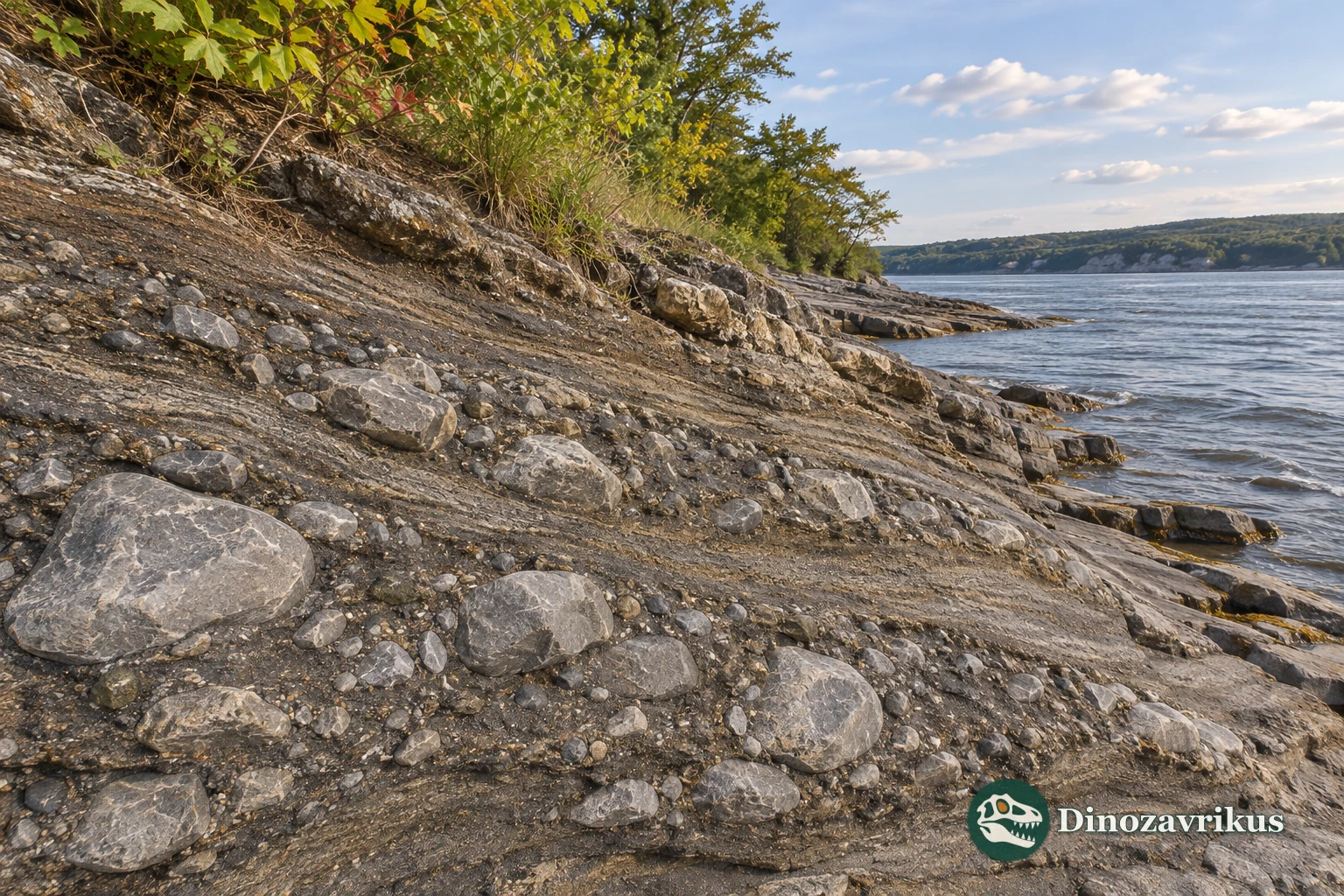
A limestone clast from Québec
Franco Rasetti established the genus and its type species, P. elegans, in 1945. The original material came from Ville-Guay near Lévis on the Saint Lawrence. The fossils were preserved in a limestone clast within a conglomerate. Later studies correlated the fauna from these clasts with the latest part of Cambrian Stage 4.
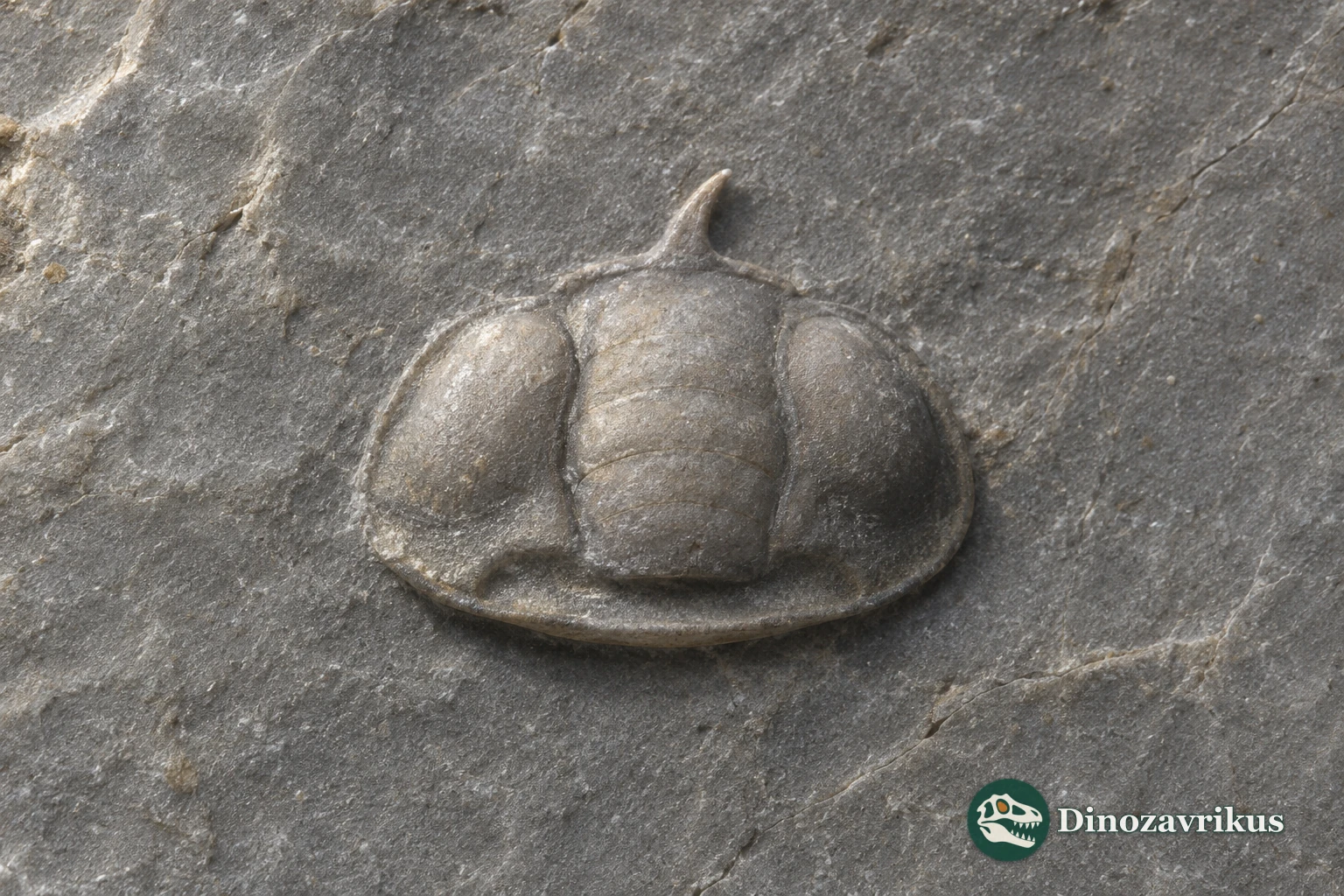
Holotype 304a in the Université Laval series is a cranidium, the central part of the head shield. The largest cranidium measured in the original description is 4 mm long. The convex cheeks rise to the height of the glabella, and the short, slightly upturned spine projects from behind it. The rounded tail shield is broader than long and shows six or seven grooves across its axis.
Enrolled shells from Greenland
Samples from the Henson Gletscher Formation in southern Freuchen Land yielded more than 100 tightly enrolled juvenile P. elegans. MGUH 23189, illustrated from two angles, shows the shell folded into a compact ball. Acetic acid was used to free the fossils from the limestone. It etched the small specimens heavily enough to limit study of their surfaces.
Other tiny trilobites such as Serrodiscus also occur in the Early Cambrian sections studied across northern Greenland. Joined fossils show how the parts of a single shell fit together, something that is harder to establish for scattered shields.
How the surface changed with growth
A sample from Peary Land contains immature cranidia of several sizes. On the smallest, about 0.7 mm across at the palpebral lobes, curved ridges follow the cheeks and centre of the head. Dense granules dominate much of the surface in a specimen around 1.4 mm wide. Some differences may reflect preservation, but the authors thought growth a likely explanation.
The same sample yielded detached thoracic segments with and without an axial spine. Only the spineless kind is visible in the enrolled series from Freuchen Land, so the two segment types cannot be assigned to the same species with confidence.
Variation in the Greenland specimens also changed how the species was classified. The depth of the pleural grooves varies from one tail shield to another. Blaker and Peel concluded that the grooves did not justify keeping the North American Neopagetina taconica as a separate species, and treated it as a synonym of P. elegans.
Frequently asked questions
Where was the type species found?
In a limestone clast in a conglomerate at Ville-Guay near Lévis, Québec.
Was there a long spine on the tail?
There is no prominent axial spine on the tail of the type species. The short spine projects from the back of the head.
How many enrolled specimens were recovered in Greenland?
The study reported more than 100 tightly enrolled juveniles.
Did young individuals of different sizes have the same shell texture?
The smallest cranidia show ridges. Dense granules dominate a larger cranidium, although preservation may affect the visible textures.