

Palaeochelys was a Miocene freshwater turtle from Europe. The specimen from Germany that gave the genus its name preserves the upper shell. Grooves on its surface show where the horny scutes met, providing a way to compare the German fossil with a related shell from France.
Quick facts
| Group | Turtles, Geoemydidae |
|---|---|
| Age | Miocene |
| Region | Europe: Germany and France |
| Type species | Palaeochelys bussenensis |
| Holotype | BMNH R1012, carapace |
| Scientific name | Palaeochelys |
| Diet | No direct evidence |
What can the fossils tell us?
BMNH R1012 preserves the upper shell. It gives a basis for comparing scutes, without revealing the skull or lower shell.
The final vertebral scute reached the rearmost midline bone. Its width helps distinguish the German and French specimens.
The Oligocene shell from Rott was named in Palaeochelys before being moved to Palaeomauremys. That reassignment narrowed the record of the genus.
The specimen from the Bussen hill
Hermann von Meyer named Palaeochelys bussenensis in 1847. Its holotype, BMNH R1012, is held at the Natural History Museum in London. The fossil comes from a limestone of the Upper Freshwater Molasse near Ulm. Reassessment of the deposits put it in the Miocene, while the precise age of the specimen’s bed remains open.
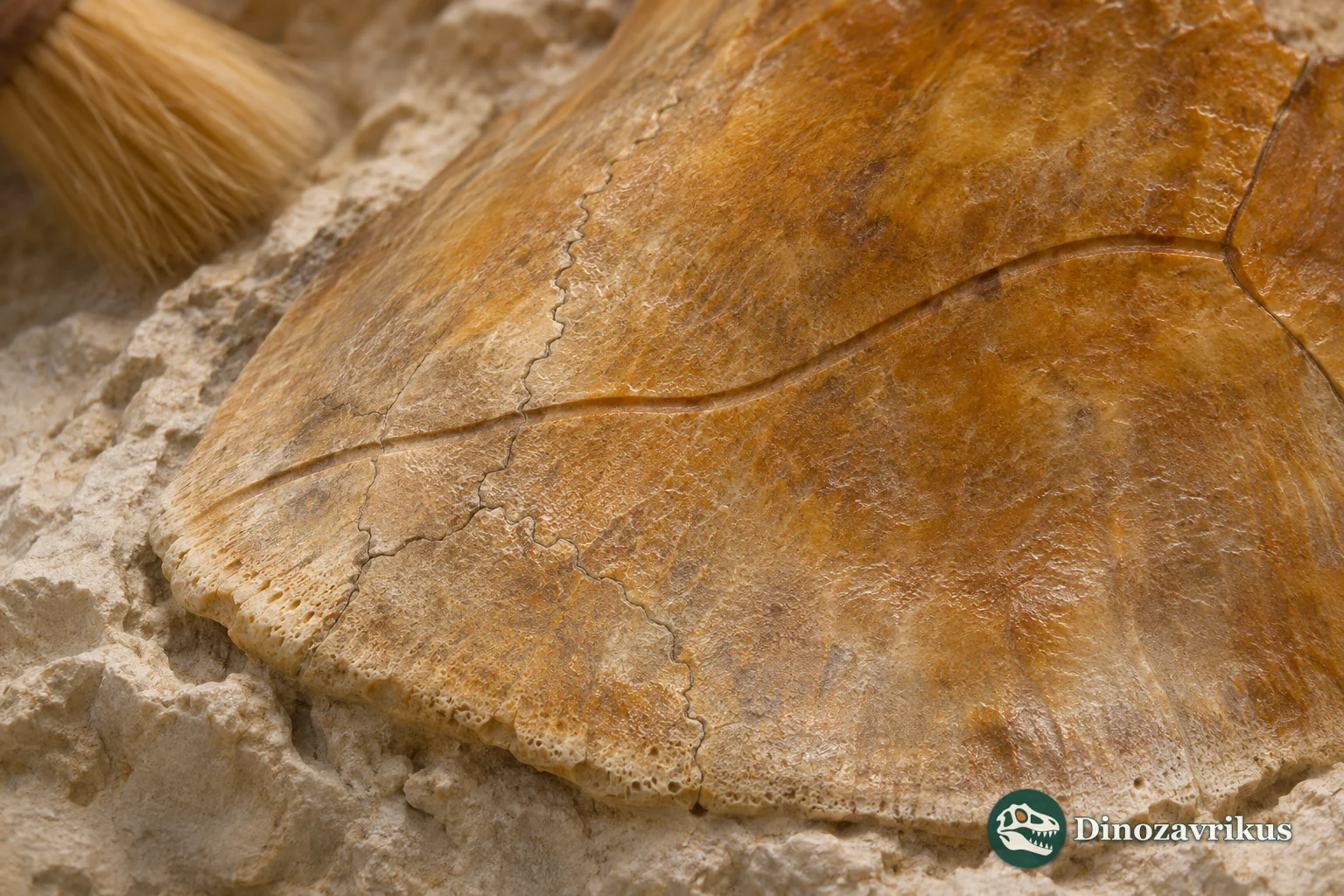
The outline of the rear scute
The first vertebral scute is broad. At the back, the fifth vertebral extends onto the pygal, the final midline bone of the carapace. A weak keel is visible towards the rear. The French P. astrei, from early Miocene deposits at Armissan, has first and last vertebral scutes that extend farther sideways and lacks that keel.
Shell characters suggest a relationship to the group that includes living Mauremys. For older European geoemydids such as Borkenia, shells also provide much of the evidence for comparison. The skull and plastron of the German type are unknown.
Why the older fossil lists are longer
Earlier authors used Palaeochelys for a wider variety of European freshwater turtles. The Oligocene species originally named Palaeochelys mlynarskii on material from Rott was later transferred to Palaeomauremys. The revised genus Palaeochelys is anchored by the Miocene shells from Germany and France.
Frequently asked questions
What part of the turtle does the type preserve?
It is the upper bony shell, or carapace. It leaves the head and diet unknown.
What do the different lines on the shell represent?
Sutures separate bones. Grooves can preserve the former boundaries of the horny scutes.
How can the French species be recognised?
Its first and last vertebral scutes extend farther across the shell, and the weak rear keel of the German type is absent.
Why do older publications mention Oligocene Palaeochelys?
The name was applied more broadly. The named species from Rott was subsequently placed in Palaeomauremys.