

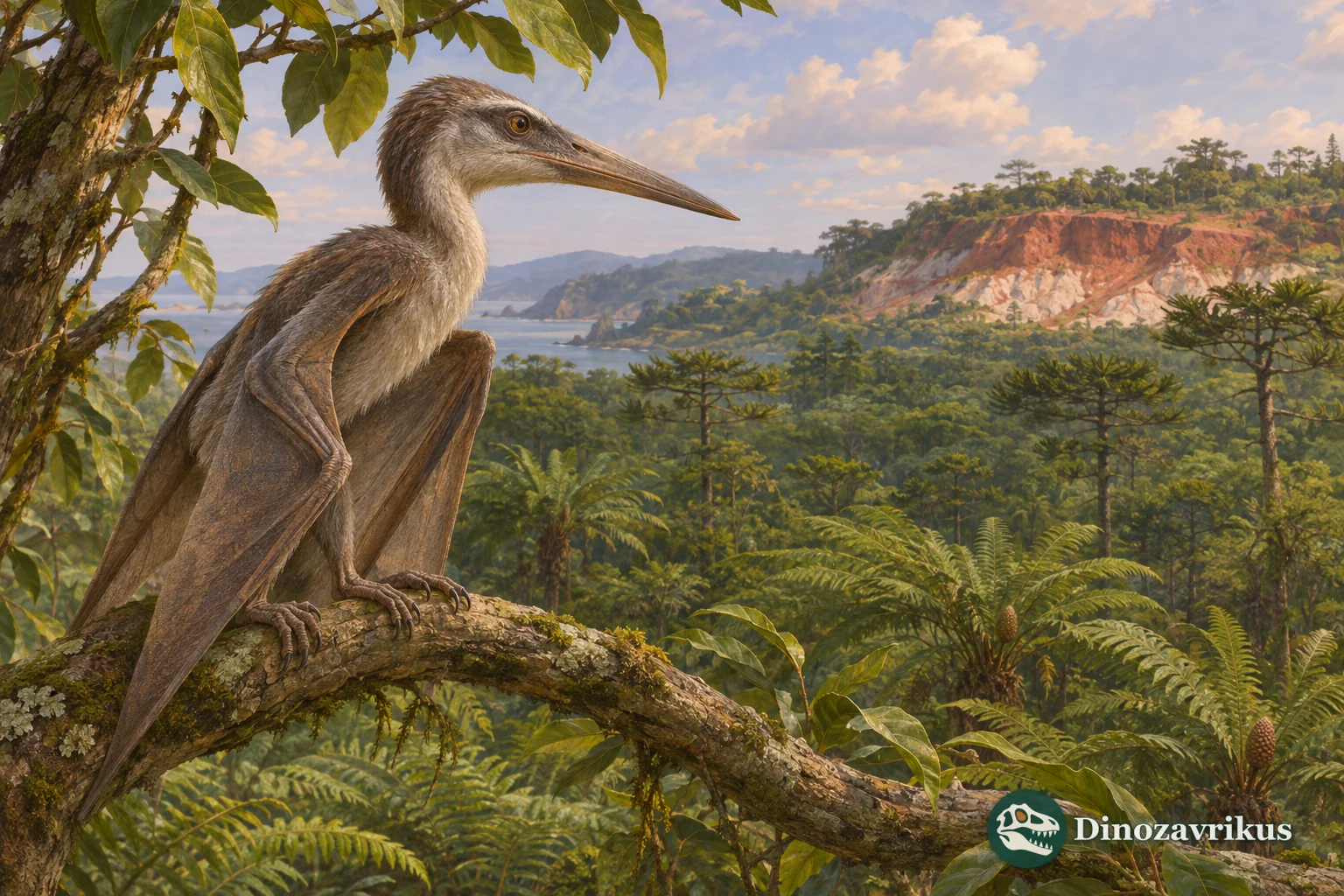
Palaeocursornis corneti is tied to a tiny fossil from the Cornet bauxite mine in northwestern Romania. The rock's Early Cretaceous age is more secure than the identity of the animal. Researchers have identified the same bone as either the lower end of a bird femur or the end of a pterosaur humerus. A complete winged animal in artwork illustrates one hypothesis rather than a known body form.
Quick facts
| Current combination | Palaeocursornis corneti |
|---|---|
| Name-bearing specimen | MTCO 14909 (1637), a 29 mm bone fragment |
| Locality | Cornet bauxite mine near Oradea, Bihor County, Romania |
| Age | Berriasian, Early Cretaceous |
| Bone identity | Disputed: bird femur or pterosaur humerus |
| Body size | Unknown from the isolated fragment |
What can the fossils tell us?
MTCO 14909 (1637) is 29 mm long. Other bones from Cornet cannot automatically be attached to it.
One revision identified the distal end of a left femur of an indeterminate bird and considered the name insufficiently diagnostic.
A later study identified the same specimen as the distal end of a pterosaur humerus, based on a different reading of its structures.
No reliable wingspan, skull, covering or feeding behaviour follows from this fragment alone.
A fossil and several names
The specimen came from the Cornet bauxite mine near Oradea. Its fossil-bearing breccia contains vertebrates of Berriasian age. Association in a deposit does not show that scattered bones belonged to one animal. The name Palaeocursornis is anchored to the particular fragment MTCO 14909 (1637).
Its nomenclature changed more than once. The species was initially published as Limnornis corneti, but that genus name was already occupied by another bird. Replacement combinations included Palaeolimnornis and Palaeocursornis biharicus. Bock and Bühler's 1996 nomenclatural review established the combination Palaeocursornis corneti. The sequence of names does not imply several skeletons of the species.
Bird femur or pterosaur humerus?
In a 2011 review, Gareth Dyke and colleagues interpreted the fragment as the distal end of a left femur from an indeterminate bird. They rejected its old palaeognath assignment and regarded the material as too limited to diagnose a secure species. A bony projection on one condyle was treated as a possible pathology rather than a group-defining character.
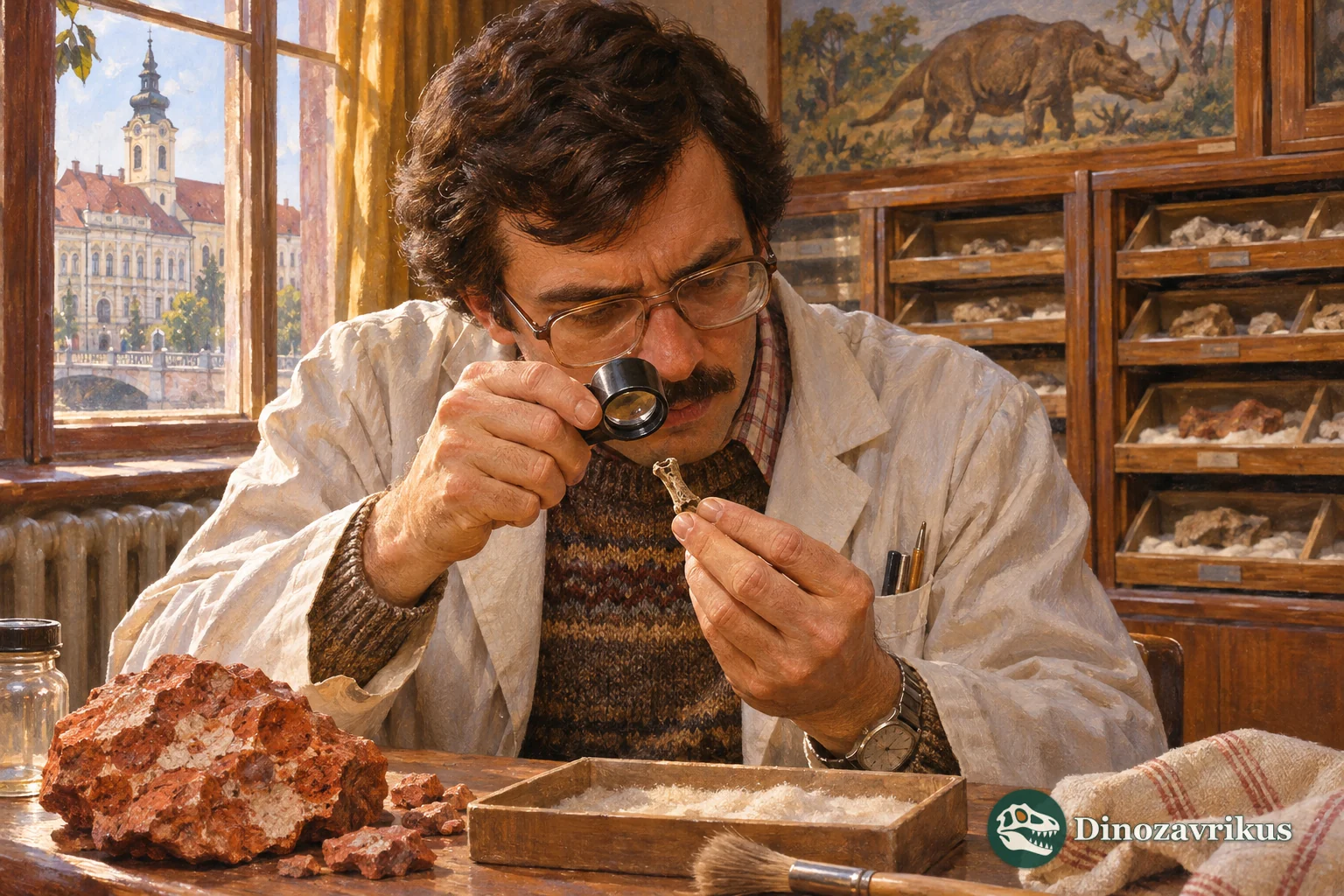
Federico Agnolín and David Varricchio proposed a different orientation in 2012: they read the same piece as the distal end of a pterosaur humerus. Their comparison focused on an opening and depressions resembling structures in some pterosaurs. This was a reinterpretation of the existing specimen, not a newly recovered fossil. A narrow family assignment remains conditional on which anatomical identification is accepted.
What the disagreement changes
If the fragment is a bird femur, it informs the record of Early Cretaceous birds at Cornet but does not restore the old palaeognath claim. If it is a pterosaur humerus, it adds to the pterosaur record of Early Cretaceous Europe. In neither reading is the fragment's length of 29 mm a measure of body size. Skull shape, wingspan, diet and soft tissues are unknown.
For comparison, Bakonydraco is based on different bones from younger Hungarian rocks, while Ornithostoma is known from jaw fragments in England. Neither can supply missing anatomy for Palaeocursornis. The comparison shows how unlike body parts can underpin pterosaur names.
Frequently asked questions
Was Palaeocursornis certainly a pterosaur?
No. A 2012 study argued for a pterosaur humerus, whereas a 2011 review identified the same fragment as a bird femur.
How many bones define the name?
One 29 mm fragment, MTCO 14909 (1637). Other Cornet finds do not form an articulated skeleton with it.
Why do different Latin names occur?
The original genus name was preoccupied. Later replacements and nomenclatural corrections led to Palaeocursornis corneti for the same material.
Can its wingspan be measured?
No. Even the bone's assignment to a bird or pterosaur is debated, and no complete wing belongs to the name-bearing specimen.