

Palmerara lived in the seas of western North America during the middle Cambrian. Older studies call it Nyella, a name already in use for a group of beetles when the trilobite genus was established. Both names refer readers to the same fossils, including the head shields and small pygidia that identify its type species.
Quick facts
| Group | Trilobites |
|---|---|
| Age | Middle Cambrian |
| Type species | Palmerara granosa |
| Type beds | Langston Limestone, Idaho |
| Genus established | Allison Palmer, 1979 |
| Replacement name | Hüseyin Özdikmen, 2009 |
What can the fossils tell us?
Palmerara granosa also has three or four pairs of furrows on the raised central lobe of the head.
Articulated remains allowed researchers to associate this pygidium with the head of P. granosa.
At Nevada localities, Palmerara granosa occurs in more than one of the fossil assemblages within the zone.
Why the genus has two names
Charles Resser described Poulsenia granosa in 1939 using material from Idaho's Langston Limestone. In his work on the Carrara Formation, Allison Palmer made it the type species of Nyella in 1979.
The Australian entomologist Charles Oke had used Nyella for a beetle genus in 1931. Hüseyin Özdikmen introduced Palmerara as a replacement for the trilobite name in 2009. The type species described in older work as Nyella granosa is the same species treated here as Palmerara granosa.
A furrowed head and a short tail
The raised glabella of P. granosa tapers forward and usually bears three or four pairs of furrows. A deep, gently curved furrow sets off the convex front border. Nevada material includes cranidia, a detached free cheek, and pygidium USNM 208277. A later study recorded articulated remains that corroborate the association of the head and tail. The pygidium is broadly oval and has no marginal spines.
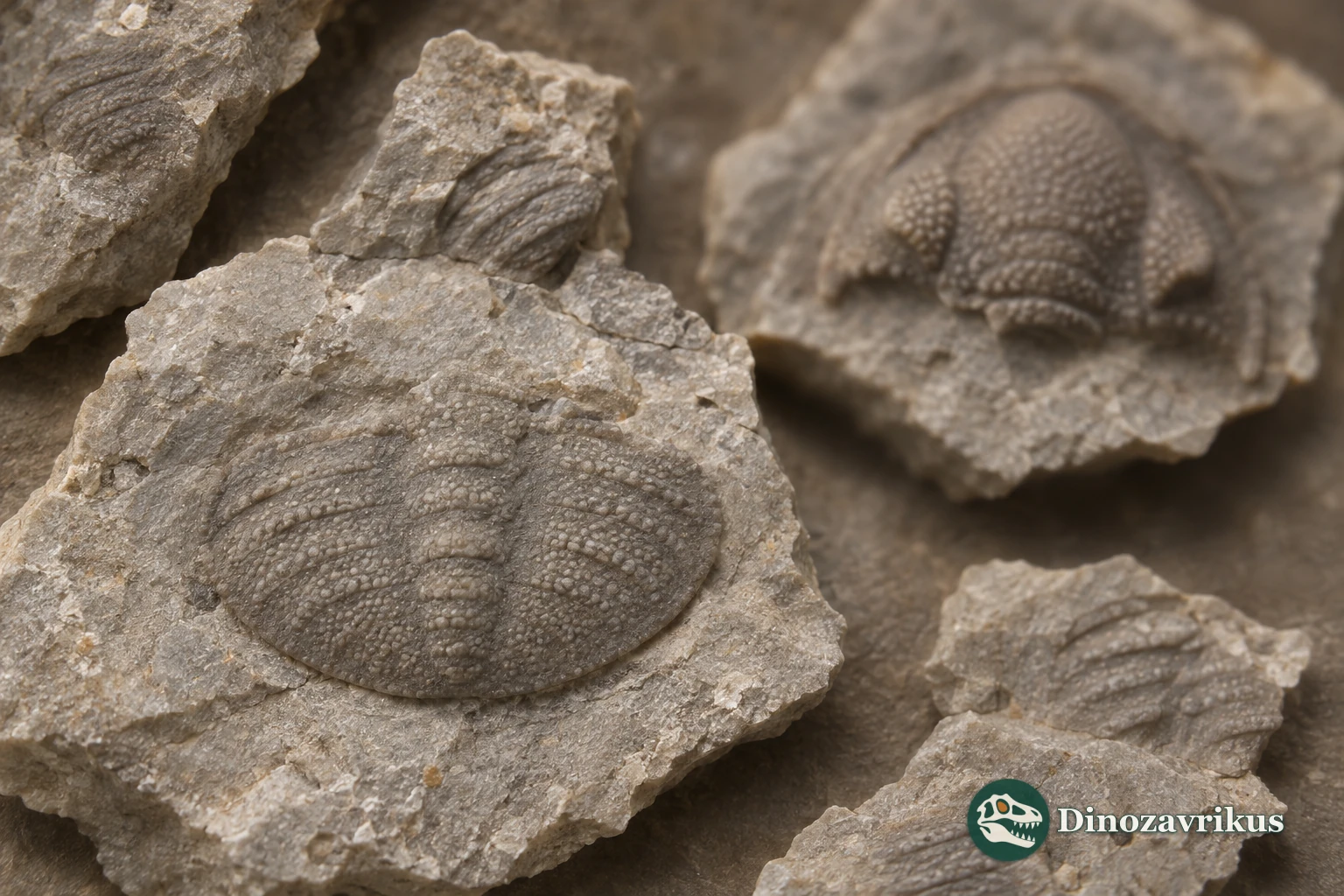
Palmerara in the Carrara Formation
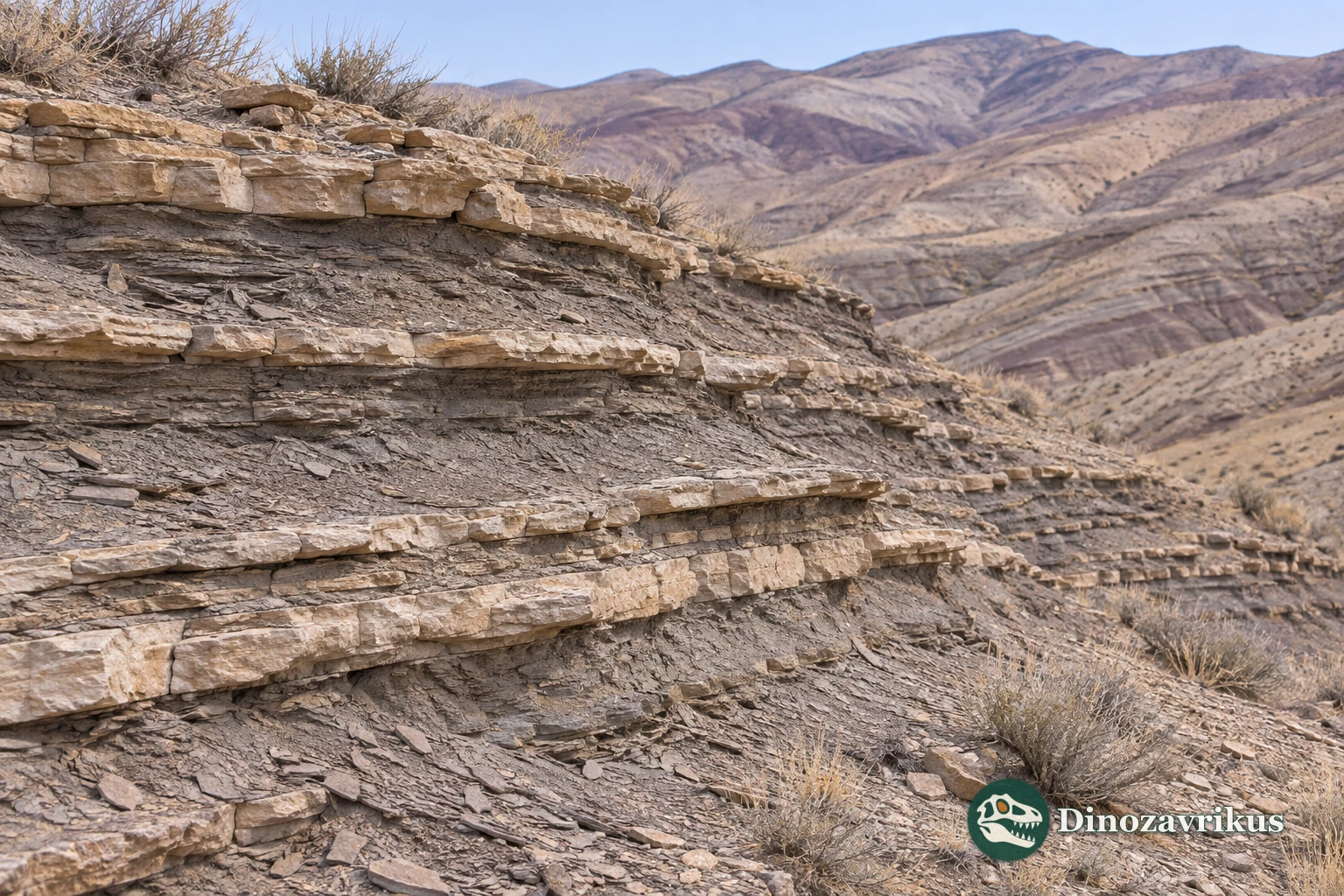
Nevada specimens of Palmerara granosa occur in the Albertella Biozone. Its fossils appear in several distinct assemblages within that zone in the Carrara Formation. The related P. immoderata is based on cranidium USNM 208280, collected at the Nevada Test Site.
Frequently asked questions
Why do older papers call this trilobite Nyella?
Palmer used Nyella in 1979. It was replaced because the same name had been used for a beetle genus since 1931.
Where did the type species of Palmerara come from?
The type material of Palmerara granosa came from the Langston Limestone of Idaho.
Did P. granosa have spines on the edge of its tail shield?
Its described tail shield is short and broadly oval, with no marginal spines.
What is the holotype of Palmerara immoderata?
USNM 208280, a cranidium collected at the Nevada Test Site.