

Pandanaris was an extinct member of the blackbird family, which includes living cowbirds. It was named from parts of the bill found in California. Bones from Sonora, Mexico, later gave researchers a way to compare the Californian bird with a similar form named separately from Florida.
Quick facts
| Group | Passeriformes, Icteridae |
|---|---|
| Age | Pleistocene |
| Type locality | Rancho La Brea, California |
| Holotype | Upper part of the bill, K7278 |
| Mexican material | Nine elements from at least two birds |
What can the fossils tell us?
In the comparative sample its jaw was deeper relative to length than in the other icterids examined.
Cranial, wing and leg material represents at least two individuals. The fossils come from deposits about 40,000 years old.
A revision found no consistent character separating the material into two species. The sex of the individual fossils is uncertain.
From the asphalt deposits to Sonora
Alden Miller named Pandanaris convexa in 1947 from material at Rancho La Brea. The holotype, K7278, is the upper part of the bill. Miller also examined a lower jaw. This material is particularly informative about the outline of the bill, while it leaves the proportions of the whole bird open.
At Térapa, Jessica Oswald and David Steadman identified nine skeletal pieces of Pandanaris. These include parts of the bill and jaw apparatus, ulnae, carpometacarpi and a lower leg bone. At least two individuals were represented. The age of about 40,000 years refers to the deposits at this Mexican site.
Why two names might represent one species
In 1957 Pierce Brodkorb named Florida fossils from near Reddick Pandanaris floridana. The diagnosis drew on the shape and dimensions of the jaws. Oswald and Steadman compared the material from all three regions. They proposed that some variation could reflect differences in body size between the sexes of a single species. The sex of the individual fossils could not be independently determined.
A revision of Mionetta produced a different result, finding two genera among small ducks of overlapping size. In both cases, comparing the same surface of a bone across specimens helped show whether the differences could support a separate name.
Bill shape and the fossil setting
The lower jaw was proportionally deeper than in the modern icterids in the published comparison. That distinctive profile helps identify the remains of Pandanaris. The jaw alone does not establish the foods it gathered.
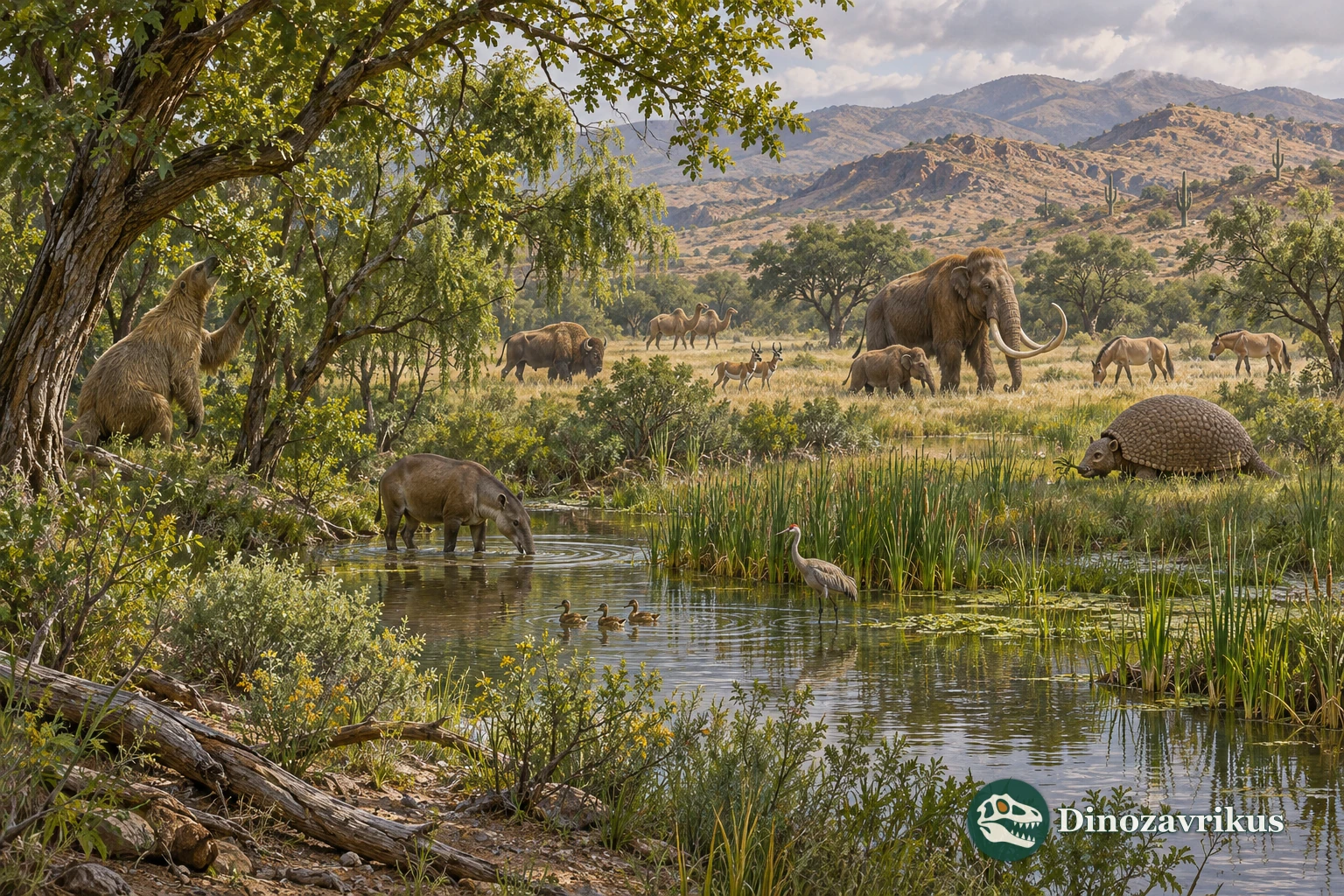
Waterfowl, ibises and rails occur alongside passerines at Térapa. This community is consistent with the presence of water and wetland habitats in the Late Pleistocene landscape. The fossils give little indication of which parts of that landscape the extinct cowbird used most.
Frequently asked questions
Where was Pandanaris first found?
The type material comes from the asphalt deposits at Rancho La Brea in California.
What is distinctive about its bill?
Its lower jaw was deep for its length compared with the modern icterids in the study.
What fossils came from Sonora?
Nine elements represent at least two individuals, including parts of the jaws, wings and lower leg.
Did Pandanaris lay its eggs in other birds’ nests?
Some living cowbirds do, but skeletal remains do not establish the extinct bird’s nesting behaviour.