

Paracolobus was a large extinct colobine monkey from East Africa. The genus reaches back before the Ice Age, while its later records extend into the early Pleistocene. Jaw and tooth fossils are commoner than associated skeletons; one male P. mutiwa from West Turkana gives the rare chance to compare teeth with limbs of the same animal.
The younger part of its history belongs in the ice-age animal catalogue. Rhinocolobus is a useful comparison because isolated large teeth can be difficult to assign to either genus. The broader context is the ancient mammal catalogue.
Quick facts
| Group | Colobine monkeys, Cercopithecidae |
|---|---|
| Type species | P. chemeroni Leakey, 1969 |
| Other species | P. mutiwa and P. enkorikae |
| Time | Late Miocene to early Pleistocene by species |
| Region | Kenya and Ethiopia |
| Associated skeleton | KNM-WT 16827, a male P. mutiwa |
What can the fossils tell us?
Jaw and cranial characters help separate the large fossil colobines. A single large tooth from Lomekwi may fit Paracolobus or Rhinocolobus and should not be forced into one genus.
KNM-WT 16827 links jaws, teeth and limb bones in one P. mutiwa. Its shoulder, elbow and femur have been used to infer terrestrial movement, but climbing remains a live interpretation.
P. enkorikae came from late Miocene Lemudong'o. The P. mutiwa skeleton from Lomekwi is late Pliocene, while the species' type is in younger early Pleistocene deposits.
Three named species across a long history
Richard Leakey named the type species P. chemeroni in 1969 from Kenya. The important KNM-BC 3 individual includes parts of the skull and an associated partial skeleton. Meave Leakey named P. mutiwa in a 1982 study of large fossil African colobines. Leslea Hlusko later described P. enkorikae from Lemudong'o, a Kenyan late Miocene locality around six million years old.
The associated P. mutiwa skeleton KNM-WT 16827 comes from the upper Lomekwi Member of the Nachukui Formation in West Turkana, around 2.58–2.53 million years old. The species' type from Koobi Fora is younger, around 1.87 million years old. These are dates for separate occurrences, not a single date for the genus or an animal's lifetime.
Why isolated teeth can mislead
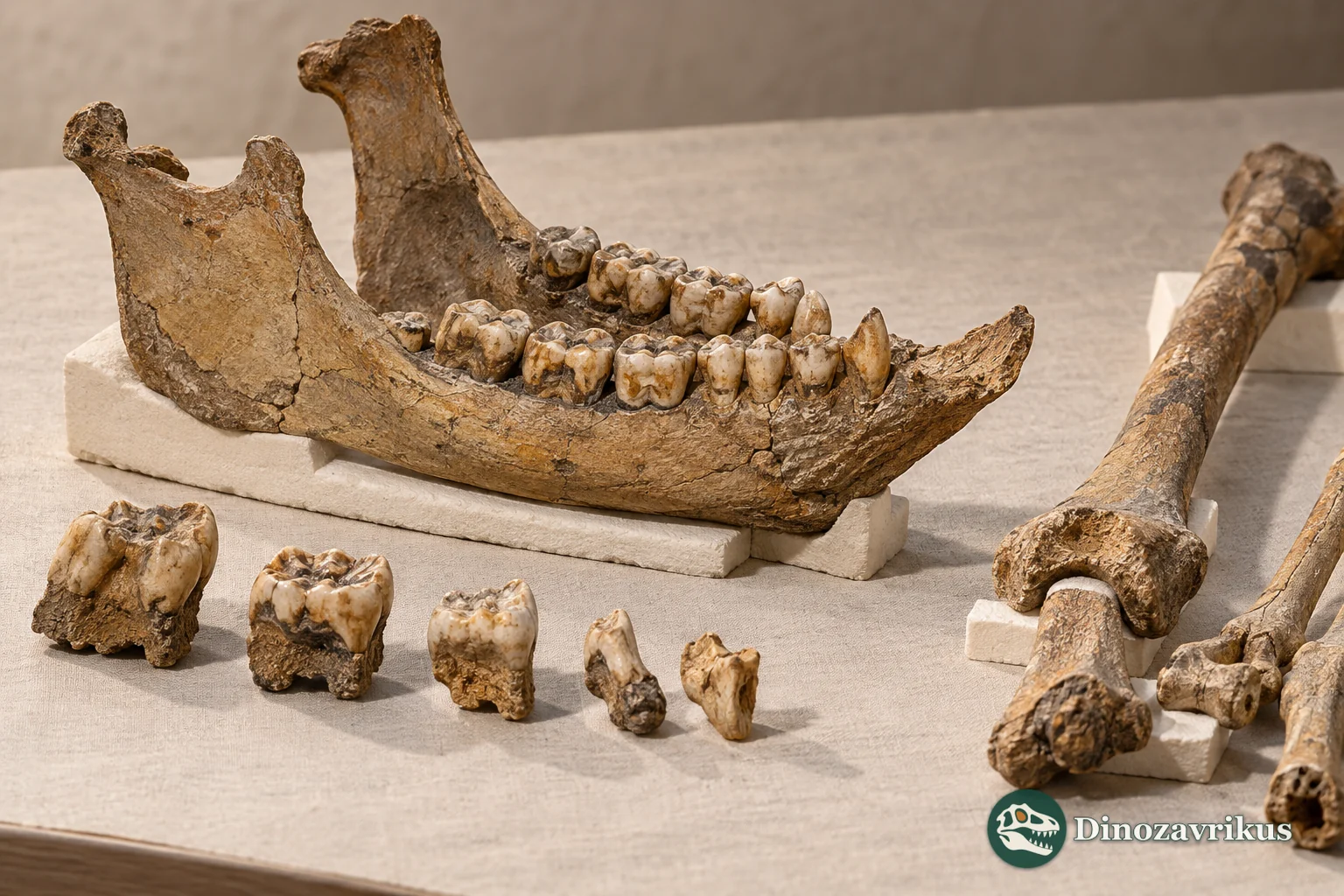
Colobine teeth preserve well. Researchers compare tooth dimensions and cusp form together with jaw and facial proportions. At Lemudong'o, many fragments were recovered but only a small fraction retained several teeth within a diagnostic jaw. The count of fragments is not a count of monkeys.
A recent Lomekwi faunal review left some isolated teeth as Rhinocolobus or Paracolobus because sizes overlap and the needed associated features are absent. Such uncertainty is a result of careful identification, not evidence that the two named genera were identical.
What KNM-WT 16827 says about locomotion
The male KNM-WT 16827 preserves portions of the upper and lower jaws with teeth and multiple limb bones. This association lets researchers relate species identification to shoulder, elbow and femoral anatomy of one individual. A 2021 analysis interpreted several robust features as consistent with substantial terrestrial movement.
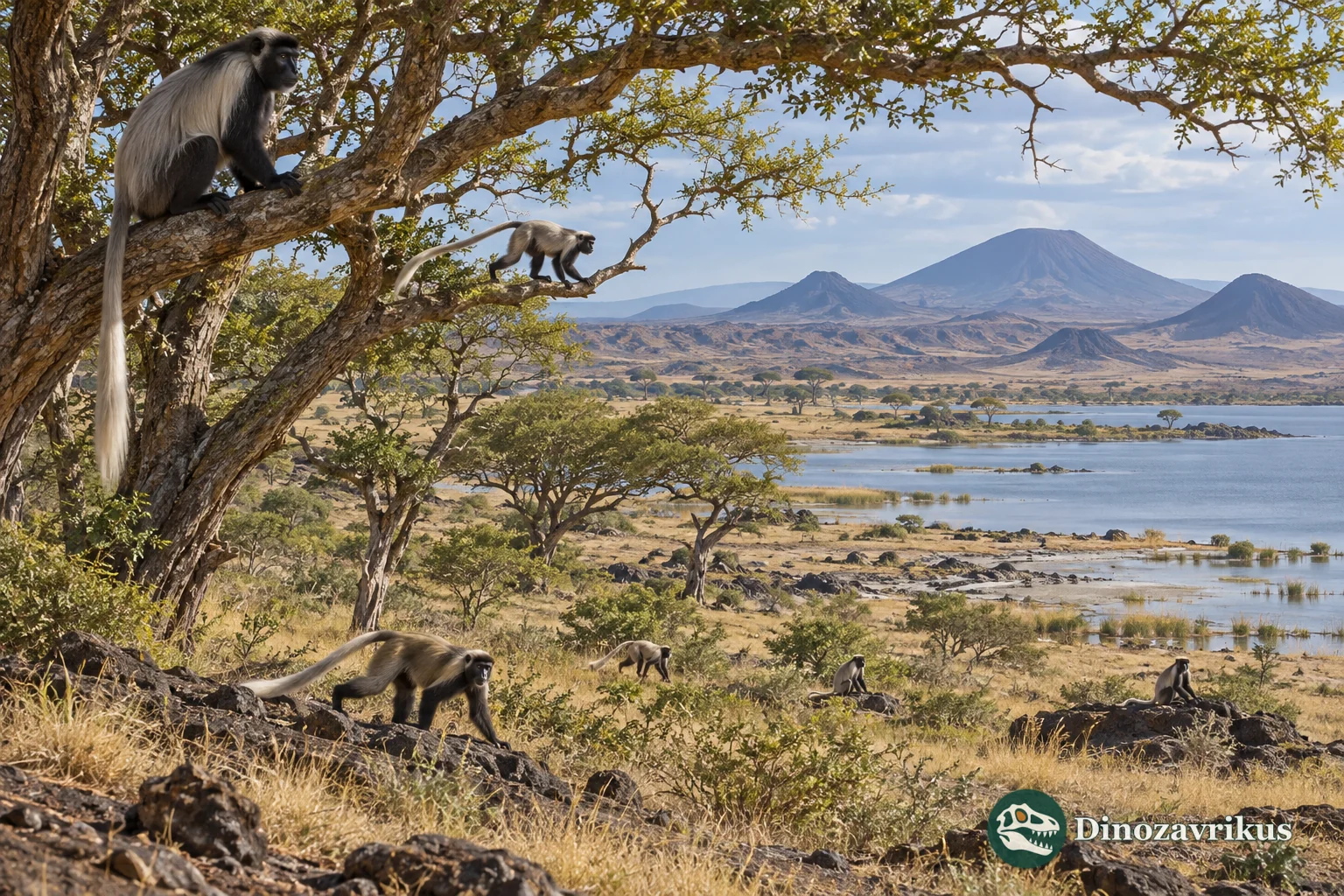
Other work emphasizes elbow and forearm traits compatible with climbing and movement along branches. The evidence therefore supports locomotor flexibility more readily than a precise percentage of time on the ground. No fossil bone records a daily route through trees. The cover shows one artistic pose on a low branch rather than an established habitual posture.
Environment and reconstruction limits
The Turkana Basin preserved a changing mosaic of shorelines, woodland patches and more open ground. A large colobine may have used several substrates, but one skeleton cannot reconstruct every habitat occupied by every species. Feeding is inferred from teeth and colobine relationships; no stomach contents from KNM-WT 16827 identify its last meal.
Fur color, group size and social behavior are not known from these specimens. The landscape image is a generalized illustration, not a map of Lomekwi at one exact moment. Fossils anchor the anatomy and geological occurrence; the living scene remains a reconstruction.
Frequently asked questions
Did Paracolobus live only in the Pleistocene?
No. P. enkorikae is known from late Miocene Lemudong'o, while later forms occur in Pliocene and early Pleistocene deposits.
Why is KNM-WT 16827 important?
It associates jaws, teeth and limb bones of one P. mutiwa, allowing the species identification and locomotor interpretation to be compared.
Was Paracolobus strictly terrestrial?
That is unsettled. One study emphasized terrestrial traits, while climbing-compatible elbow anatomy supports a more mixed interpretation.
Can a lone tooth always distinguish it from Rhinocolobus?
No. Some large isolated Lomekwi teeth overlap in size and lack the jaw features needed for a secure genus assignment.