

Paraethomys was an extinct murine rodent known mainly from fossil cheek teeth. Finds span northern Africa and southwestern Europe from the late Miocene onward. European forms disappeared during the Pliocene, while North African representatives survived later. The mouse on the cover is an artistic reconstruction; no fossil preserves its coat color.
Its teeth are especially useful for comparing species and rock layers. They do not provide a complete skeleton or a direct measurement of body mass.
Quick facts
| Group | Extinct murine rodent, Murinae |
|---|---|
| Type species | Paraethomys filfilae Petter, 1968, Algeria |
| Fossil range | Northern Africa and southwestern Europe |
| European history | Late Miocene through Pliocene |
| Baza-1 sample | 174 isolated teeth of P. baeticus, at least 24 individuals |
| P. baeticus age | About 4.6–4.3 Ma by magnetobiostratigraphic correlation |
| Known material | Mostly molars, with some jaw fragments |
What can the fossils tell us?
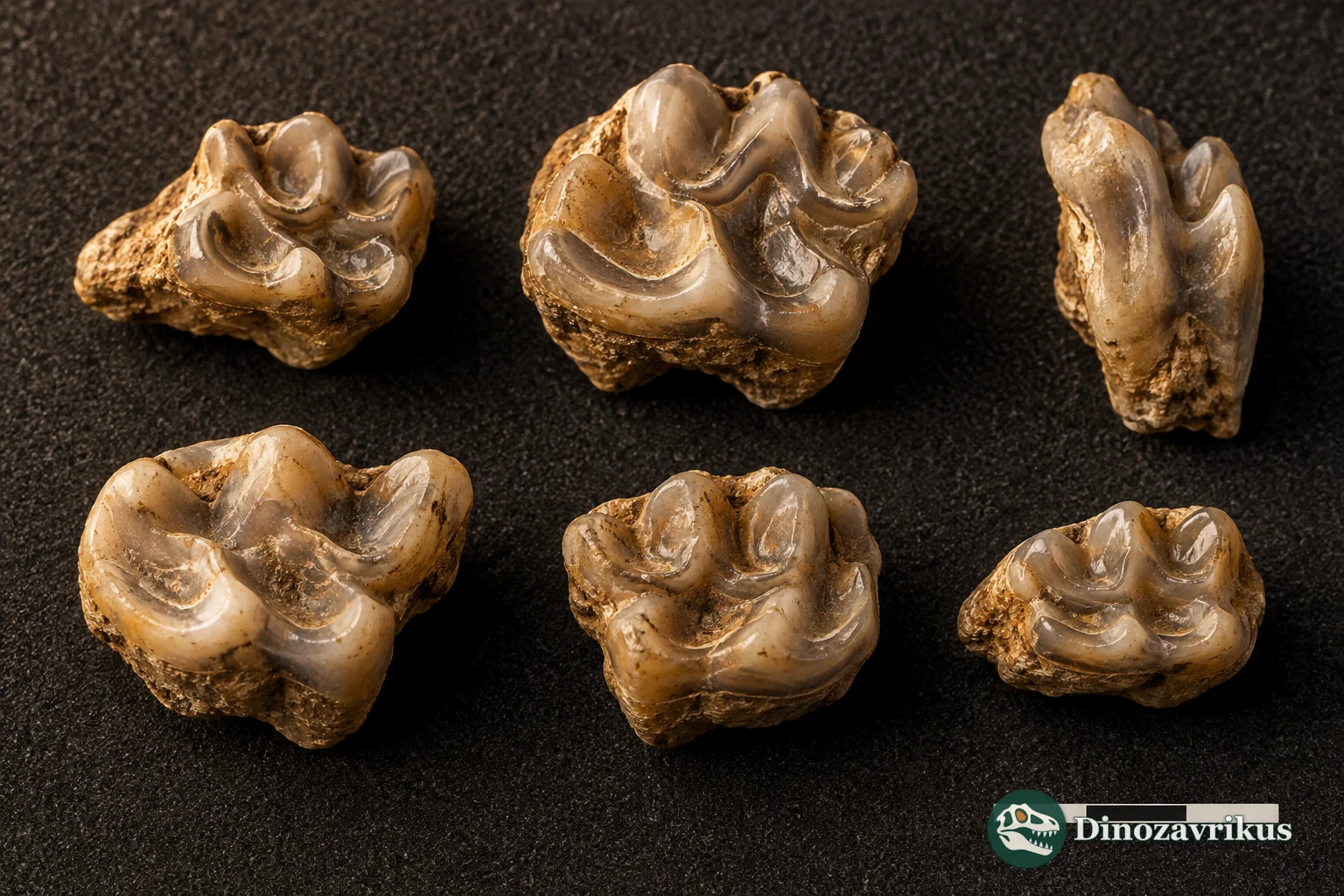
Baza-1 upper and lower molars reveal cusp positions and longitudinal enamel connections. One tooth preserves crown anatomy, not whole-body length.
The approximate 4.6–4.3 Ma interval for P. baeticus is a correlation of magnetic and fossil evidence across strata. It is not a direct age measurement on every tooth.
Early P. meini in Iberia supports a dispersal scenario from northern Africa before the end of the Messinian crisis. Fossils do not record the route taken by individual animals.
A North African type and a longer history
The type species P. filfilae was named by Petter in 1968 from Pleistocene material at Jebel Filfila in Algeria. That type locality does not restrict the age of the entire genus to the Pleistocene. Earlier species and populations occur in late Miocene and Pliocene deposits on both sides of the Mediterranean.
Researchers place the early arrival of P. meini in Iberia at roughly 6.2 Ma, using fossil succession and geological correlations in the Fortuna and other Spanish basins. Dispersal from North Africa is a research inference, not a directly witnessed journey. The European and North African records subsequently followed different histories.
A large tooth series at Baza-1
Pedro Piñero and Diego Verzi described P. baeticus in 2020 using fossils from Baza-1 in the Guadix–Baza Basin of southern Spain. Similar teeth had previously been assigned cautiously to a species close to P. abaigari. Revisiting measurements and crown details across a large sample supported a distinct species.
The sample includes 174 isolated teeth, representing a minimum of 24 individuals. These are neither 174 skeletons nor a basis for the exact weight of a living mouse. Material is held in Spanish research collections. The authors remeasured older comparisons using a consistent method.
Why the molars matter
P. baeticus shows moderately developed longitudinal links among cusps, without the fully elaborate crown pattern of some later members of the lineage. The first upper molar has diagnostic cusp arrangements and posterior spurs; the first lower molar can show a small enamel islet. In size it lies between smaller P. meini and larger P. abaigari. Worn teeth can lose these details, which is why a series matters more than one specimen.
The species helps correlate early Pliocene terrestrial layers. Magnetobiostratigraphic evidence suggests an interval around 4.6–4.3 Ma, within the Neogene. A range inferred for deposits is not a laboratory date for every crown.
Limits of the record
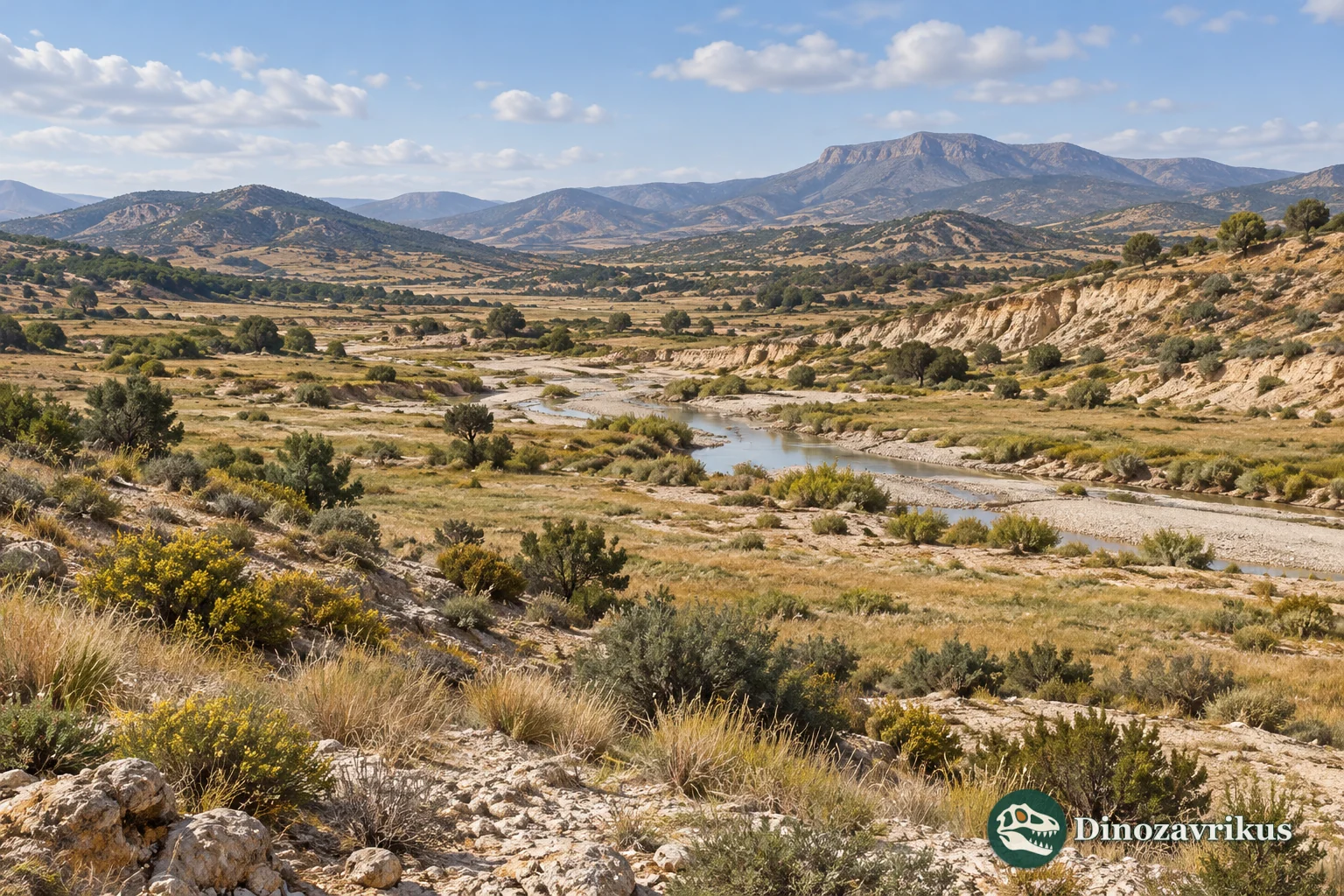
Associated small mammals help interpret the basin, but a list of taxa from a sedimentary sequence does not mean all lived together at one instant. Crown form cannot establish an exact plant diet, fur color, reproduction or a cause of extinction. The landscape illustration is interpretive and not a documentary image of the Baza-1 excavation.
The rodent Prolagurus represents a different lineage; the common fact that both were small rodents does not make their molars interchangeable.
Frequently asked questions
Was Paraethomys only a Pleistocene rodent?
No. The type species was described from Pleistocene Algeria, but the genus also has late Miocene and Pliocene records.
What was found at Baza-1?
Researchers studied 174 isolated P. baeticus teeth representing at least 24 individuals, not 174 complete skeletons.
Why was P. baeticus named only in 2020?
Earlier teeth were tentatively linked to another species. A larger comparison revealed a distinctive combination of size and crown characters.
Can its weight or coat color be determined from these teeth?
No. Molars support taxonomy and comparison of strata, but do not preserve fur or securely determine whole-body mass.