

Parageomys is a historical genus name for a fossil pocket gopher from Pleistocene Kansas. The species originally described as Parageomys tobinensis was later placed in Geomys. Thus the old name should not be counted as a separate accepted genus alongside Geomys. The cover is an artistic reconstruction: a jaw does not preserve its fur or a particular burrow.
The fossil Nerterogeomys illustrates the broader diversity of North American pocket gophers. A similar digging lifestyle does not by itself resolve genus boundaries. In this case, the decisive comparison concerns cheek-tooth characters and how they change with wear.
Quick facts
| Family | Geomyidae |
|---|---|
| Original name | Parageomys tobinensis Hibbard, 1944 |
| Later combination | Geomys tobinensis |
| Type locality | Tobin local fauna, Russell County, Kansas |
| Age | Pleistocene |
| Evidence | Lower jaw and cheek teeth |
What can the fossils tell us?
Hibbard named P. tobinensis from the Tobin local fauna. The jaw preserves dental characters, not the coat or complete body proportions.
Persistence of continuous enamel bands helped motivate the original genus. Later comparison found it insufficient to maintain a separate genus.
The name was later treated as a Geomys subgenus and then synonymized with Geomys. These are successive interpretations of the fossils, not separate animals.
The Tobin fossil and its original description
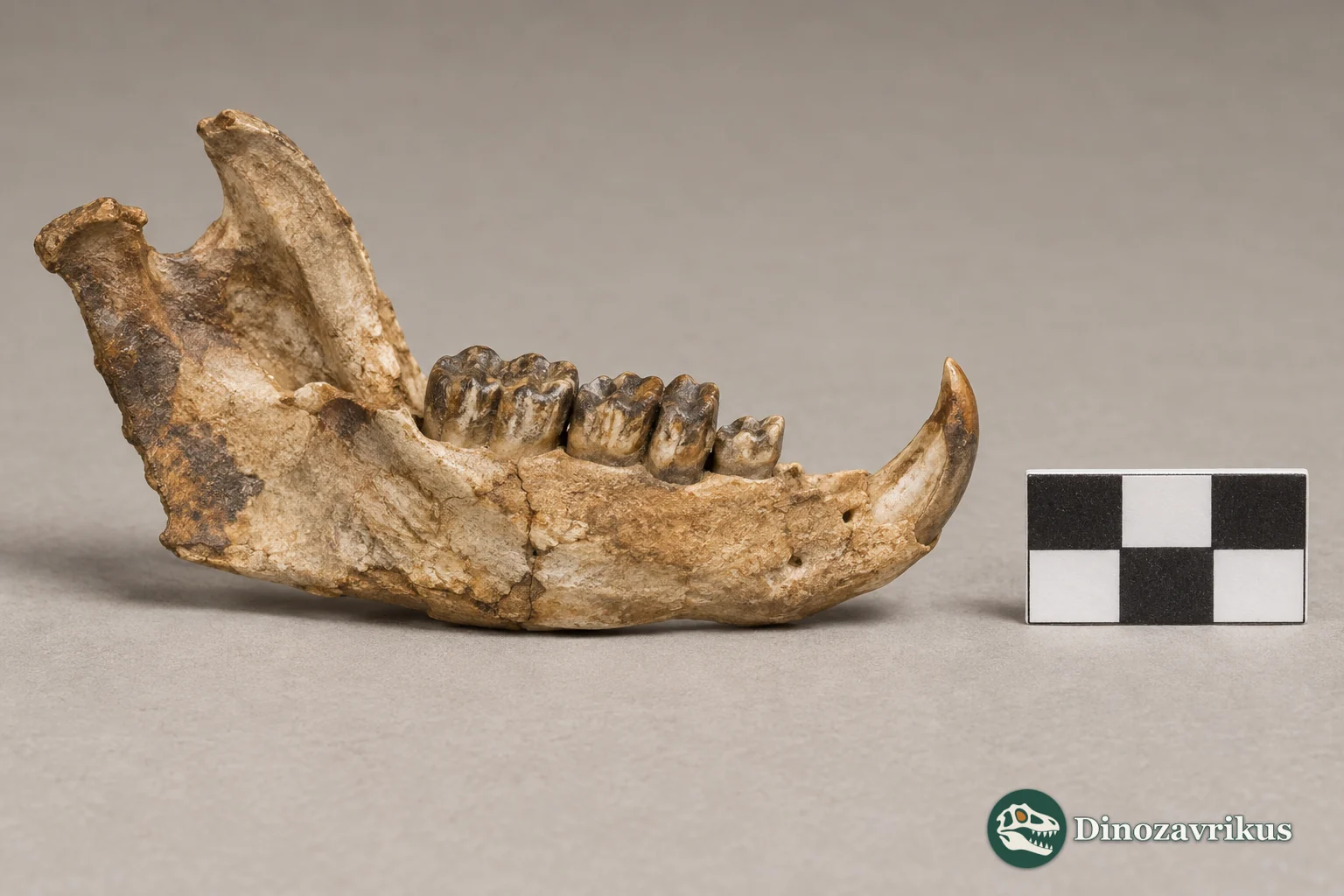
Claude Hibbard established Parageomys tobinensis in 1944 from the Tobin local fauna of Russell County, Kansas. The type material includes a lower jaw. Its teeth allow comparisons of size and enamel pattern, but they do not directly reveal the animal's coat, ears or total length. Fossils later discussed under the name also came from other Kansas faunas; each assignment needs its own specimen and stratigraphic context.
The study-table image below shows a generic gopher-like fossil jaw. It is not a photograph or anatomical copy of the named type specimen.
Why the genus was synonymized
Hibbard emphasized the persistence of continuous enamel bands on cheek teeth even at relatively late wear stages. By 1956 he treated Parageomys as a subgenus of Geomys. Robert Russell's 1968 review found no sufficient set of further differences to keep it as a distinct genus and placed the name in the synonymy of Geomys.
An older report may call a fossil Parageomys tobinensis while a later one uses Geomys tobinensis. This does not establish two species in the same fauna. Museum records can preserve the original determination while biodiversity counts follow the later revision. The fossil rodent Atopomys also shows why a fragmentary tooth must be interpreted within a comparative series.
What teeth can reveal
Pocket gophers are digging, plant-eating rodents. Membership in the family supports a broad life reconstruction, but the type jaw cannot establish the exact plants eaten by G. tobinensis, tunnel depth or seasonal activity. Tooth wear helps describe chewing while complicating direct comparisons between individuals of different ages.
The Tobin fauna supplies a geological context for the name. Associated species and sedimentary position help assess the age of that locality, but a single precise date cannot be transferred to every referred specimen. The last occurrence and extinction cause of this species remain unknown.
Frequently asked questions
Are Parageomys and Geomys two accepted genera?
No. Parageomys was first named as a genus, later used as a subgenus and ultimately treated as a junior synonym of Geomys.
What is the tobinensis species based on?
The original Kansas material includes a lower jaw with cheek teeth, not a complete skeleton.
Why was tooth enamel insufficient to keep the genus?
The enamel pattern was distinctive, but a comparative revision found no sufficient additional stable genus-level differences.
Do we know its fur color?
No. Teeth and jaw bones do not preserve fur color. The animal shown here is an artistic reconstruction.