

Pararyctes is a Paleocene genus of small North American mammals known mainly from teeth and short jaw fragments. Its type species is anchored to one upper molar, while a second named species from Alberta is represented by an incomplete maxilla. This record supports comparisons of tooth anatomy and development, but it does not reveal the animal's proportions. The genus belongs in the ancient mammal catalogue.
Quick facts
| Scientific name | Pararyctes Van Valen, 1966 |
|---|---|
| Type species | P. pattersoni |
| Other named species | P. rutherfordi, described from Cochrane 2 |
| Group | Early eutherians; family-level placement remains unsettled |
| Age | Paleocene; ages depend on the locality and referral |
| Range | Western North America, including Wyoming and Alberta |
| Type material | UW 2002, an isolated upper left M1 of P. pattersoni |
| Main limitation | No complete skull, postcranial skeleton or reliable body-size estimate |
What do the Pararyctes fossils show?
The type species Pararyctes pattersoni is based on upper left M1 UW 2002 from the Saddle locality in Wyoming. The crown can be compared with other teeth, but the specimen does not preserve a jaw, skull or body.
Holotype UALVP 45094 is an incomplete right maxilla with P4 and M2–3 from the Paskapoo Formation in Alberta. It connects several tooth positions in one specimen, but no other part of the skeleton is known from it.
A Paleocene Alberta specimen records nearly the full pattern of dental replacement. It informs how teeth developed in that individual; it does not establish the diet, lifespan or every feature of the genus.
Names and name-bearing fossils
Leigh Van Valen established Pararyctes in 1966 for the species P. pattersoni. Its holotype, UW 2002, is an isolated upper left first molar from the Saddle locality in the Fort Union Formation of Wyoming. The tooth fixes the application of the name, but it cannot show how the crown sat in the jaw or how the rest of the animal was built.
Craig Scott, Richard Fox and Gordon Youzwyshyn named P. rutherfordi in 2002 from Cochrane 2 in Alberta. The holotype UALVP 45094 is an incomplete right maxilla preserving P4 and M2–3. The name honours geologist R. L. Rutherford, who worked on the geology of the Cochrane area and took part in the discovery of the locality. Additional isolated teeth were referred to the species, extending its dental description beyond the type.
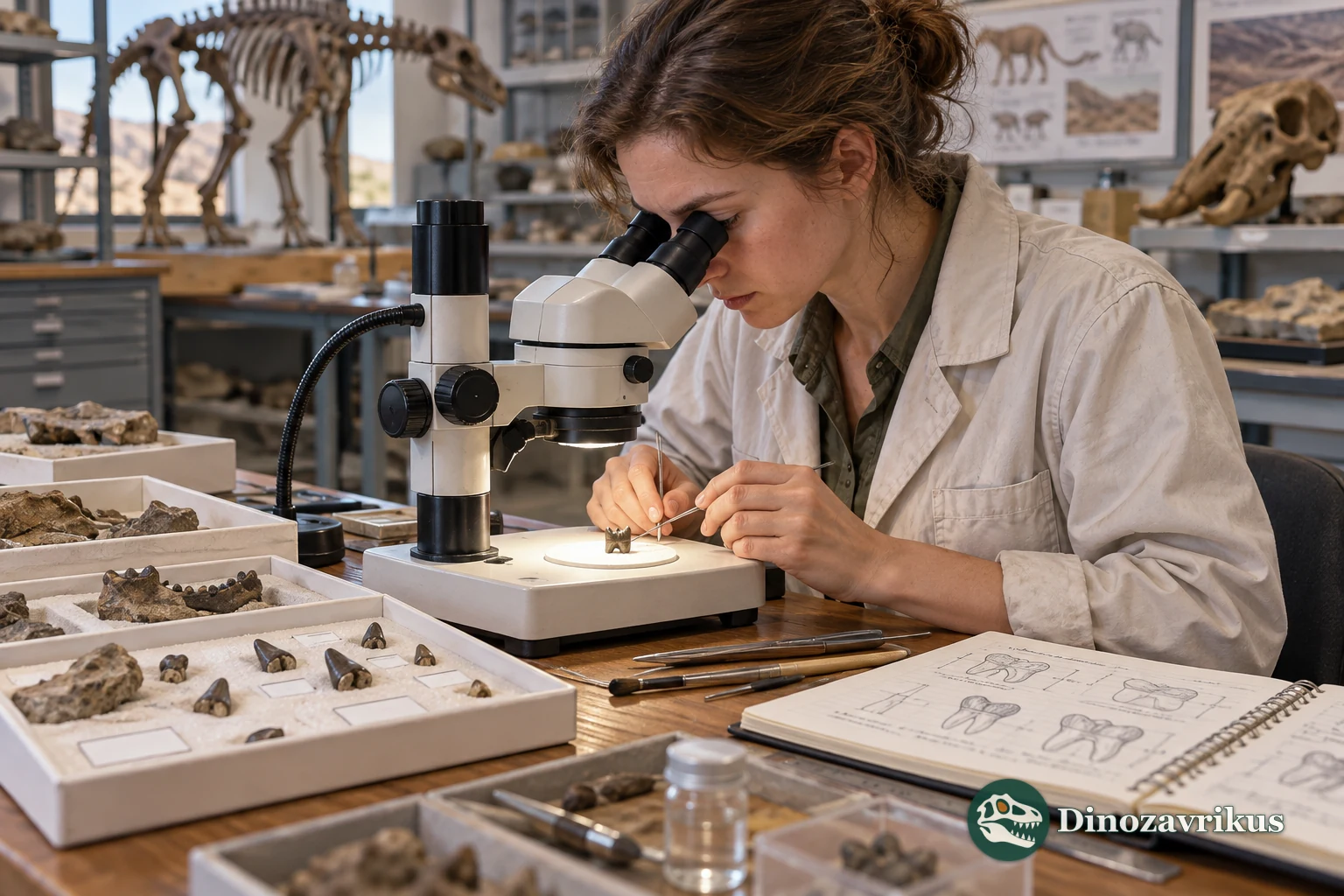
What the teeth reveal
The available crowns can be compared by their cusps, crests, proportions and positions in the tooth row. The partial maxilla of P. rutherfordi is especially useful because three positions occur in one individual. Referred teeth add other positions, but an isolated crown can be difficult to assign when related mammals have similar dental features.
Richard Fox described a Paleocene Alberta specimen of Pararyctes in 1983 that preserves nearly the complete replacement pattern of its dentition. Premolars at two positions replaced deciduous teeth, while the three frontmost premolar positions appeared not to be replaced or shed. The study showed that superficially similar adult tooth counts need not imply identical tooth-family histories across mammal lineages. It is evidence from one specimen, not a complete account of development throughout the genus.
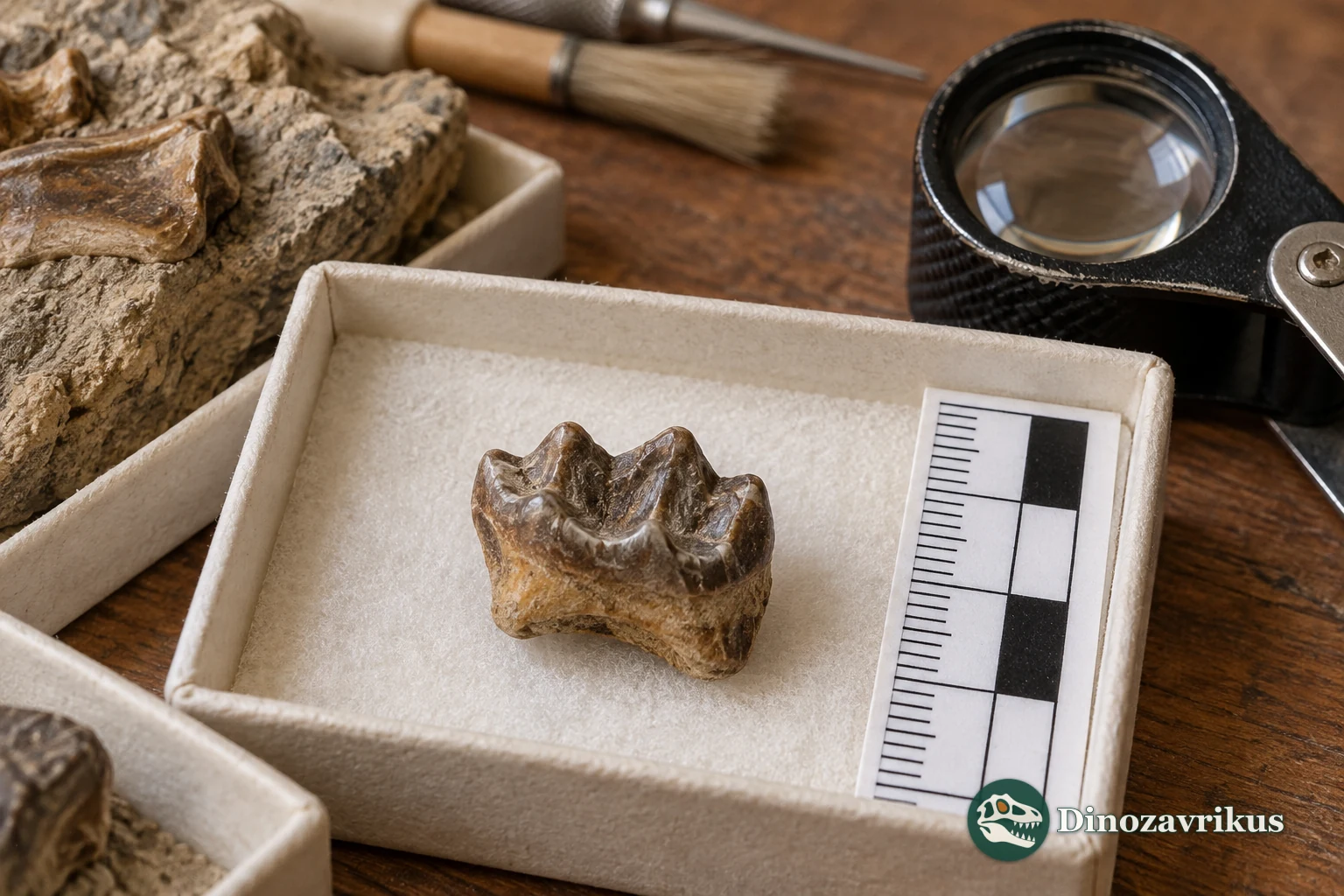
Molar shape may constrain how food was processed, but it does not identify a precise menu. No stomach contents, feeding traces or independent dietary isotope results are known for Pararyctes. Its diet and foraging behaviour therefore remain uncertain.
Species and classification
Two named species are commonly discussed: the type species P. pattersoni and the Alberta species P. rutherfordi. Their evidence is uneven. The first is anchored to one tooth; the second includes a partial maxilla and a set of referred teeth. That difference affects how confidently workers can compare their boundaries and test whether isolated crowns belong to either species.
The genus has been assigned to different early eutherian groups, including Palaeoryctidae and cimolestid lineages. Some authors have retained an uncertain family placement. Dental similarities are useful for testing these proposals, but they do not yet produce a stable consensus. Paleotomus offers a comparison in how isolated teeth shape early mammal taxonomy; the parallel is methodological and does not establish a close relationship between the genera.
Age and localities
P. pattersoni is reported from Paleocene localities in the western interior of North America, including its type area in Wyoming. P. rutherfordi comes from Cochrane 2 in the Paskapoo Formation of southwestern Alberta. The Cochrane 2 local fauna is assigned to the earliest Tiffanian using several index mammals and preserves a diverse community of Paleocene vertebrates.
A land-mammal age applies to a fossil locality and its faunal context, not to an exact date for an individual. Records from separate formations should not be merged into a single continuous range or assumed to represent animals living at the same time. Broader database ranges depend on referrals that need to be checked against the original material.
Body size and ecological limits
Measurements of teeth permit comparisons among specimens, but an isolated molar or a short upper jaw does not provide a dependable body length or mass. No complete skull, limb bones or associated skeleton establish the animal's posture, gait, tail, fur or soft tissues. A small mammal in a forest-floor scene is a plausible illustration of the general scale of early mammals, not a reconstruction directly recovered from a Pararyctes skeleton.
Frequently asked questions
What fossil is the type of Pararyctes?
The type species P. pattersoni is based on upper left molar UW 2002 from the Fort Union Formation in Wyoming. The genus was not named from a complete skeleton.
What did the Cochrane 2 fossils add?
The holotype of P. rutherfordi preserves part of an upper jaw with three teeth, and additional teeth were referred to the species. Most of the skeleton remains unknown.
Why is its tooth-replacement pattern notable?
One Alberta specimen preserves an unusual sequence in which only some premolar positions replaced deciduous teeth. The observation helps interpret dental development but does not establish the animal's full life history.
Which family did Pararyctes belong to?
Authors have proposed different placements among early eutherians, including palaeoryctid and cimolestid groups. Its family-level position remains unsettled because most evidence is dental.